
 Emre Yumlu
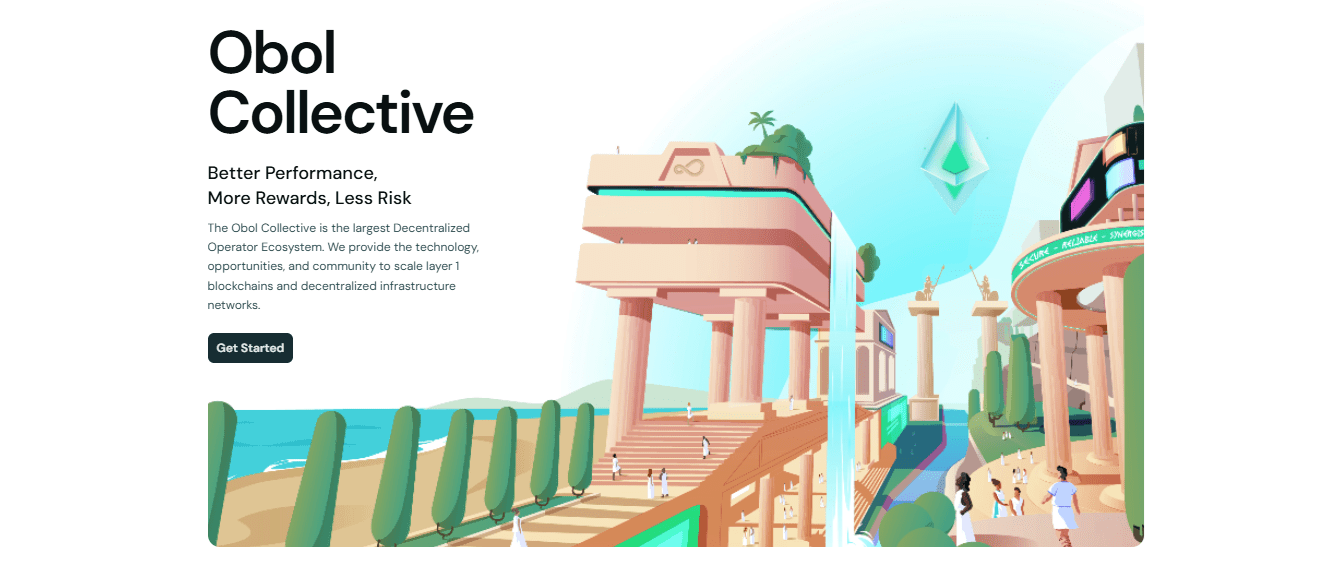
The Obol Collective is the largest Decentralized Operator Ecosystem, providing technology, opportunities, and community to scale decentralized infrastructure networks like Ethereum. Let’s dive into what Obol is and explore its details.
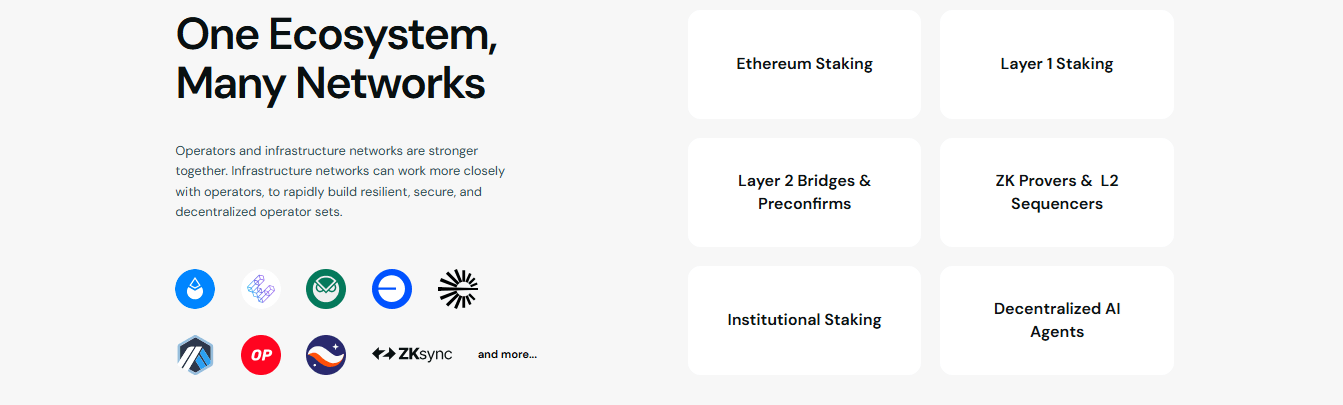
It brings together over 50 staking protocols, client teams, software tools, education, and community projects, as well as professional and individual node operators. Notable participants include EigenLayer, Lido, EtherFi, Figment, Blockdaemon, and DappNode.
What is Obol (OBOL)? What Does It Do?
Obol aims to make Ethereum’s consensus mechanism more secure, flexible, and decentralized through Distributed Validators (DVs). DVs are Ethereum proof-of-stake validators that operate across multiple nodes instead of a single one. This technology protects against client errors, key mismanagement, and Byzantine fault tolerance. Obol believes DVs will become a significant part of Ethereum’s mainnet, creating a new trust paradigm.
Charon, developed by Obol, is a middleware client that strengthens the validator network through “squad staking.” Charon enables multiple nodes to work together as a single validator, enhancing the network’s security and resilience.
What is DV Labs?
DV Labs (formerly Obol Labs) is the core research and software development team behind Distributed Validator Technology (DVT). DV Labs aims to build a reliable and decentralized infrastructure layer for node operators. The Charon client, its flagship product, is designed to enhance Ethereum’s security.
Obol (OBOL) Product Suite
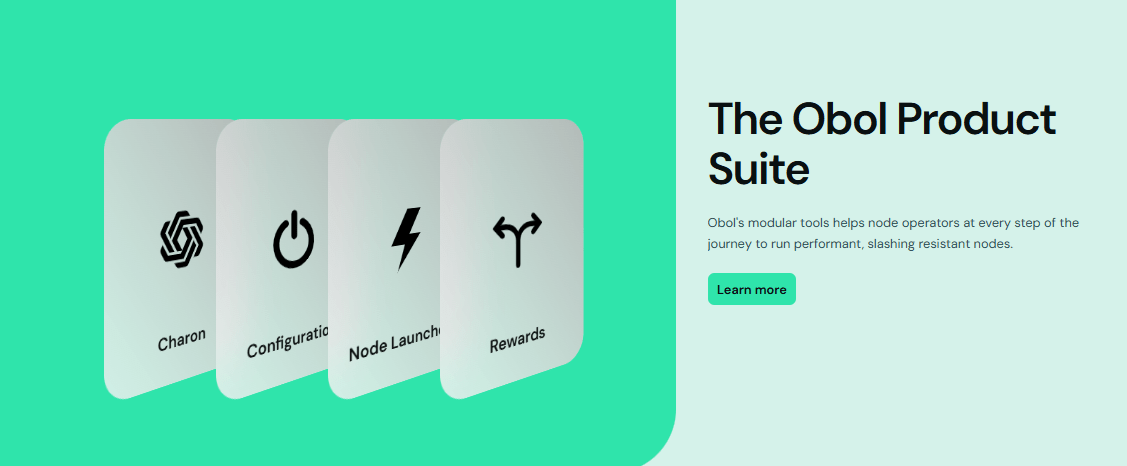
Obol’s product suite enables node operators to run fault-tolerant, uninterrupted DVs. Key tools include:
-
Charon: A middleware client that runs distributed validators.
-
DV Launchpad: A user-friendly interface for configuring DVs.
-
Obol SDK & API: For configuring and managing large-scale DV clusters.
-
Obol Splits: Smart contracts for distributing validator rewards among multiple operators.
OBOL Incentives Program
The OBOL Incentives Program rewards users staking on DVs with OBOL Tokens. Key details:
-
12.5 million OBOL Tokens (2.5% of total supply) will be distributed in 2025.
-
Incentives begin on March 24, 2025, with rewards claimable from May 12, 2025.
-
Approximately 240,385 OBOL will be distributed weekly.
-
Participate by staking with partners or setting up your own DV cluster via the DV Launchpad.
-
For self-managed DV clusters, a 1% Decentralization Contribution is mandatory.
How Do Incentives Work?
-
Rewards depend on validator performance (uptime and effectiveness).
-
Incentives are tracked using the Miga Labs indexer and verified with on-chain data.
-
Earned OBOL Tokens can be viewed on the DV Launchpad or partner interfaces.
Benefits of the OBOL Token
The OBOL Token represents ownership and governance in the Obol Collective. Token holders can participate in decision-making processes shaping the ecosystem’s future.
What is Obol Splits?
Obol Splits are secure, non-custodial smart contracts for distributing validator rewards and principal. Key features:
-
Secure and transparent: All contracts are audited and open-source under the GPLv3 license.
-
Self-sovereign: Users retain full control over their contracts.
-
Flexible: Rewards can be continuously distributed among operators and principal providers.
Advantages of Distributed Validators
-
Security: Eliminates single points of failure; validators function even if <33% of nodes are offline.
-
Decentralization: More operators lead to distributed network control.
-
Performance: Higher uptime and effectiveness result in greater rewards.
How to Start Staking with Obol?
-
Stake with Partners: Use partners listed on obol.org/incentives.
-
Set Up Your Own DV Cluster: Create your cluster via the DV Launchpad, using hardware like DappNode.
-
Connect with the Community: Join the Obol Discord to find “squad mates.”
What is the OBOL Token?
The OBOL Token plays a central role in the governance and operation of the Obol Collective. Its key functions include:
Token Use Cases
-
Governance: OBOL Token holders delegate votes to representatives, influencing the Obol Collective’s direction, upgrades, and funding allocations.
-
Retroactive Funding (RAF): Token holders delegate votes to decide which past contributions to the ecosystem receive funding.
-
Staking: Starting May 7, 2025, OBOL Token holders can stake tokens without lockup in a vault, receiving stOBOL, which accrues OBOL rewards as its value increases relative to OBOL. For the first six months, 0.33% of the total supply will be distributed as rewards, adjustable later via governance. Staking is accessible at stake.obol.org.
-
DeFi: Post-launch, DeFi opportunities like liquidity pools, lending protocols (e.g., Morpho), and restaking (e.g., Eigenlayer, Symbiotic) are planned.
Token Distribution
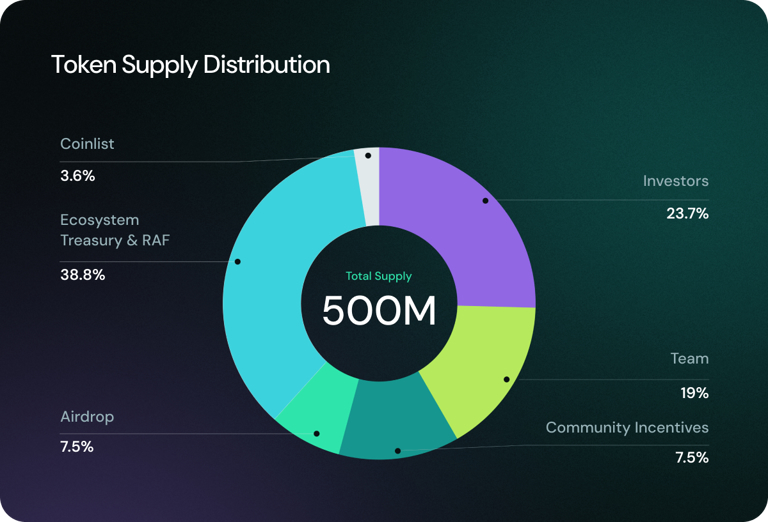
The total supply is capped at 500 million OBOL Tokens, with not all tokens circulating immediately. The distribution plan is:
-
Ecosystem Treasury and Retroactive Funding: 38.8% to support innovation and decentralization.
-
Investors: 23.7% for early financial backers, subject to a lockup period.
-
Team: 19% for core contributors and developers, aligned with long-term goals and locked.
-
Community Incentives: 7.5% for initiatives promoting Obol DV adoption (e.g., OBOL Incentives Program).
-
Airdrop: 7.5% to reward early contributors and supporters.
-
Coinlist Public Sale: 3.6% for broad, fair distribution. 50% of purchased tokens are unlocked at launch, with the rest unlocking linearly over 12 months.
Token Liquidity and Transferability
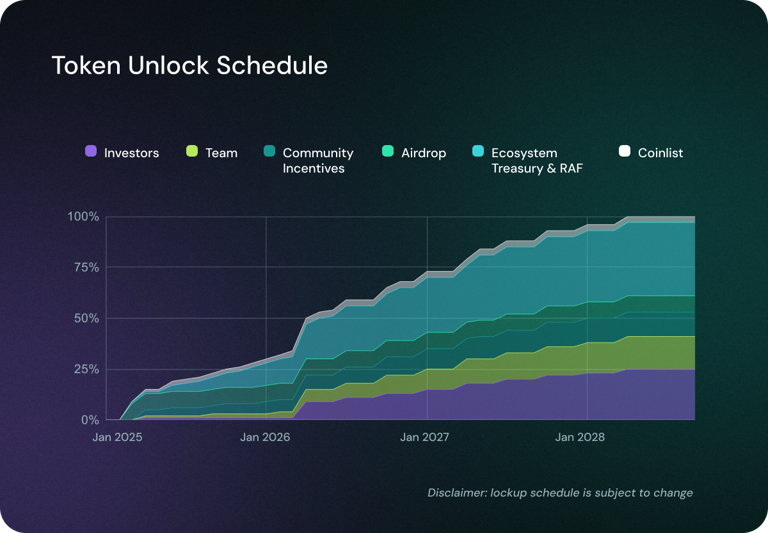
As of May 7, 2025, 11:00 UTC, the OBOL Token will become transferable. Following centralized exchange listings, token unlocking will begin, with circulating supply increasing per a structured plan.
Obol (OBOL) Partners and Investors
Obol collaborates with leading projects and platforms to strengthen decentralized staking infrastructure. Key partnerships include Lido, Liquid Collective, Splits, Stakely, Stereum, DappNode, Ether.fi, Gnosis Chain, and StakeWise. These collaborations enhance Obol’s integration and technological foundation.

Obol (OBOL) Founding Team
Obol is a decentralized staking infrastructure project led by an experienced team. The CEO and co-founder is Collin Myers. The CTO and co-founder, Oisin Kyne, oversees technical leadership. Security is managed by CSO Chris Battenfield. Product management is led by CPO Nanni Sackmann, while Thomas Heremans, Head of Operations, handles operational processes.

Official Links
- Whitepaper: Obol Whitepaper
- Discord: Obol Discord
- X (Twitter): Obol X
Also, you can freely share your thoughts and comments about the topic in the comment section. Additionally, don’t forget to follow us on our Telegram, YouTube, and Twitter channels for the latest news and updates.