
 Emre Yumlu
Walrus (WAL) is the native token of the Walrus protocol, a next-generation decentralized finance (DeFi) protocol and a decentralized storage solution built on the Sui blockchain. Designed to prioritize privacy, security, and decentralization, Walrus offers an innovative ecosystem for users can maintain full control over their digital assets and data. By leveraging advanced cryptographic techniques and programmable storage, it aims to revolutionize both DeFi and data availability in the Web3 space.
What is Walrus (WAL)?
Walrus (WAL) is the core token of the Walrus protocol, powering two primary functions: a privacy-focused DeFi platform for anonymous transactions and a decentralized storage and data availability layer. In DeFi, it enables users to perform private interactions with decentralized applications (dApps) while safeguarding their data. For storage, developed by Mysten Labs and governed by the Walrus Foundation, Walrus facilitates the decentralized storage of large data files (NFT imagery, game assets, AI datasets, etc.). The WAL token is used for staking, governance, and storage fees, fostering a robust ecosystem.
Key Features
-
Privacy-Focused Anonymous Transactions: Ensures user identities and transaction details remain confidential.
-
Decentralized Blockchain: Provides a secure and scalable infrastructure for secure transactions.
-
Programmable Storage: Enables storage management, tokenization, and marketplaces via Move smart contracts on Sui.
-
Staking and Governance: WAL holders can stake tokens to participate in governance and receive rewards.
-
Data Resilience: Utilizes RedStuff 2D erasure coding for efficient and reliable storage.
-
Multi-Chain Compatibility: Integrates with chains like Ethereum and Solana for broader adoption.
How Does Walrus (WAL) Work?
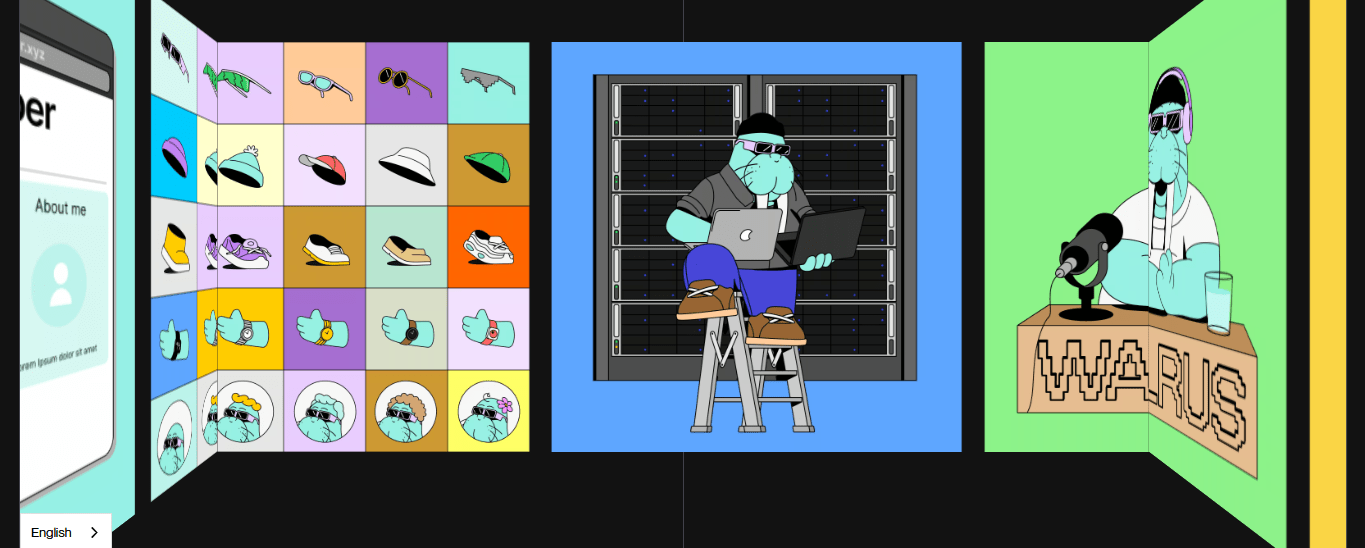
Walrus operates in two key areas: DeFi and storage. In DeFi, it uses advanced encryption to enable anonymous transactions, allowing users to stake WAL tokens for governance participation and rewards, and interact with dApps. In storage, Walrus serves as a peer-to-peer data availability layer. Files are encoded into shards using the RedStuff algorithm and distributed across independent nodes, ensuring resilience and low costs. The Sui blockchain handles metadata and control, while the storage layer remains chain-agnostic.
How It Works
-
Privacy Protection: Anonymous transactions keep user data private.
-
Staking and Rewards: Staking WAL tokens enables governance participation and reward generation.
-
Programmable Storage: Each file is represented as a Sui object (Blob ID), manageable by smart contracts.
-
Storage Fees: Users pay in WAL for storage transactions.
-
Resilience: RedStuff coding ensures data loss prevention and fast retrieval.
Why Is Walrus (WAL) Important?
Walrus addresses growing demands for privacy and security in both DeFi and Web3 ecosystems. In DeFi, it allows users to engage with dApps anonymously, protecting sensitive data. In storage, it offers a programmable, decentralized solution for large-scale data applications, making it ideal for developers. Governance and staking rewards encourage user involvement, while low-cost storage and multi-chain support position Walrus as a key player in Web3.
Why It Matters
-
Privacy and Security: Anonymous transactions and secure storage.
-
Decentralization: User control and robust infrastructure.
-
Governance: WAL holders shape the protocol’s future.
-
Cost-Effective Storage: Efficient solutions with RedStuff.
-
Web3 Integration: Supports diverse applications, from NFTs to AI.

How to Use Walrus (WAL)?
To use Walrus, users must acquire WAL tokens from supported platforms or exchanges. Tokens can be stored in a secure wallet, staked for governance, or used to interact with dApps. For storage, users can create and manage data blobs via Walrus’s CLI, web interfaces, or SDKs. These tools simplify integration for both developers and users.
Getting Started
-
Purchase WAL tokens from supported exchanges.
-
Store tokens in a secure wallet.
-
Stake WAL for governance participation and rewards.
-
Use WAL for dApp interactions or data storage via Walrus tools.
Funding and Backing
The Walrus Foundation raised $140 million in a private token sale in early 2025, led by Standard Crypto with participation from a16z crypto, Electric Capital, and Franklin Templeton. These funds support network scaling and tool development. Initially built by Mysten Labs, Walrus is now governed by the Walrus Foundation and tightly integrated with the Sui ecosystem.

Tokenomics and Incentives
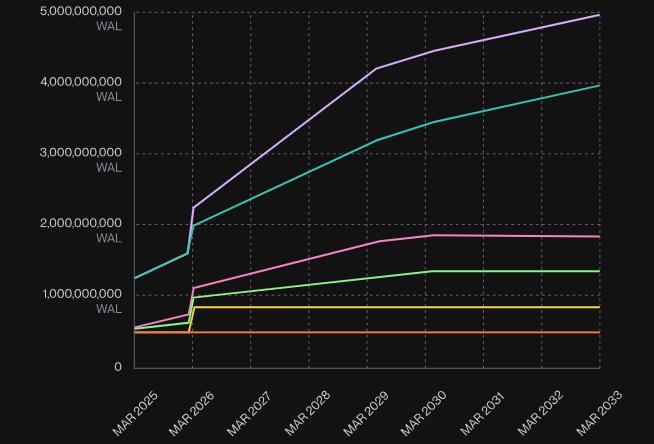
The WAL token serves as a payment, staking, and governance tool. With a total supply of 5 billion WAL, the allocation is:
-
43%: Community reserves (grants, incentives, hackathons).
-
10%: User airdrop (4% pre-Mainnet, 6% post-Mainnet).
-
10%: Storage subsidies.
-
30%: Core contributors.
-
7%: Investors.

Testnet users can experiment with test WAL tokens. Staking incentives reward node operators and stakers. Community initiatives like Walrus Academy and airdrop campaigns drive engagement.
Walrus (WAL) Founding Team
The Walrus (WAL) protocol is led by a founding team consisting of:
- Evan Cheng (CEO and Co-Founder),
- Sam Blackshear (CTO and Co-Founder),
- Adeniyi Abiodun (CPO and Co-Founder),
- George Danezis (Chief Scientist and Co-Founder),
- Kostas Chalkias (Chief Cryptographer and Co-Founder),
- Kevin Boon (Chief Legal Officer), and
- Sylvia Favretto (General Counsel and Corporate Secretary).
Official Links
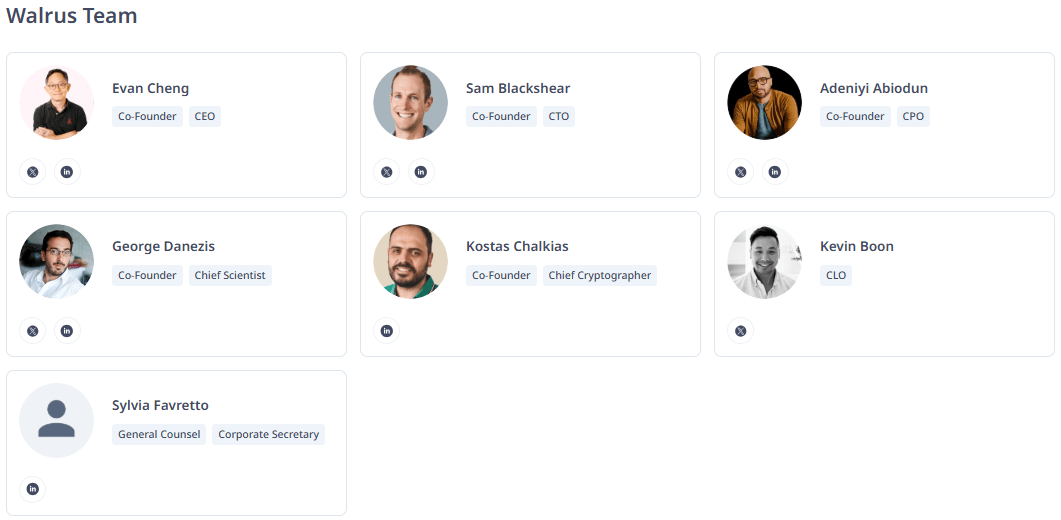
This team has come together to develop the Sui blockchain and Walrus innovative storage solutions.
Official Links
Also, in the comment section, you can freely share your comments and opinions about the topic. Additionally, don’t forget to follow us on Telegram, YouTube and Twitter for the latest news and updates.