

 Emre Yumlu
Binance Coin (BNB) is a cryptocurrency developed by Binance, the world’s largest cryptocurrency exchange by trading volume. Initially launched in 2017 as an ERC-20 token on the Ethereum network, BNB has evolved into the native token of Binance’s own blockchain ecosystem, BNB Chain. Today, ranking among the top cryptocurrencies by market capitalization, BNB serves a wide range of purposes, from transaction fees to decentralized finance (DeFi) applications. In this article, we will explore what BNB is, how it works, its use cases, and the key features of the BNB Chain ecosystem.
History and Evolution of BNB
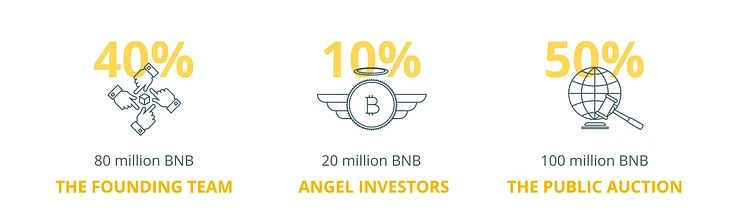
Binance Coin was introduced through an Initial Coin Offering (ICO) held between June 26 and July 3, 2017. A total of 200 million BNB tokens were created and distributed as follows:
- 40% (80 million BNB): Allocated to the Binance founding team, released gradually over four years.
- 10% (20 million BNB): Assigned to angel investors with immediate access.
- 50% (100 million BNB): Offered to the public at $0.15 per token.
The ICO raised approximately $15 million USD in Bitcoin and Ethereum. Of the funds, 35% were used for platform development, 50% for marketing and education, and 15% were reserved for emergencies.
Initially operating as an ERC-20 token on Ethereum, BNB transitioned to Binance’s own blockchain, Binance Chain, in 2019. In 2020, Binance Smart Chain (BSC) was introduced, which was rebranded as BNB Smart Chain in 2022. As of February 2022, Binance Chain and Binance Smart Chain merged to form BNB Chain. Today, BNB Chain consists of three main components:
- BNB Smart Chain (BSC): A Layer-1 platform compatible with Ethereum Virtual Machine (EVM) for smart contracts and decentralized applications (DApps).
- opBNB: A Layer-2 scaling solution that enhances transaction speed and reduces costs.
- BNB Greenfield: A decentralized data storage platform.
Structure and Features of BNB Chain
BNB Chain is a blockchain ecosystem designed to meet the demands of Web3, offering speed, scalability, and affordability. With a large user base, BNB Chain excels in areas like DeFi, gaming, NFTs, and data storage. Below are the key components and features of BNB Chain:
1. BNB Smart Chain (BSC)
- EVM Compatibility: Fully compatible with the Ethereum Virtual Machine, allowing seamless migration of Ethereum-based projects. Tools like MetaMask work effortlessly with BSC.
- High Performance: Capable of processing thousands of transactions per second (TPS) for fast transactions.
- Low Fees: Average transaction fees are approximately $0.10, with transactions completed in 3 seconds.
2. opBNB
- Layer-2 Solution: Utilizes Optimistic Rollups technology to boost transaction speeds (5,000–10,000 TPS) and lower costs.
- High Efficiency: Ideal for high-throughput applications like gaming and NFTs.
3. BNB Greenfield
- Decentralized Data Storage: Enables users to securely store NFTs, files, and other digital assets.
- Data Ownership: Provides users with full control over their data.
4. BNB Beacon Chain (Formerly Binance Chain)
- Governance and Staking: Previously used for governance and staking, these functions are now being transitioned to BNB Smart Chain. Validators must migrate from BNB Beacon Chain to BSC.
BNB Chain is supported by a robust ecosystem, with over 20 million BNB staked and backed by 20,000 delegators. It also hosts a thriving DeFi ecosystem, including decentralized exchanges like PancakeSwap, lending protocols, and yield farming platforms.

How Does BNB Work?
BNB Chain operates using the Proof of Staked Authority (PoSA) consensus mechanism, a hybrid of Proof of Stake and Proof of Authority. In this system:
- Validators: The network is secured by 21 validators responsible for validating transactions. To become a validator, a minimum of 10,000 BNB must be staked. Validators are selected every 24 hours by BNB stakers.
- Rewards: Validators earn income from transaction fees rather than new token issuance, keeping costs low.
- Decentralization: Due to Binance controlling several validators, BNB Chain is less decentralized than Bitcoin or Ethereum. However, this trade-off enhances transaction speed and reduces costs.
Token Burn Mechanism
Binance regularly burns BNB tokens to reduce the total supply from 200 million to 100 million. The burn process occurs in two ways:
- Auto-Burn: Quarterly burns are determined based on BNB’s price and the number of blocks produced on BSC. For instance, in early 2025, the 27th burn event destroyed 1.94 million BNB (approximately $1.17 billion USD).
- Real-Time Burn: A portion of transaction fees is burned in each block, with the ratio set by validators.
Additionally, the BNB Pioneer Burn Program compensates users for lost tokens, with these losses counted toward the official burn total. The burn mechanism aims to increase BNB’s value and prevent inflation.
BNB Use Cases
BNB is a versatile token used both on the Binance exchange and within the BNB Chain ecosystem. Its primary use cases include:
1. Centralized Use Cases
- Discounted Trading Fees: Paying transaction fees with BNB on the Binance exchange offers discounts. BNB holders can also join the VIP program for additional benefits.
- Binance Launchpad: BNB enables participation in token sales for new blockchain projects.
- Binance Pay: Use BNB for online shopping or crypto transfers.
- BNB Vault and Launchpool: Stake BNB to earn passive income or gain tokens from new projects.
- Crypto Loans: Use BNB as collateral to borrow funds via Binance’s loan platform.
- Liquid Swap: Provide liquidity with BNB to earn yields through DeFi markets.
2. Decentralized Use Cases
- Transaction Fees: BNB is used to pay fees on BNB Smart Chain and opBNB.
- DeFi and DApps: BNB powers token trading, liquidity provision, and yield farming on decentralized exchanges like PancakeSwap.
- Staking and Governance: Staking BNB supports network security and allows participation in governance decisions.
- Gaming and NFTs: BNB Chain is ideal for gaming and NFT applications, enabling users to earn rewards or trade NFTs.
3. Other Use Cases
- Travel: Book flights and hotels with BNB on platforms like Travala.com, Coinsbee, and TravelbyBit.
- E-Commerce: Pay with BNB at Shopify merchants via Lunu.
- Entertainment: Participate in Binance events to win BNB rewards.
- Services and Finance: Use BNB for freelance services, financial transactions, or other real-world payments.
BNB Chain Investors
BNB Chain is backed by a strong group of investors, particularly in areas like DeFi, staking, cross-chain, and yield farming. The co-investors include:
- YZi Labs (formerly Binance Labs)
- CoinFund
- Shima Capital
- GSR
- Animoca Brands
- Web3 Foundation
- Zokyo
- Unanimous Capital
- Mina Protocol
- Hailstone Ventures
- TPS Capital
- Lunar Ventures
- Eureka Stock & Share Broking Services
- Crypto Wesearch
- Dream Ventures
These investors have played a key role in supporting BNB Chain’s growth and development.
Click to Register on Binance Exchange with a 20% Commission Discount!
BNB Token Types: BEP2 and BEP20
BNB Chain uses two token standards:
- BEP2: The token standard for BNB Beacon Chain, used for transaction fees, staking, and trading on Binance DEX. Compatible with hardware wallets like Ledger Nano X and S.
- BEP20: The token standard for BNB Smart Chain, similar to Ethereum’s ERC-20. It supports smart contracts, DApps, and DeFi projects, allowing developers to create various token types (e.g., stablecoins).
BNB Tokenomics and Burn Mechanism
BNB circulates across BSC, opBNB, and Greenfield in a shared token universe, with the total circulating supply being the sum of the effective supply across these networks. As the native token, BNB functions on BSC similarly to ETH on Ethereum, used for:
- Paying fees for smart contract deployment.
- Staking and earning validator rewards.
- Cross-chain transfers between BSC, opBNB, and Greenfield.
Burn and Seed Fund
- Seed Fund: At BSC’s genesis, some BNB tokens burned on Beacon Chain were re-minted on BSC and distributed to the initial validator set.
- Burn Process: Every quarter, Binance uses 20% of its profits to buy back and burn BNB tokens, sending them to an inaccessible address. This will continue until the total supply reaches 100 million.
BNB Founding Team
The founding team of BNB and Binance includes:
- Changpeng Zhao: Former CEO and co-founder of Binance.
- Yi He: Co-founder and Chief Customer Service Officer.
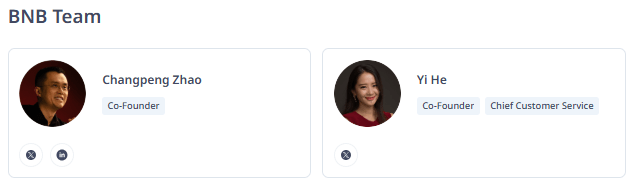
This team has been instrumental in making Binance the world’s leading crypto exchange and establishing BNB as a cornerstone of its ecosystem.
Official Links
You can also freely share your thoughts and comments about the topic in the comment section. Additionally, don’t forget to follow us on our Telegram, YouTube, and Twitter channels for the latest news and updates.