Yeliz Akmaca
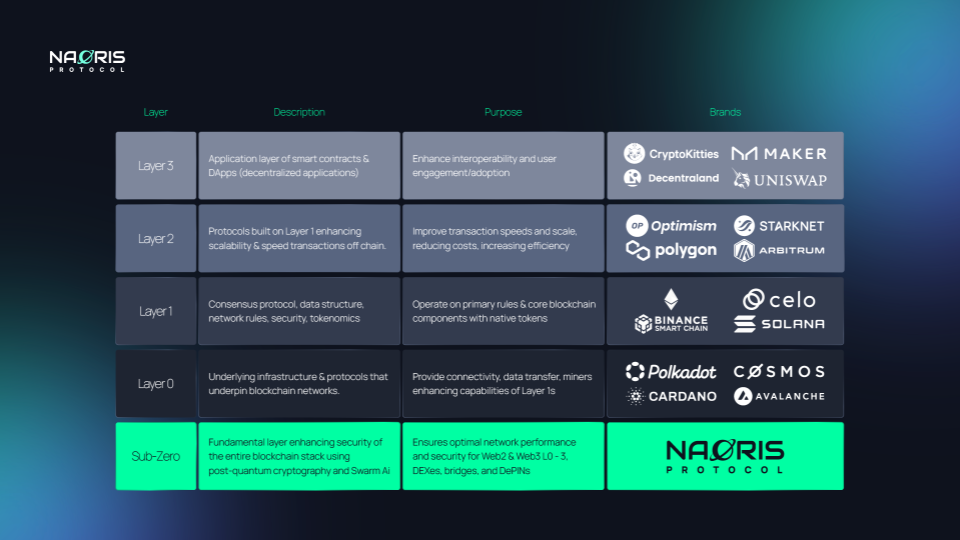
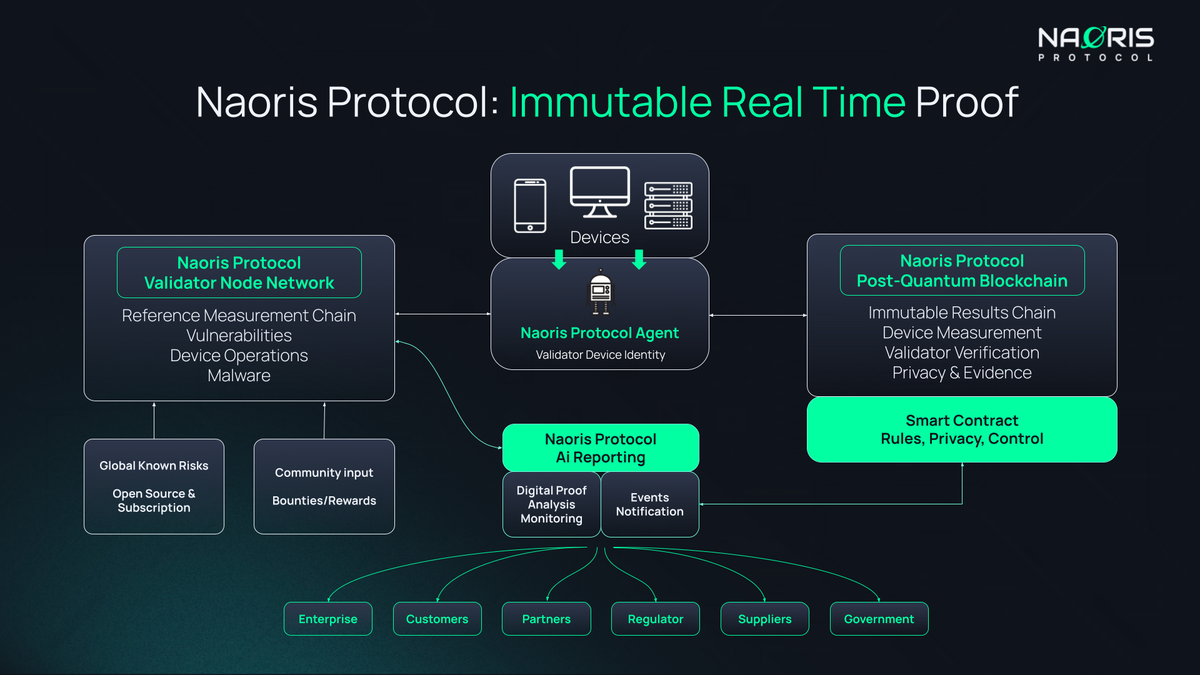
Naoris Protocol is a blockchain-based decentralized security network developed as an alternative to traditional centralized cybersecurity systems. This innovative system aims to secure all internet-connected digital devices — including Web3, enterprise infrastructures, and IoT — through collective validation and incentive-based mechanisms.
Core Purpose
Naoris Protocol’s main goal is to eliminate single points of failure caused by centralized security infrastructures and to decentralize cybersecurity using blockchain technology.
How It Works
Naoris Protocol turns all network participants (devices, nodes, enterprise systems) into security validators. This enables the network to collectively ensure security, rather than relying solely on centralized systems.
Key Components
- Naoris Net: Core network infrastructure that enables distributed security.
- Naoris OS: Software layer that transforms devices into security validators.
- Decentralized Proof of Security (dPoSec): Consensus protocol that monitors and scores device behaviors.
- CYBER Stake: Staking mechanism that enables secure devices to validate the network.
- Trustless Incentive Layer: Incentivizes proper security behavior without trust assumptions.
What is $NAORIS Token Used For?
- Reward mechanism for devices and nodes validating security.
- Facilitates value transfers in the dPoSec consensus protocol.
- Required for validator node staking.
- Used to penalize malicious activity.
- Recorded on-chain to boost transparency and reliability.
- Incentivizes participants to contribute to overall network security.
- Supports long-term sustainability of the decentralized cybersecurity network.
Key Features
- Decentralized CyberSecurity Mesh (DCSM) approach
- Blockchain-powered collective monitoring and protection
- Every device can act as a security node
- Real-time threat detection via dPoSec
- Malicious actions penalized, positive behavior rewarded
- Web2 and Web3 interoperability
- Regulatory-compliant infrastructure
- DAO-based governance
Use Cases
- Web3 applications
- IoT devices
- Enterprise networks
- Telecom providers
- Healthcare and smart devices
- Military/Intelligence
- Banking and Fintech
- Centralized and decentralized exchanges (DEXs)
- Critical infrastructure (energy, finance, etc.)
Partners and Backers
- Outlier Ventures
- Fabric Ventures
- NewTribe Capital
- Gate.io
- Bitget
- CV VC
- YGG and various Web3 gaming stakeholders
Founders and Advisors
Founding Team:
- David Carvalho: Founder, CEO & Chief Scientist
- Monica Oravcova: Co-founder & COO
- Sumit Chauhan: CTO
- Scott MacAndrew: CFO
Advisors:
- David Holtzman – Former IBM CTO, DNS protocol architect, ICANN founding member
- Mick Mulvaney – Former U.S. Congressman & White House Chief of Staff under Trump
- Ahmed Reda Chami – Royal Advisor in Morocco, former minister, ex-CEO of Microsoft North Africa
- Kjell Grandhagen – Former Head of NATO Intelligence, Norwegian Intelligence Service, and Major General

Why It Matters
Traditional centralized cybersecurity models have become singular attack points. Naoris Protocol flips this by decentralizing security — each new device strengthens the network. It offers a scalable, permissionless, and transparent security infrastructure for Web3.
Additional Key Components
- Naoris Consensus Protocol (NACP): A hybrid Proof-of-Stake + Proof-of-Reputation model tailored for cybersecurity.
- Smart Contract Orchestration: Allows DApps and enterprise systems to define security rules on DSNP.
- Token Incentives (NAO): Nodes ensuring security are rewarded, malicious actors are penalized.
Naoris Protocol Token Details
- Token Name: Naoris Protocol
- Ticker: NAORIS
- Blockchain: Ethereum (ERC-20)
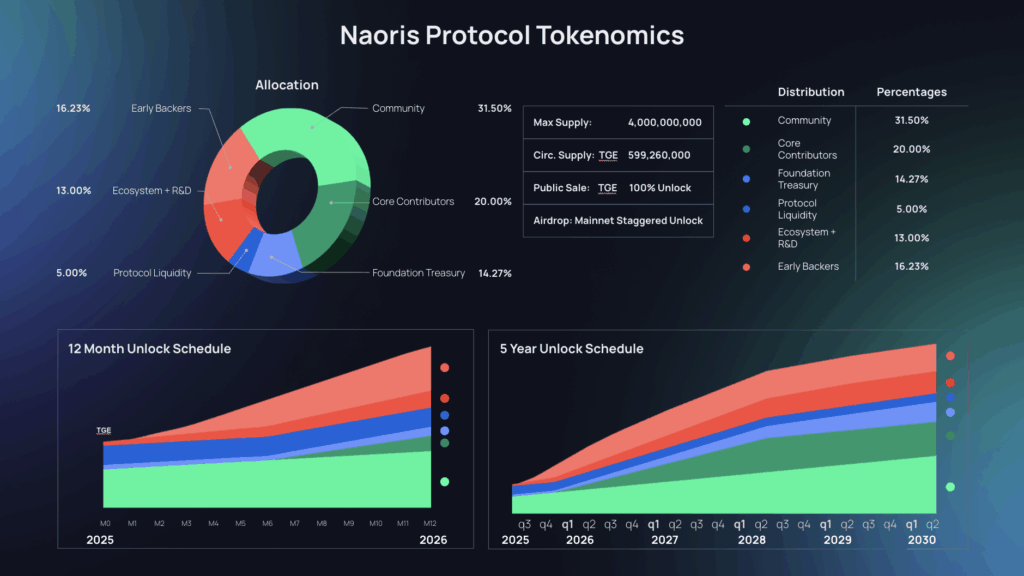
- Total Supply: 4,000,000,000 NAORIS
- Max Supply: 4,000,000,000 NAORIS
- Circulating Supply (self-reported at TGE): 599,260,000 NAORIS
Token Distribution
- Community: 31.5%
- Core Contributors: 20%
- Early Investors (Seed, Strategic, Private): 16.23%
- Foundation Treasury: 14.27%
- Ecosystem & R&D: 13%
- Protocol Liquidity: 5%
Roadmap
2023
- Testnet launch
- Strategic partnerships established
- Technical development initiated
2024
- CYBER Stake integration
- Web3 and enterprise system integration
- Mainnet infrastructure completed
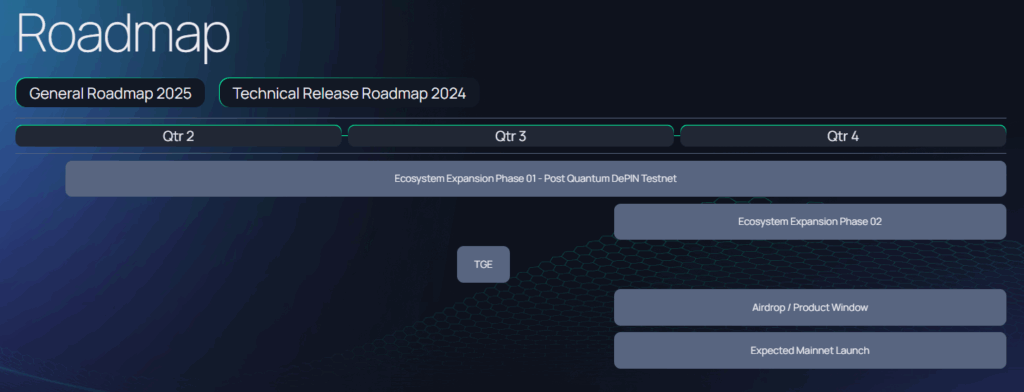
- Q1 2025 – Testnet & DePIN Expansion
- Launch of Post-Quantum DePIN Testnet (Phase 1)
- Q2 2025 – TGE, Airdrop & Expansion
- Token Generation Event (TGE) and airdrop
- Testnet Phase 2: new product window launch
- Integration of Devnet, smart contracts, dPoSec blockchain elements, SmartSpyAI
- Q3 2025 – Mainnet Launch & Product Rollout
Mainnet goes live
- Users gain early or discounted access using airdropped tokens
- Release of Windows/Linux/Mac agents, Data Keeper, Node, and other tools
- July 31, 2025
- Listed on Binance Alpha and Binance Futures