Yeliz Akmaca
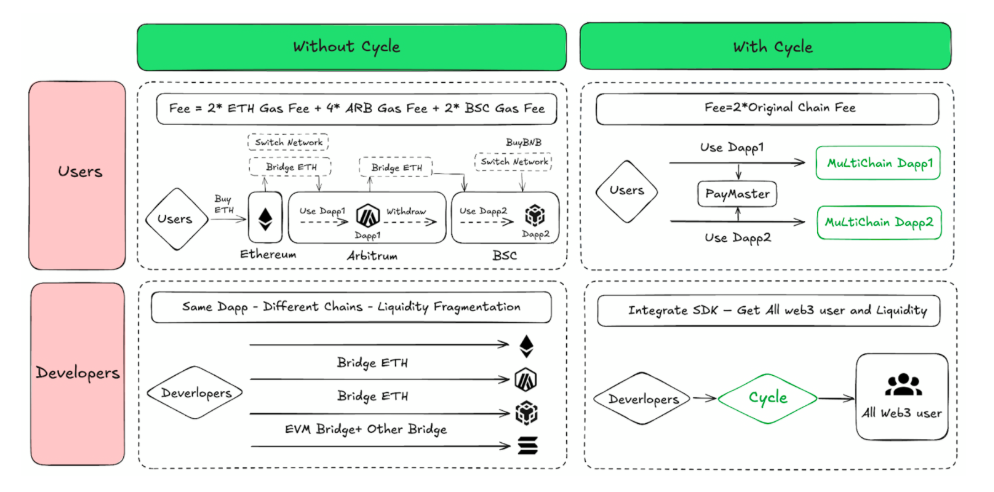
Cycle Network (CYC) aims to solve one of Web3’s biggest challenges — fragmented liquidity — with a bridgeless infrastructure protocol. Inspired by Zelda: Tears of the Kingdom, the project empowers developers to focus on creativity without dealing with the complexities of multi-chain ecosystems. Cycle enables seamless interoperability for dApps and assets across different blockchains using Verifiable State Aggregation (VSA) and Chain Abstraction.
Project Vision
The goal of Cycle Network is to eliminate repetitive “reinventing the wheel” in Web3 by providing developers a unified toolkit where they can build dApps once and deploy them across all blockchains.
- Developers save time by avoiding redundant tasks.
- Users enjoy frictionless cross-chain interaction without high costs or security risks.
How It Works
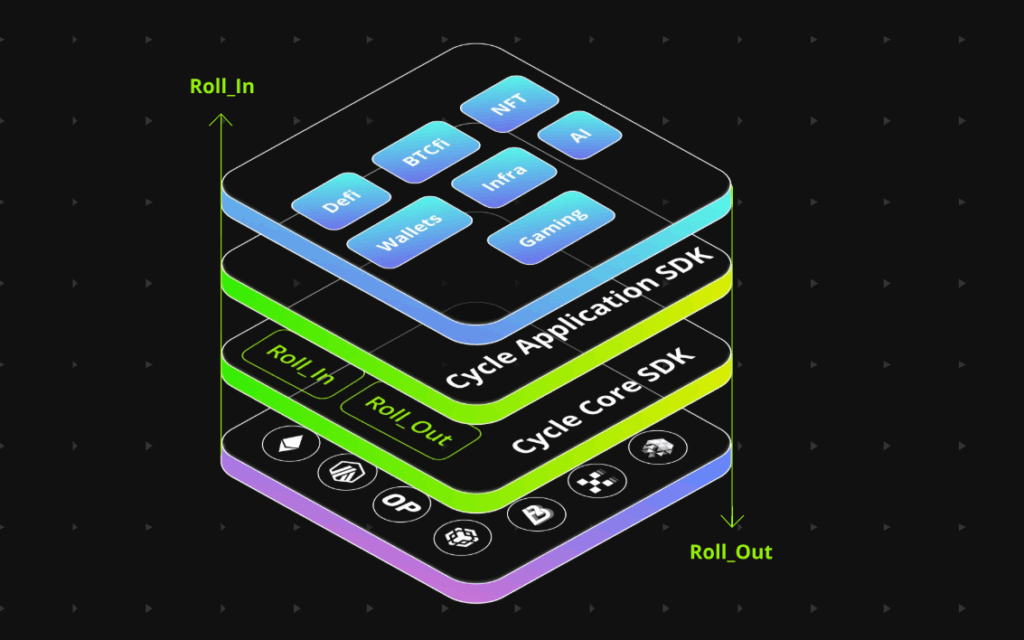
Cycle Network’s architecture has three main layers:
- Security Layer: Provides safety and liveness of transaction states, inheriting Ethereum’s security guarantees via Rollups.
- Extended Layers: Source and destination networks including Layer-1s, Layer-2s, and app-chains.
- Cycle Layer: Acts as a Rollup for both security and extended layers, aggregating all cross-chain and internal states into one unified ledger.
Partnerships and Integrations
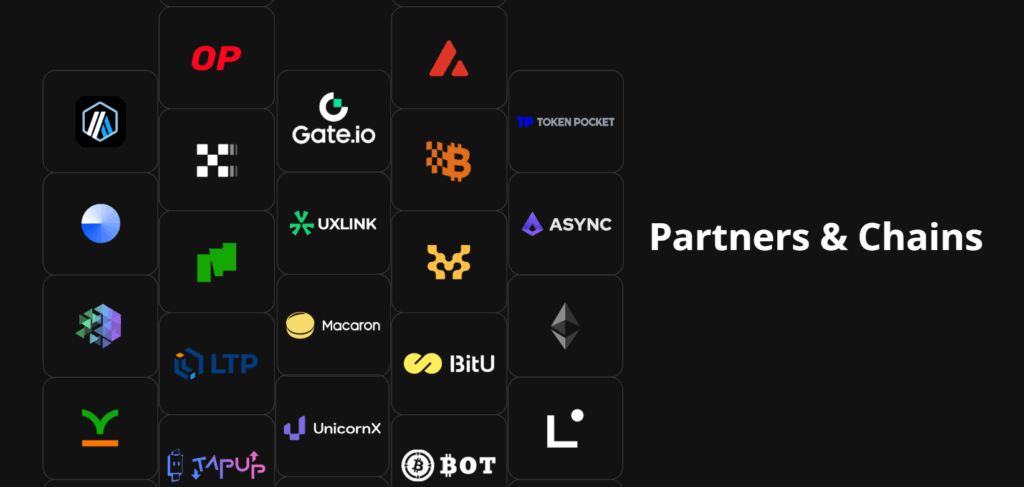
Cycle Network partners with key blockchains, exchanges, and wallets to strengthen its bridgeless ecosystem:
- Ethereum (ETH)
- Avalanche (AVAX)
- Arbitrum
- Optimism (OP)
- Gate.io
- Token Pocket
- UXLINK
- Investors and Backers
- Vertex Ventures (Singapore VC)
- Skyland Ventures (Japan)
- Manta (Blockchain project & investor)
- Unicorn Verse
Technologies Used
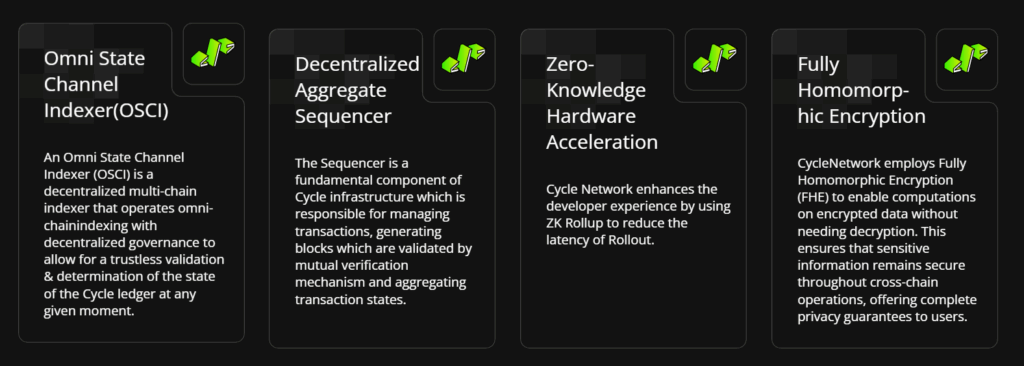
- Verifiable State Aggregation (VSA): Securely collects and validates cross-chain states.
- Omni State Channel Indexer (OSCI): Decentralized indexer validating the Cycle ledger.
- Decentralized Aggregate Sequencer: Manages transaction sequencing and aggregation.
- ZK-Rollup: Aggregates off-chain transactions into Ethereum for security.
- ZK-Hardware Acceleration: Reduces latency and enhances UX.
Governance
- Short-term: managed by committee & multi-sig.
- Long-term: transition to DAO governance.
Roadmap (2025–2026+)
Phase 1: Ecosystem Expansion (2025)
- Token Generation Event (TGE) & CEX listings
- Integrations with Solana, Cosmos, Move ecosystem
- Launch of Cycle SDK
- CYC staking on mainnet
Phase 2: Infrastructure Upgrade & RWA (2025–2026)
- Mainnet Phase 2 & SDK 2.0
- Multi-chain DEX, stablecoin & payment integrations
- Web2 business adoption for cross-chain asset issuance
- Bridgeless Payment Layer
Phase 3: Full Decentralization (2026+)
- 100+ blockchain integrations
- Potential native stablecoin issuance
- DAO-based governance
- Global settlement for RWA projects
Tokenomics
- Total Supply: 1,000,000,000 CYC
- Circulating Supply: 152,000,000 CYC
- Max Supply: 1,000,000,000 CYC
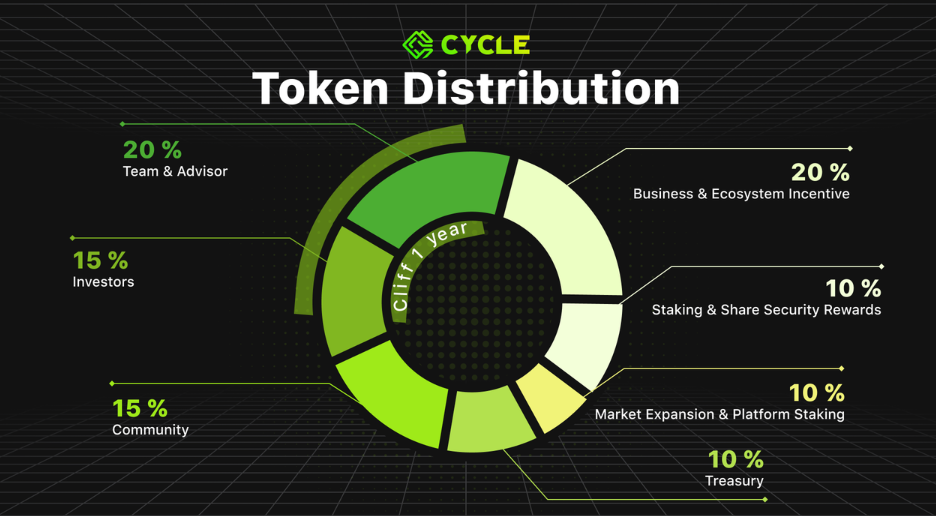
Distribution
- Team & Advisors: 20% (12-month lock, 48-month linear release)
- Investors: 15% (12-month lock, 24–36 month release)
- Treasury: 10% (6-month lock, 48-month release)
- Market Expansion & Platform Staking: 10%
- Ecosystem Incentives: 20%
- Community Rewards: 15%
- Staking & Security Rewards: 10% (60 months linear release)
Token Utility
- SDK Fees: Developers pay in CYC for Rollin/Rollout SDK.
- Gas Fees: dApps use CYC to operate on mainnet.
- Staking: Supports security and new network onboarding.
- Liquidity Mining: Incentives for ETH, USDT, USDC pools.
Ecosystem Highlights
- Unified liquidity pool for developers and users.
- Simplifies RWA and Web2 business adoption into multi-chain environments.
- Secure, developer-friendly infrastructure with VSA and ZK tech.
Key Features
- Bridgeless Design: Eliminates bridge-related risks.
- Chain Abstraction: Build once, deploy everywhere.
- VSA: Reliable state aggregation across blockchains.
- ZK & Hardware Acceleration: Optimized low-latency performance.
- Developer-Friendly SDK: Fast multi-chain app deployment.