

 Emre Yumlu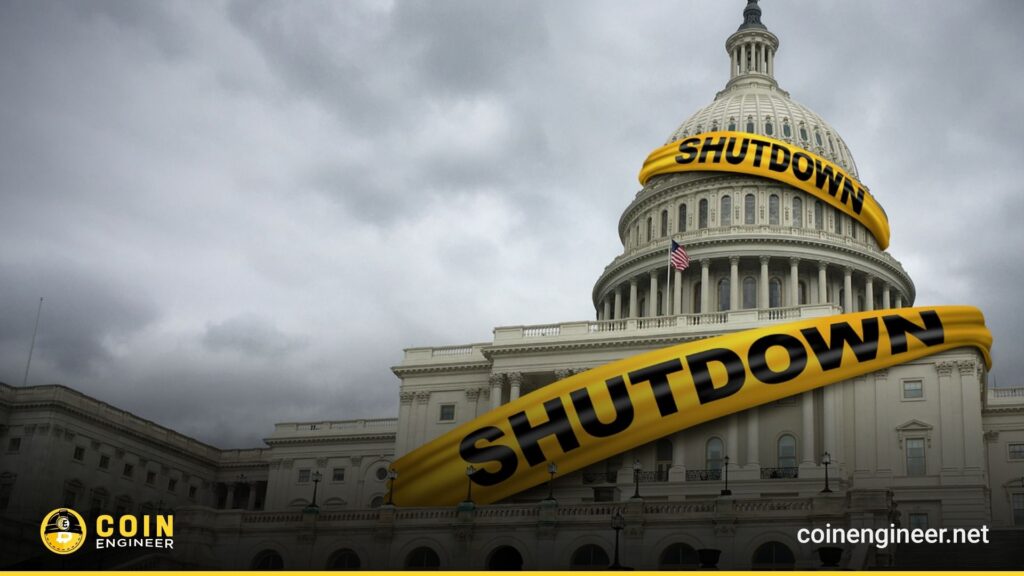
The U.S. government faces the possibility of a shutdown if lawmakers fail to reach a budget agreement by midnight on Tuesday. Such an outcome could significantly slow the legislative process, including the Senate’s consideration of a bill aimed at establishing a clear regulatory framework for digital asset markets.
Political Standoff Over Funding
Although Republicans hold a majority in both chambers of Congress, they still need Democratic support to pass a short-term funding measure that would keep the government operating. Democrats are pushing for the reversal of healthcare spending cuts included in the July budget agreement, creating another sticking point in negotiations.
Former President Donald Trump recently voiced skepticism, suggesting talks with Democratic leaders would be “unproductive.” Still, bipartisan leadership discussions are scheduled at the White House, bringing together figures such as Minority Leader Hakeem Jeffries, Senate Minority Leader Chuck Schumer, House Speaker Mike Johnson, and Senate Majority Leader John Thune.
Regulatory Progress at Risk
If a shutdown occurs, the effects won’t be limited to legislative votes—it would also impact federal agencies like the SEC and CFTC. This raises the likelihood of further delays for the Senate Banking Committee’s review of the crypto market structure bill, a proposal designed to bring clarity to oversight of digital assets.
Senator Cynthia Lummis of Wyoming had originally aimed for committee approval by the end of September. That timeline has already slipped into late October, and a potential shutdown would likely push progress even further down the road.
Historical Context: Lessons From the Past
Government shutdowns have become a recurring feature of U.S. politics since the 1980s. The longest on record lasted 35 days during 2018–2019, when a dispute over funding for Trump’s border wall halted federal operations.
Should another shutdown occur now, lawmakers’ immediate focus will inevitably shift to restoring government funding. As a result, regulatory issues like digital asset legislation may once again be deprioritized.
What It Means for the Crypto Industry
The pending bill builds upon the House-passed CLARITY Act and seeks to clearly define the roles of the SEC and CFTC in overseeing cryptocurrencies. Market participants have been awaiting this framework as a potential milestone for U.S. digital asset regulation.
However, if political deadlock leads to a shutdown, the path forward could remain uncertain. For now, the crypto industry may need to brace for yet another delay, with legislative priorities overshadowed by budget disputes in Washington.
You can also freely share your thoughts and comments about the topic in the comment section. Additionally, don’t forget to follow us on our Telegram, YouTube, and Twitter channels for the latest news and updates.