

 Emre Yumlu
Semantic Layer (42), with the slogan “Make dApps Great Again,” is an infrastructure protocol that transforms the Web3 ecosystem by giving dApps control over MEV (Miner Extractable Value) and transaction ordering autonomy. By introducing the concept of Application-Controlled Execution (ACE), it enables dApps to internalize MEV, scale independently of the base chain, and apply custom execution logic while preserving on-chain liquidity and composability. Semantic Layer operates as an execution layer between dApps and the base blockchain. Without relying on validators or block builders, dApps can directly control the order and conditions of their users’ transactions. In this article, we will explore in detail what Semantic Layer is, how it works, its use cases, advantages, risks, tokenomics, investors, team, and roadmap.
What is Semantic Layer (42)?
Semantic Layer is an infrastructure protocol that provides a programmable MEV supply chain for dApps. With Application-Controlled Execution (ACE), dApps internalize MEV, control the order flow, and implement custom execution logic. This allows protocols to create their own revenue models, provide users with fairer MEV distribution, and strengthen on-chain security mechanisms. Unlike the current MEV supply chain, Semantic Layer prioritizes the interests of users and developers.
The platform is positioned as an execution layer between dApps and the base blockchain. Instead of validators or block builders, dApps determine the order and conditions of user transactions. This structure eliminates the unfairness in the current system where more than 70% of MEV goes to validators. Although users are the source of the transaction flow, they receive no share in the current system, while Semantic Layer redirects this value back to users and developers.
The logo features interwoven blue and green lines, symbolizing the structural nature of the semantic layer and the flow of between blockchain data. The community is engaged in intense discussions around “AI intelligent agents” and “smart meta-transactions,” with high expectations for the Binance Alpha launch. Although the funding round was modest, the team has a strong background. As a project with high potential and inherent risks, it requires a cautious approach. 42 may not only be the ultimate answer to life and the universe but also the riddle that will determine the future of your wallet.
Purpose of Semantic Layer
Semantic Layer aims to ensure dApps receive a fair share of MEV, proactively close security vulnerabilities, and solve scaling issues. In the current MEV supply chain, users receive zero share while validators take more than 70%. Semantic Layer corrects this distortion to increase the welfare of users and developers. It offers custom MEV distribution and native scaling through a programmable meta-transaction standard.
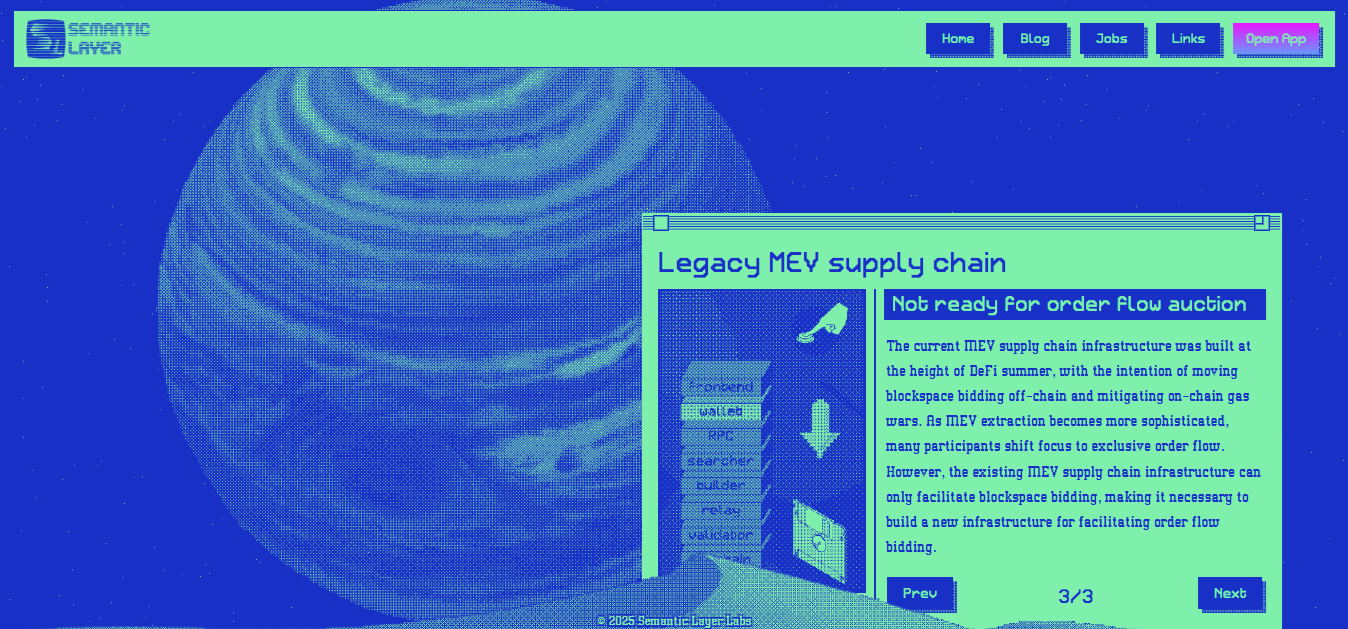
The platform works in harmony with existing infrastructure and integrates seamlessly alongside the default MEV layer. Thanks to open-source standards, developers can program transaction routing and execution conditions. Semantic Layer recognizes that the current infrastructure, designed at the peak of DeFi summer, supports blockspace bidding but is inadequate for order flow auction. Therefore, it introduces a new infrastructure for order flow auctions.
How Does Semantic Layer Work?
Semantic Layer functions as an execution layer between dApps and the base blockchain. MEV is extracted from the moment a user sends a transaction until it is included on-chain. However, in the current system, this value is unfairly distributed. Semantic Layer makes this process programmable.
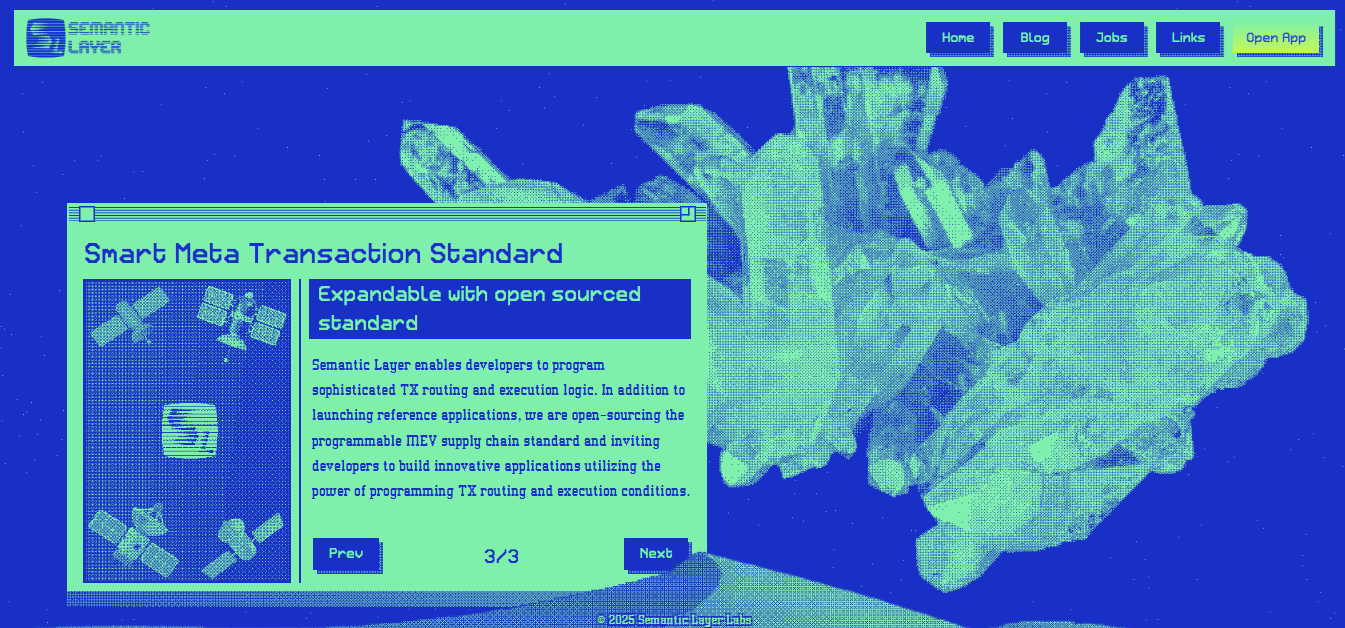
Smart Meta-Transaction Standard
Users and developers are the backbone of the ecosystem. Semantic Layer prioritizes these two groups with a programmable MEV supply chain. Programmability enables fairer MEV distribution and proactive security solutions.
- MEV Distribution: Users are the source of the transaction flow but receive no share in the current system. Semantic Layer directs the majority of MEV to users and dApps.
- Proactive Security: Smart contract hackers have threatened DeFi for years. In the current system, hackers send private transactions that cannot be detected. Semantic Layer detects hacker transactions in advance to provide proactive security.
- Order Flow Auction: The current infrastructure supports blockspace bidding. However, as MEV becomes more sophisticated, focus shifts to exclusive order flow. Semantic Layer offers a new infrastructure for order flow auctions.
Compatibility and Extensibility
Semantic Layer is fully compatible with existing infrastructure. It operates alongside the default MEV layer without causing disruption. Open-source standards allow developers to program TX routing and execution logic. Reference applications are launched, and the community is invited to develop innovative applications.
Semantic Layer Use Cases
Semantic Layer offers various use cases for dApps:
- MEV Internalization: dApps retain MEV within their own systems without leaving it to validators.
- Custom Execution Logic: dApps determine the order and conditions of user transactions.
- Native Scaling: Increased transaction volume independent of the base chain.
- Proactive Security: Preventing hacker transactions in advance.
- Order Flow Monetization: Protocols generate revenue by auctioning transaction flow.
Usage Steps:
- The dApp integrates Semantic Layer.
- Implements the smart meta-transaction standard.
- Programs MEV distribution and execution logic.
- User transactions are executed under dApp control.
- MEV is distributed to users and the protocol.
Advantages of Semantic Layer
- Fair MEV Distribution: Users and dApps receive a share of MEV.
- Proactive Security: Detects hacker transactions in advance.
- Native Scaling: Performance independent of the base chain.
- Compatibility: Seamless integration with existing systems.
- Programmability: Custom execution logic and TX routing.
- Monetization: dApps generate revenue from transaction flow.
Technical Infrastructure of Semantic Layer
- Application-Controlled Execution (ACE): dApp control over transactions.
- Programmable Meta-Transaction: Custom MEV distribution and execution.
- Execution Layer: Between dApp and base chain.
- Open Source Standard: For developer participation.
- Compatibility Layer: Parallel operation with existing MEV systems.
42 Token Tokenomics
- Token Name: 42
- Market Cap: $23.15M (27.29% increase)
- Unlocked Market Cap: $23.15M
- 24-Hour Volume: $64.31M (2472.09% increase)
- Fully Diluted Value (FDV): $156.29M
- Volume/Market Cap Ratio: 277.72%
- Holder Count: 2.61K
- Total Supply: 1B 42
- Maximum Supply: 1B 42
Semantic Layer Investors
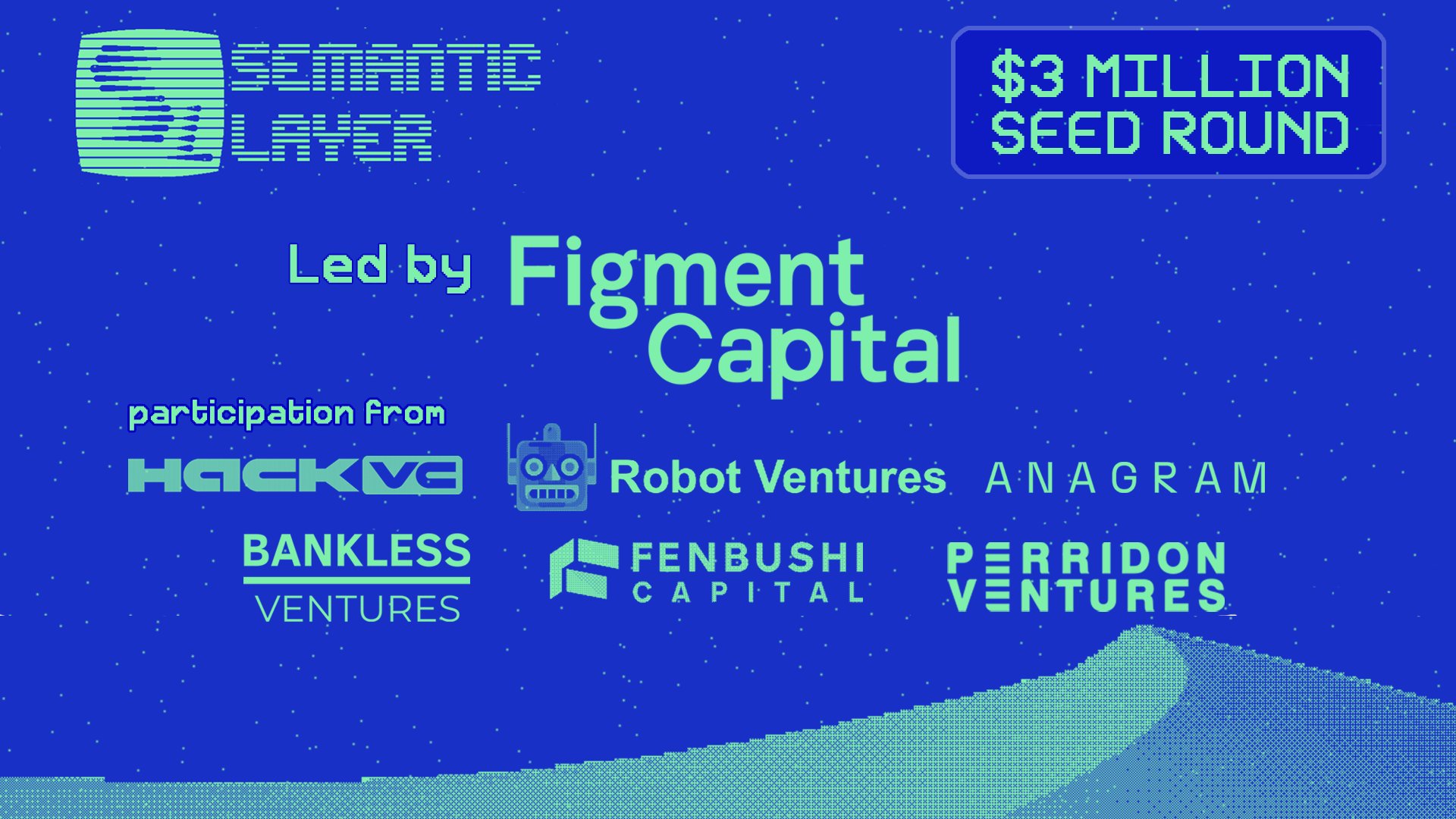
Semantic Layer has raised $3 million:
- Tier 2:
- Robot Ventures
- Fenbushi Capital
- Hack VC
- Tier 3:
- Figment Capital
- Anagram Crypto
- Bankless Ventures
- Tier 4:
- Perridon Ventures
Semantic Layer Team
Semantic Layer is developed by a team experienced in Web3 infrastructure and MEV fields. Team members have achieved significant success in previous projects and possess technical and strategic expertise. Details have not been disclosed to the public.
Official Links
You can also freely share your thoughts and comments about the topic in the comment section. Additionally, don’t forget to follow us on our Telegram, YouTube, and Twitter channels for the latest news and updates.