

 Emre Yumlu
The blockchain ecosystem continues to evolve each year with more advanced infrastructure, faster transaction layers, and broader real-world use cases. Among the projects shaping this transformation is XPR Network (XPR)—a next-generation blockchain designed to meet modern digital requirements. So, what exactly is XPR Network, and how does it work? Here is a detailed breakdown.
What is XPR Network (XPR)?
XPR Network is an advanced blockchain built for both individual users and enterprise-level applications. It provides a modern architecture with zero transaction fees, high scalability, WebAssembly (WASM)-based smart contracts, and on-chain identity verification.
Beyond its technical features, XPR Network stands out with:
-
ISO 20022 compatibility
-
Strong enterprise integration potential
-
A developer-friendly ecosystem
In this guide, we examine XPR Network’s structure, its underlying technology, use cases, security model, and token economics.
XPR Network: A Modern Layer-1 Blockchain
XPR Network is a public Layer-1 blockchain running on a delegated proof-of-stake (dPoS) consensus model. This structure allows the network to process transactions quickly and efficiently with minimal resource usage.
Its core components include:
-
WASM-based smart contracts
-
Native on-chain identity framework
-
A financial settlement layer
-
High throughput reaching thousands of TPS
-
Zero-fee user transactions
Thanks to this combination, the network supports a wide array of consumer and enterprise applications.
A Flexible, Cost-Free Platform for Developers
One of the strongest advantages of XPR Network is its developer experience. With WebSDK tools, ready-to-use frontend libraries, and a WASM smart contract environment, developers can build:
-
Custom tokens
-
NFT collections
-
Decentralized applications
-
DEX platforms, lending markets, and financial tools
-
Games and commerce applications
Importantly, XPR Network does not charge gas fees. Creating an account is free, and users do not pay for transactions. Instead, developers purchase monthly resource packages based on their application needs. This model keeps user onboarding frictionless while providing sustainable infrastructure for large-scale projects.
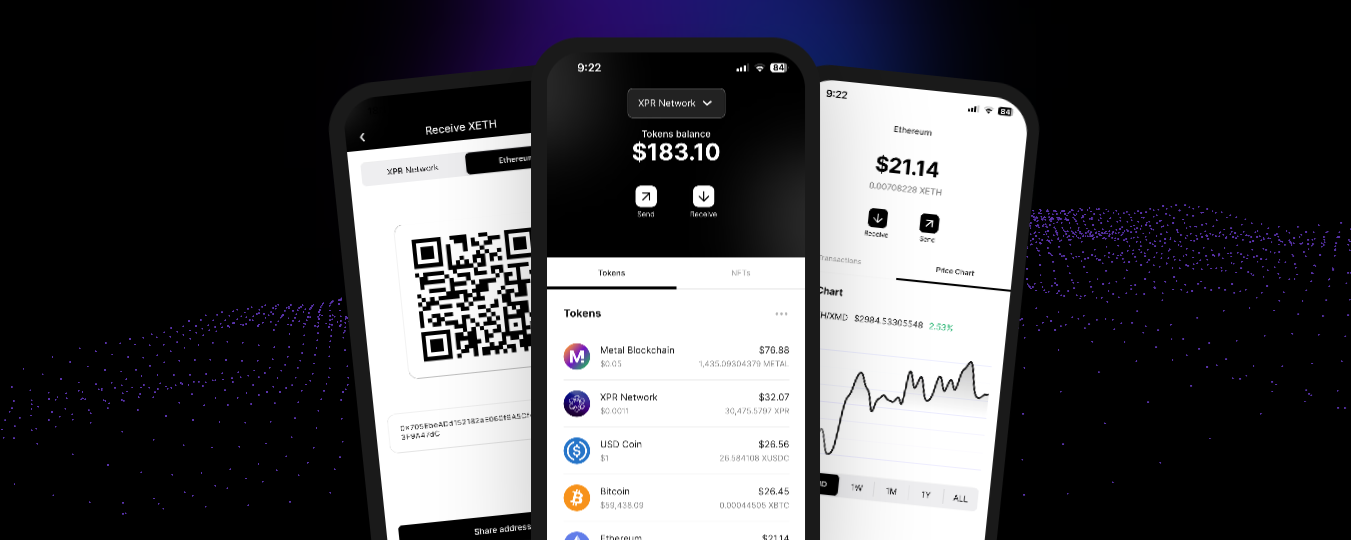
Technical Strengths and Enterprise Integration Potential
XPR Network’s architecture is optimized for speed and performance. With throughput reaching around 4,000 TPS, it delivers the performance needed for real-world financial and commercial applications.
Key features that strengthen its enterprise use case include:
-
On-chain identity authentication
-
Secure financial settlement mechanisms
-
ISO 20022 messaging standard compatibility
-
Streamlined enterprise integration
These capabilities make XPR Network suitable for solutions such as payment infrastructure, supply-chain visibility, asset tokenization, DeFi protocols, and digital security products. Its compliance with global financial messaging standards also positions it as a strong candidate for future institutional adoption.
How XPR Network Maintains Security
XPR Network uses a multi-layer security model to defend against modern blockchain threats.
1. WebAuth Biometric Authentication
User accounts can integrate WebAuth, enabling biometric verification for secure access and transaction approvals.
2. Smart Contract Security
With WASM-based contracts, the execution environment enforces strict safety rules, reducing vulnerabilities.
3. Multi-Key Architecture
The network supports multiple key roles, lowering the risk of account compromise through a single private key.
4. Cryptographic Protection
All transmitted data is encrypted using strong cryptographic standards—critical for identity-based and financial transactions.
5. ISO 20022 Security Alignment
Compliance with global financial messaging standards enhances both security and institutional interoperability.
Together, these elements create a robust, enterprise-grade security foundation.

Real-World Use Cases for XPR Network
XPR Network is highly adaptable and can be used across a broad set of industries:
1. Real-Time Payments
Zero fees and low latency make it ideal for blockchain-based payment systems.
2. Supply Chain Applications
Instant validation and identity-bound transactions help maintain reliable and transparent supply-chain data.
3. Tokenization and Digital Assets
Real-world assets—from real estate to equities—can be tokenized on XPR Network.
4. DeFi Ecosystem
The network’s fee-less structure benefits lending markets, liquidity platforms, and decentralized exchanges.
5. Gaming and Entertainment
WASM performance supports fast, complex in-game economic systems.
6. Enterprise Financial Integration
ISO 20022 compatibility allows smoother interaction with banks and payment processors.
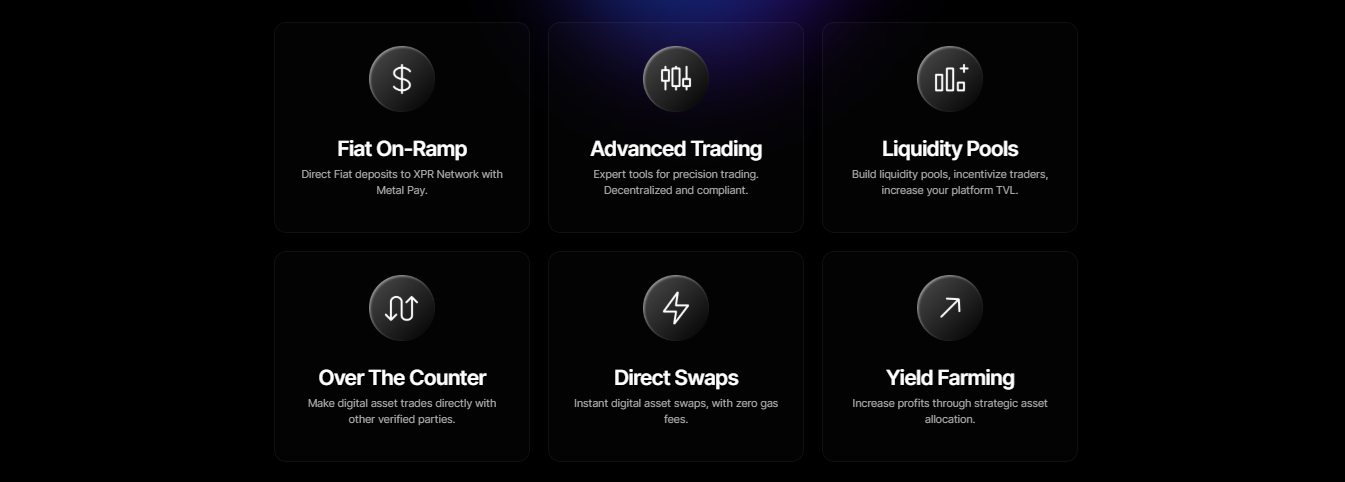
XPR Tokenomics
1. Initial Supply
-
Total initial supply: 10 billion XPR
2. Airdrops
-
151 million XPR distributed across the MTL and LNX communities
-
Snapshot taken on March 30, 2020
-
Five airdrop rounds delivered:
-
66M XPR to MTL holders
-
85M XPR to LNX holders
-
3. Venture Allocation
-
100M XPR allocated to early investors supporting the core developer.
4. Founder & Employee Incentives
-
1.1B XPR reserved for team compensation with a 12-month vesting schedule.
5. Development Fund
-
8.65B XPR allocated to long-term ecosystem development.
6. Phoenix Proposal (February 7, 2022)
Proposed by Marshall Hayner and approved by governance.
-
14B non-circulating tokens added to the ecosystem
-
Total non-circulating supply: 28B XPR
-
Circulating supply unchanged: 14B XPR
7. Post-Phoenix Allocation Plan (to enter circulation over 3 years)
-
Block Producers: 500M XPR
-
Community Programs: 2B XPR
-
Marketing: 1.5B XPR
-
Core Developer (Metallicus): 10B XPR

XPR Network Team
The project is backed by a highly experienced team.
Marshall Hayner — Co-Founder & CEO
-
Founder of QuickCoin and Block.io
-
Integrated Dogechain.info into Block.io
Glenn Mariën — Co-Founder & CTO
-
10+ years of full-stack development experience
-
Creator of Dogechain.info
Syed Jafri — VP of Engineering, Blockchain
-
Founder of Bloks.io
-
5+ years experience in blockchain and healthcare tech
Irina Berkon — CFO
-
Finance executive featured in Forbes
-
15+ years experience; licensed CPA

Official Links
You can also freely share your thoughts and comments about the topic in the comment section. Additionally, don’t forget to follow us on our Telegram, YouTube, and Twitter channels for the latest news and updates.