

 Emre Yumlu
Morgan Stanley strategists suggest that Bitcoin (BTC) has entered the “fall” phase of its four-year market cycle. Experts indicate that this period is an ideal time for investors to secure profits while preparing for a potential downturn, commonly referred to as a crypto winter.
Bitcoin Cycles and the “Fall” Analogy
Denny Galindo, an investment strategist at Morgan Stanley Wealth Management, compared Bitcoin’s price cycles to the seasons. In a podcast episode of Crypto Goes Mainstream, Galindo highlighted that historically, Bitcoin tends to follow a pattern of three upward trends followed by a corrective phase.
“We are currently in the fall season. Fall is harvest time, and it’s the right moment to lock in your gains,” he explained.
This seasonal framework reflects how major Wall Street players are increasingly viewing Bitcoin through a cyclical investment lens, similar to commodities or other macro liquidity-driven assets.
Technical Outlook: Signs of a Bear Market
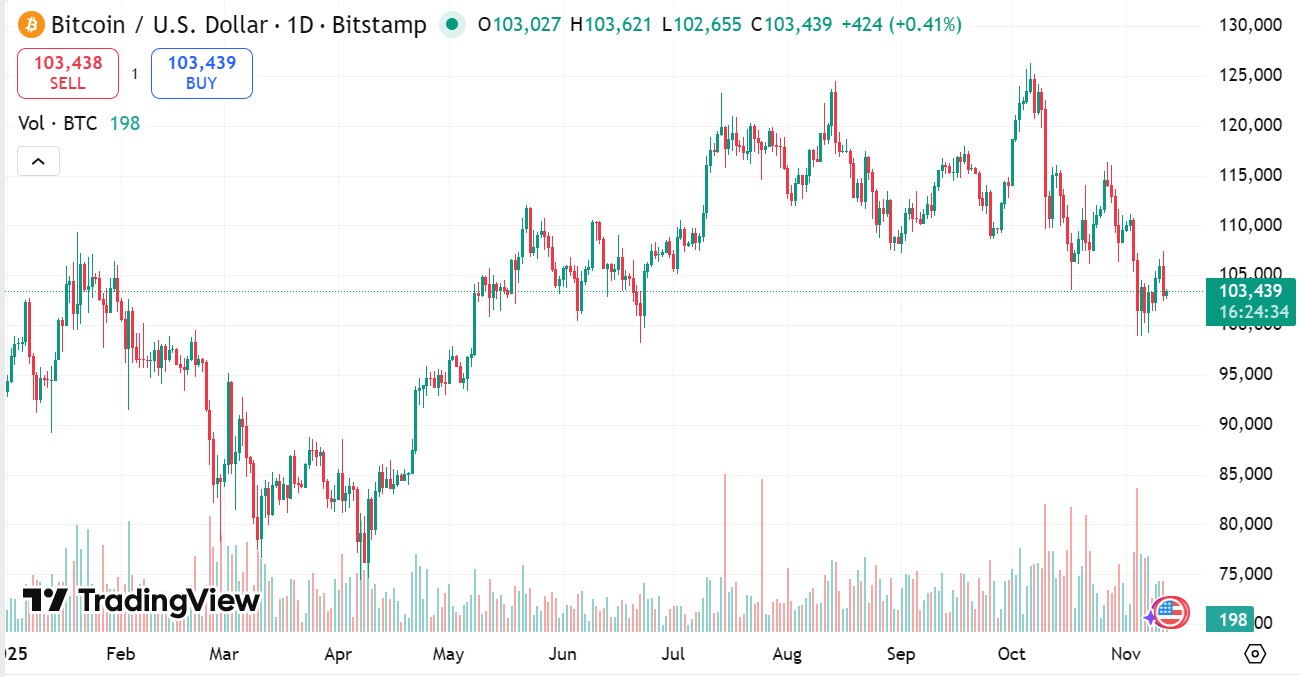
On November 5, Bitcoin dipped below $99,000, crossing a key macro indicator and signaling potential bearish momentum. Julio Moreno, head of research at CryptoQuant, noted that BTC falling below its 365-day moving average is a strong technical warning. Bitrue analyst Andri Fauzan Adziima referred to this decline as marking the official start of a technical bear market.
In addition, crypto market maker Wintermute highlighted a slowdown in liquidity inflows. The company pointed out that stablecoins, ETFs, and digital asset treasuries (DATs) have historically been the main sources of crypto market liquidity, and inflows from these components have now plateaued.
Institutions See Bitcoin as a Macro Hedge
Despite ongoing volatility, institutional investors remain positive about Bitcoin. Michael Cyprys of Morgan Stanley Research noted that some institutions view BTC as “digital gold” or a macro hedge against inflation and currency devaluation.
Cyprys emphasized that institutional allocations are typically slower-moving because large investors cannot quickly adjust strategies or portfolios due to internal governance, risk committees, and long-term mandates. However, growing regulatory clarity and ETF infrastructure have lowered barriers, increasing adoption.
Data from SoSoValue shows that U.S. spot Bitcoin ETFs now manage over $137 billion in net assets, while Ether ETFs exceed $22.4 billion. This illustrates the growing institutional interest and the expanding footprint of crypto within diversified portfolios.
You can also freely share your thoughts and comments about the topic in the comment section. Additionally, don’t forget to follow us on our Telegram, YouTube, and Twitter channels for the latest news and updates.