

 Yeliz Akmaca
Datagram Network is a decentralized communication infrastructure and dApp platform built on an Avalanche-based sovereign Layer 1 blockchain. It is multi-chain compatible (Ethereum, Solana, etc.) and supported by hundreds of thousands of nodes across 150+ countries. The network aims to overcome the cost, inefficiency, and centralization issues of traditional cloud infrastructure.
DGRAM brings the concept of a datagram, a connectionless and fast unit of data in traditional networks, into a decentralized environment. Powered by an AI-driven Hyper-Fabric Network, it enables real-time connectivity and DePIN cross-network interoperability. The network provides a foundational layer for users and decentralized applications to communicate securely, privately, and without reliance on a central authority, enhancing efficiency and reducing costs for Web3 applications, AI workloads, gaming, and real-time communication.
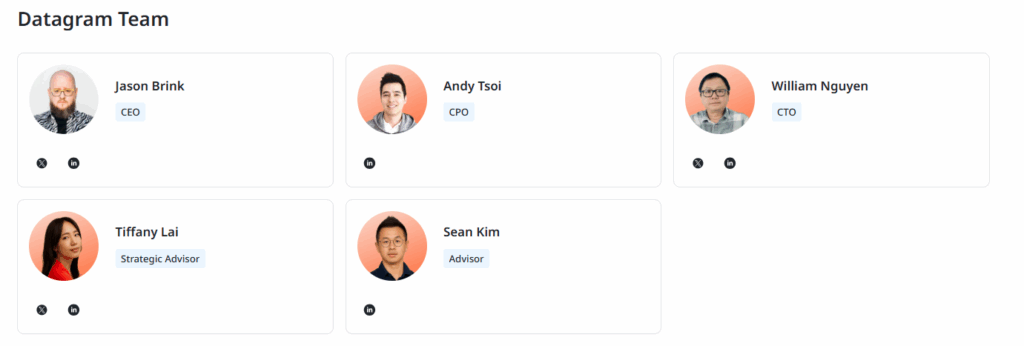
Team / Founders
Leadership Team
- Jason Brink: CEO (Chief Executive Officer)
- Advisors
- Tiffany Lai: Strategic Advisor
- Sean Kim: Advisor
Project Concept
Datagram Network’s core vision is to create a privacy-focused data transport layer through its AI-driven Hyper Network Layer. This infrastructure supports not only messaging but also a wide range of high-performance dApps such as gaming, AI/ML, and CDN, providing a fast and anonymous network foundation.
How the Project Works
Datagram operates through four main components:
Hyper Network Layer: AI-powered coordination system optimizing traffic routing, load balancing, and resource allocation in real time.
Datagram Core Substrate (DCS): Integrates existing DePIN projects into the network while offering additional computing, storage, and bandwidth resources.
Node Network: Composed of Full Core, Partner Core, Device Core, Hardened Core, and Consumer Core nodes forming the backbone of the network.
Node Operator Incentive Model: Node operators are rewarded based on uptime, performance, and actual usage.
The network is compatible with multiple blockchains, including EVM-based chains, and supports interoperability across DePIN networks.
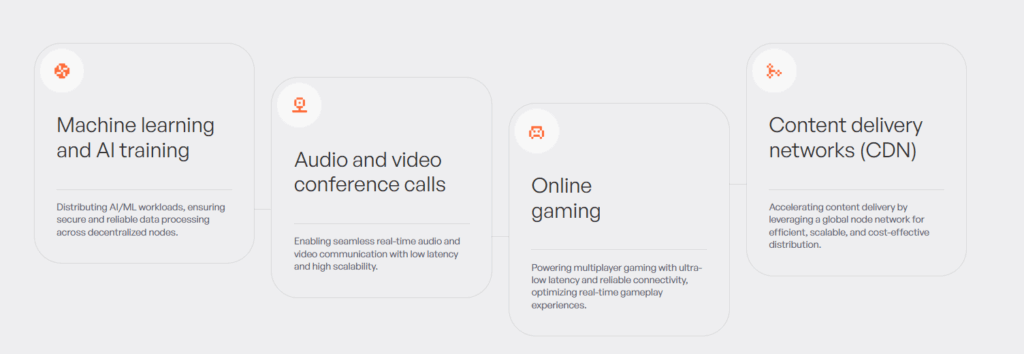
Key Use Cases
-
AI & Machine Learning – Secure, low-cost AI/ML computation across decentralized nodes.
-
Voice & Video Conferencing – Low-latency, uninterrupted real-time communication.
-
Online Gaming – Ultra-low latency for fast and reliable multiplayer connections.
-
Content Delivery Networks (CDN) – Fast, scalable, and decentralized content distribution through global nodes.
Investors and Strategic Partners
Lead Investor
BLIZZARD (Avalanche Ecosystem Fund): Lead of the funding round, supporting the Avalanche-based project and demonstrating cross-sector potential.
- Participants
- Animoca Brands: Leading investor in Web3 gaming and the metaverse.
- Cointelegraph: Renowned crypto media outlet.
- ISKRA
- AQUANOW
- DePIN X Capital: Focused on Decentralized Physical Infrastructure Networks (DePIN).
- AMBER
- ARCHE FUND
- Yellow Capital
- JDI
Governance
Datagram Network plans to transition to a Decentralized Autonomous Organization (DAO) where DGRAM token holders vote on the network’s development and parameters. Until then, the core development team manages technical and strategic decisions.
Roadmap
Datagram is growing in phases via testnet and mainnet:
-
Alpha Testnet: Early participants rewarded through the DPTS points system.
-
Mainnet: $DGRAM token distribution and Full Core node operations.
-
Integration of existing DePIN projects.
-
Rapid deployment of new DePIN projects.
-
AI-based traffic optimization and multi-chain integrations.
Token Use Cases
-
Transaction Fees (Gas): Payment for transactions, dApp interactions, and data transfers.
-
Governance (Staking): Token holders can stake DGRAM and participate in DAO votes.
-
Node Rewards: Node operators are compensated in DGRAM for securing the network and handling data.
-
Premium Features: Access advanced privacy or platform-specific features.
Token Information
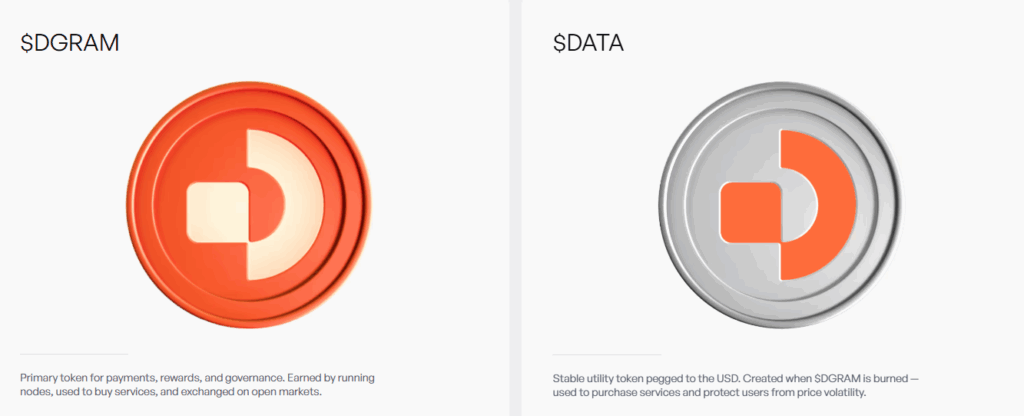
DGRAM is the native utility and governance token of Datagram Network. Pre-mainnet, $DATA represented earned points or virtual credits for node operators and community members prior to the TGE (Token Genesis Event).
- Token Name: $DGRAM
- Max Supply: 10 billion
- Total Supply: 10 billion DGRAM
- Circulating Supply: 2.09 billion DGRAM (post-TGE, November 18, 2025)
- Use: Node rewards, DePIN contributions, staking, and governance
Binance Alpha will be the first platform to list Datagram Network (DGRAM) tokens on November 18, 2025. Circulating supply becomes active with the TGE, and Full Core node operations will commence.
DGRAM Token Distribution
-
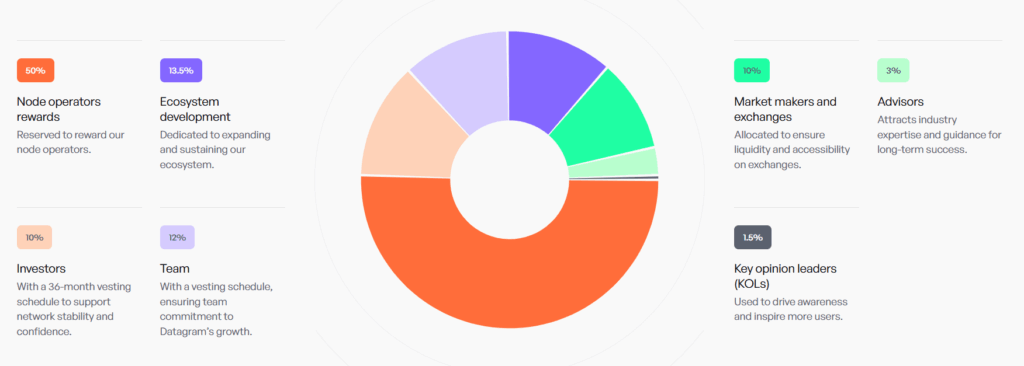
Node Operator Rewards: 50% – Incentivizing node operators for network security and data handling.
-
Ecosystem Development: 16% – For new dApps, tools, and community programs.
-
Team: 12% – Locked under vesting schedule to ensure team commitment.
-
Investors: 10% – Locked for 36 months.
-
Market Makers & Exchanges: 10% – For liquidity and accessibility.
-
Advisors: 3% – Expert guidance and industry support.
-
Key Opinion Leaders (KOLs): 1.5% – Raising awareness.
Ecosystem
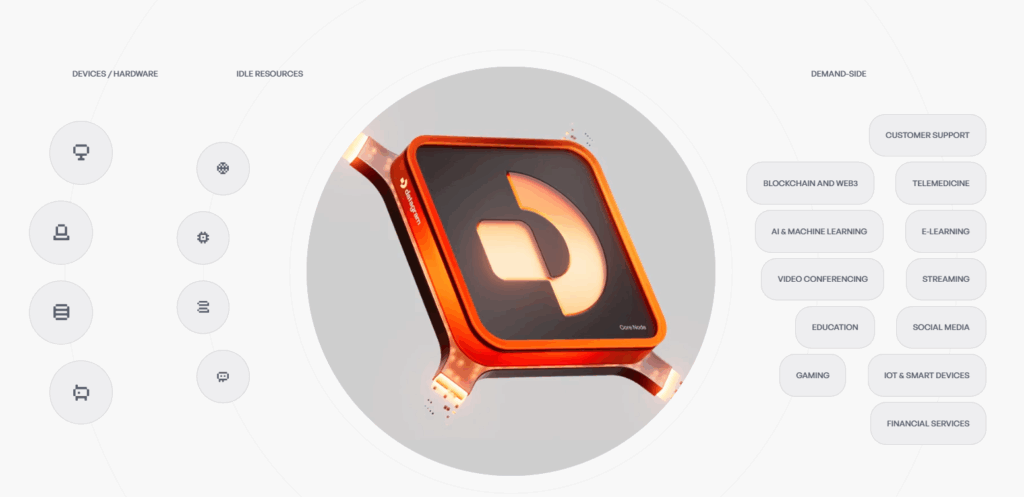
Datagram serves three main user groups:
-
Web2 & Web3 Enterprises: Access infrastructure without blockchain knowledge via API/SDK.
-
Existing DePIN Projects: Enhance and optimize resources via DCS.
-
New DePIN Initiatives: Fast deployment and scalable infrastructure.
Features
-
Blockchain-agnostic: Compatible with multiple blockchains.
-
AI-optimized: Low-latency, high-performance operation.
-
Secure & Private: Decentralized infrastructure with end-to-end encryption.
-
Cost-efficient: Utilizes idle resources effectively.
-
User-friendly: API and SDK offer Web2-style experience.
Datagram Network overcomes centralized cloud limitations to provide scalable, secure, and cost-effective infrastructure for Web3 and AI-powered real-time applications, establishing a comprehensive DePIN platform.
Official Links
You can also freely share your thoughts and comments about the topic in the comment section. Additionally, don’t forget to follow us on our Telegram, YouTube, and Twitter channels for the latest news and updates.