

 Emre Yumlu
After an extended period of distribution, signs are emerging that long-term selling pressure in the Bitcoin market may be approaching its limits. According to recent analysis from K33 Research, the sustained wave of sales driven by early Bitcoin holders appears to be losing momentum, suggesting a potential shift in market dynamics ahead.
Dormant Bitcoin Supply Is Gradually Reactivating
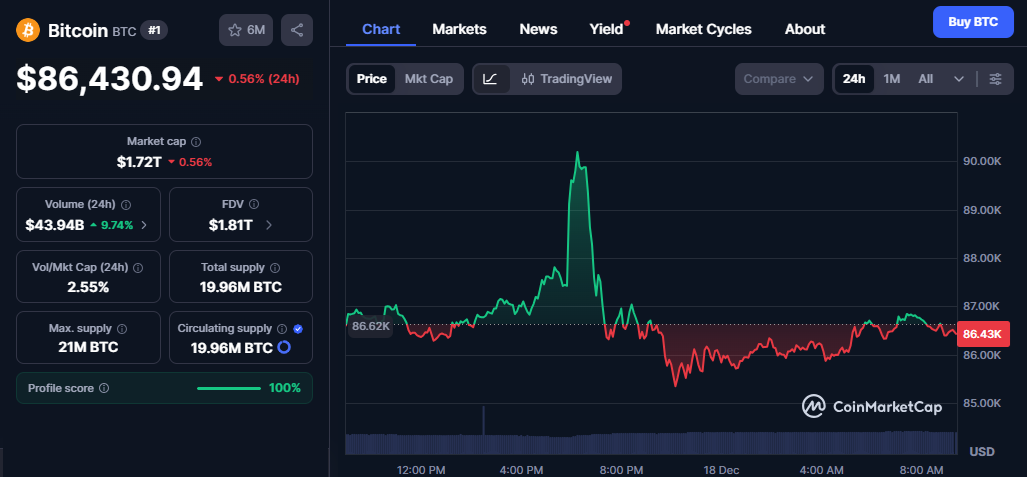
In a report dated December 16, K33 Research Director Vetle Lunde highlighted a steady decline in Bitcoin supply that had remained untouched for more than two years. Since 2024, approximately 1.6 million BTC have re-entered circulation. At current market prices, this represents roughly $138 billion in value.
Lunde interprets this movement as clear evidence of continued on-chain selling by long-term and early-stage investors. These holders, who accumulated Bitcoin at much lower price levels, have been using recent market conditions to realize profits.
More Than Just Technical Wallet Movements
One of the key takeaways from the report is that the scale of reactivated supply cannot be explained solely by technical factors. While events such as the conversion of the Grayscale Bitcoin Trust into an ETF, wallet consolidations, or security-related address changes account for part of the activity, K33 argues they fall short of explaining the full magnitude of the supply shift.
Instead, the data points to deliberate distribution, with long-term holders gradually transferring coins back into the market rather than simply reorganizing custody structures.
Historical Context and Institutional Liquidity
K33’s analysis places 2024 and 2025 among the largest years on record for long-term Bitcoin supply reactivation, ranking second and third after 2017. However, Lunde emphasizes that the current cycle differs fundamentally from previous ones.
While the 2017 cycle was largely driven by ICO participation, altcoin speculation, and protocol incentives, the present environment is shaped by deep institutional liquidity. U.S.-based spot Bitcoin ETFs and expanding corporate treasury demand have created conditions that allow large holders to execute direct, sizable sales with minimal market friction.
Several notable transactions underscore this trend, including an 80,000 BTC over-the-counter sale completed in July, a 24,000 BTC whale transaction in August, and an additional 11,000 BTC sold during the October–November period.
Supply Structure Shifts and Forward Outlook
K33 estimates that roughly $300 billion worth of Bitcoin aged over one year has returned to circulation this year alone. Increased institutional liquidity has enabled long-term investors to exit positions at six-figure price levels, reducing ownership concentration and establishing new reference prices across a meaningful portion of the circulating supply.
Looking ahead, K33 expects selling pressure to gradually ease. With nearly 20% of Bitcoin’s supply reactivated over the past two years, Lunde believes the distribution phase is nearing saturation. If this trend continues, the two-year Bitcoin supply could resume an upward trajectory by late 2026, signaling a transition toward a more durable demand-driven market structure.
You can also freely share your thoughts and comments about the topic in the comment section. Additionally, don’t forget to follow us on our Telegram, YouTube, and Twitter channels for the latest news and updates.