
 Emre Yumlu
While blockchain technology strives to solve scalability and performance issues, Altius stands out as an innovative infrastructure that directly addresses these problems through the execution layer. Altius offers a VM-agnostic and modular execution architecture that can integrate with any Layer-1, Layer-2, or application-specific chain, aiming to enable chains to achieve Web2-level performance.
Its core approach is to provide high performance without increasing hardware requirements. In this way, decentralization is not compromised, and a “future-proof” structure is created to meet the long-term performance needs of networks.
What is Altius, what does it do? Let’s examine it in detail.
What is Altius?
Altius’s mission is to solve scalability and interoperability in blockchain ecosystems at the execution layer. The project, focused on a multi-chain future, aims to build a system where different networks can share a common execution infrastructure.
This vision is shaped around three main goals:
- Continuously updatable, efficient scaling solutions
- Natural cross-chain interoperability
- Incentive mechanisms for developers building applications suitable for parallel processing
Altius Stack: Modular Execution Infrastructure
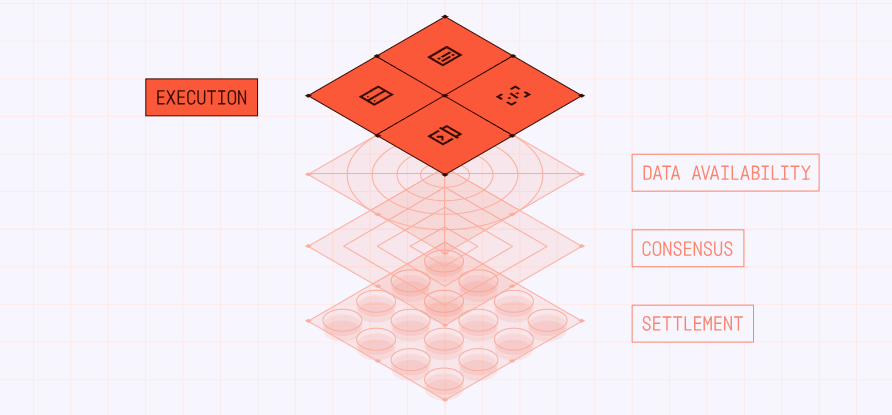
Altius Stack modularizes the execution layer by separating it from a single monolithic structure. Consensus, data availability, and execution components are decoupled from each other. This allows existing L1 and L2 networks to achieve performance gains without radically changing their architectures.
The stack’s key difference is its compatibility with different virtual machines (EVM, MoveVM, CosmWasm, etc.) and its customizability according to the needs of chains.
Technical Architecture: Three Main Pillars
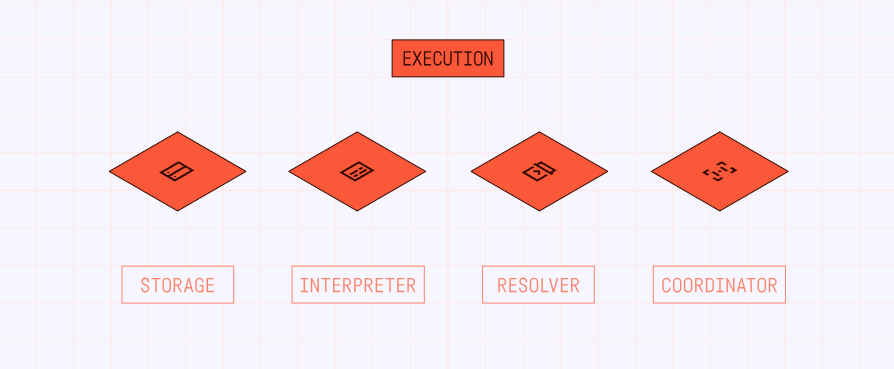
Altius’s efficiency in the execution layer is built on three main technical components.
Parallel Scalable Storage
In traditional blockchains, state data is typically managed with disk-based Merkle-Patricia trie structures. This approach causes serious I/O bottlenecks as transaction volume increases.
Altius solves this problem with a sharded architecture called Scalable State Merkle Trie (SSMT). State data is divided into shards based on key prefixes and processed in parallel across distributed nodes. Thanks to memory-priority design and distributed cache mechanisms, latency is significantly reduced.
In tests with Ethereum mainnet data:
- I/O load is reduced by up to 50%
- Multi-fold performance improvements in TPS and GPS metrics
Instruction-Level Parallelism (ILP)
Most blockchains still execute transactions sequentially. This can cause even a small conflict to trigger re-execution of the entire transaction.
Altius parallelizes instructions rather than transactions. It analyzes smart contract bytecode using the Static Single Assignment (SSA) method and executes independent instructions concurrently. In case of a conflict, only the relevant instructions are re-executed.
This approach:
- Reduces re-execution costs
- Maximizes resource utilization
- Significantly reduces latency
According to test results, selective re-execution can provide up to 75% efficiency in gas costs.
Application Code Assessor (ACA)
Altius not only optimizes the infrastructure but also encourages developers to write contracts suitable for parallel execution.
The ACA module regularly analyzes smart contracts to measure:
- Transaction parallelism degree
- Gas efficiency
- Conflict rates
and rewards high-efficiency applications.
Thanks to the Deterministic Optimistic Concurrency Control (OCC) mechanism, operations suitable for parallel execution can achieve very high speedup factors. In conflict-free scenarios, hundreds of times performance improvement becomes possible.
Layer-1 and Layer-2 Integration
Altius Stack works compatibly with both classic L1 architectures and modern chains where consensus and execution are separated.
- Classic L1s: Altius accelerates block production and reduces bottlenecks.
- Decoupled architectures: Deterministic parallel execution ensures consistent results across all nodes.
- L2 solutions: Settlement and data availability layers can be customized.
Open Execution Network (OEN)
One of Altius’s long-term goals is to make the execution layer fully permissionless and decentralized. With the Open Execution Network, any participant will be able to provide execution services by contributing computing resources to the network.
In this model:
- Executors stake tokens
- Faulty or malicious behavior is punished with slashing
- Cross-chain execution is naturally supported
This structure aims to eliminate single points of failure in the execution layer.
Why is Altius Important?
What sets Altius apart from similar scalability projects is that it doesn’t just promise faster transactions; it delivers this speed with a sustainable and chain-independent architecture. While most solutions trade off decentralization or hardware requirements to increase performance, Altius designs a structure that works on standard hardware and is compatible with different chains. This approach enables both newly established chains to scale quickly and existing networks to be strengthened without architectural breaks.
In the long term, turning the execution layer into a “shared resource” could create a significant paradigm shift in the blockchain ecosystem that reduces costs and accelerates innovation.
Roadmap
Altius’s planned milestones are as follows:
- 2025 Q1: EVM-compatible L1 and L2 integrations
- 2025 Q2: Multi-VM support
- 2025 Q4: Shared Execution Layer
- 2026 Q4: Transition to Open Execution Network
Altius Investors
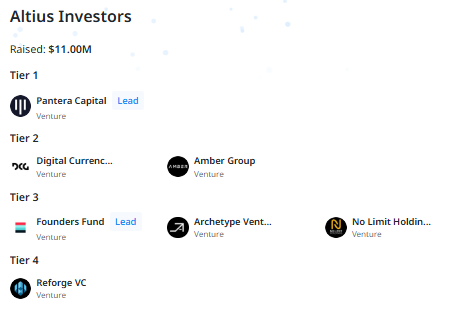
Altius has raised a total of $11 million in funding to date. Investors include prominent funds in the sector such as Pantera Capital, Digital Currency Group, Amber Group, Founders Fund, and Archetype Ventures.
Altius Team
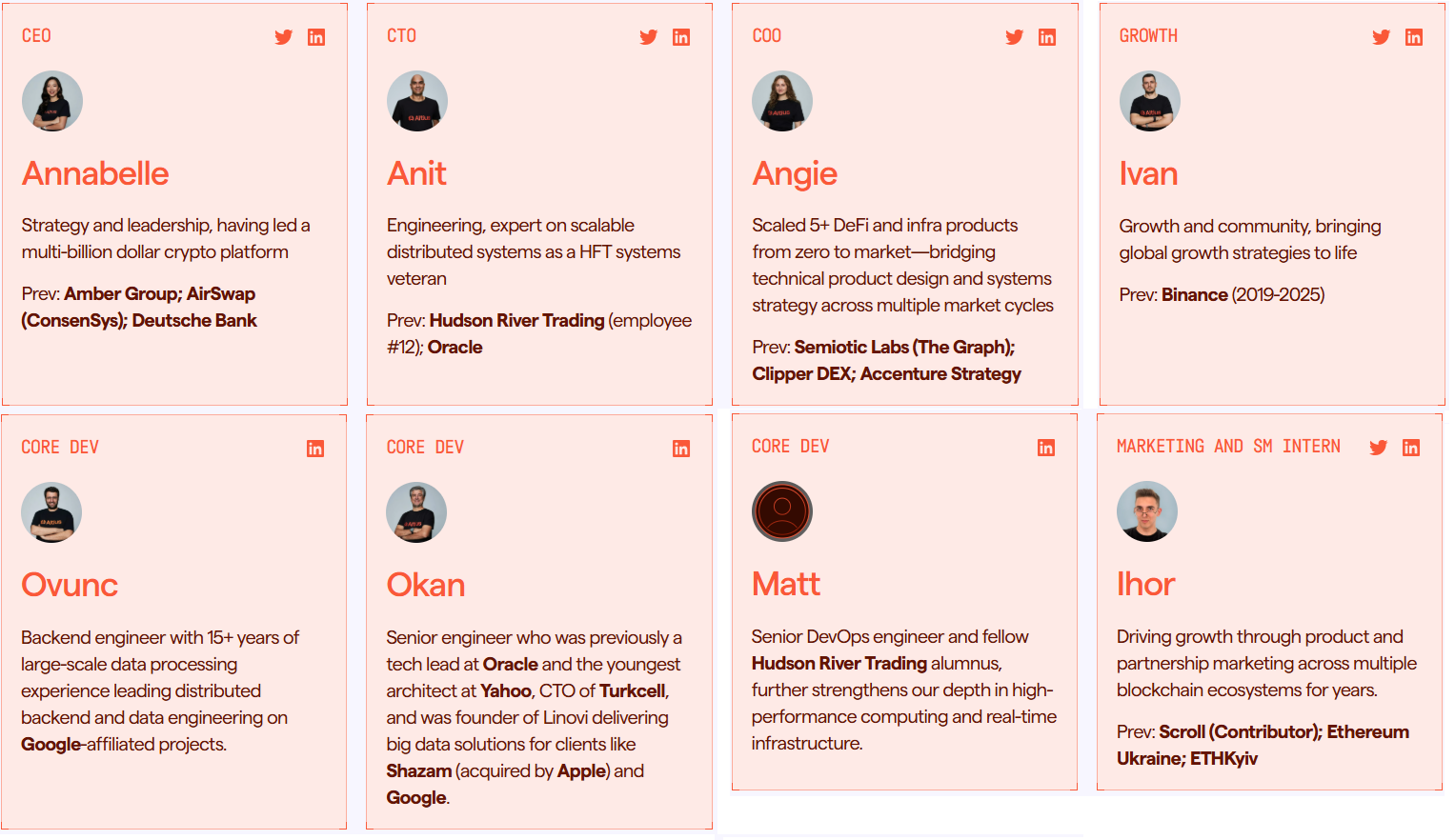
Altius is managed by a team experienced in financial infrastructure and high-performance systems.
- CEO – Annabelle: Has leadership experience in billion-dollar platforms in crypto and finance.
- CTO – Anit: Expert in high-frequency trading systems and scalable distributed architectures.
- COO – Angie: Has multi-market cycle experience in scaling DeFi and infrastructure projects from scratch.
- Growth – Ivan: Expert in global growth and community strategies.
- Core Developers: Ovunc, Okan, and Matt; have years of experience in large-scale data processing, distributed systems, and high-performance infrastructures.
Official Links
In the comment section, you can freely share your comments about the topic. Additionally, don’ t forget to follow us on Telegram, YouTube, and Twitter for the latest news and updates.