

 Emre Yumlu
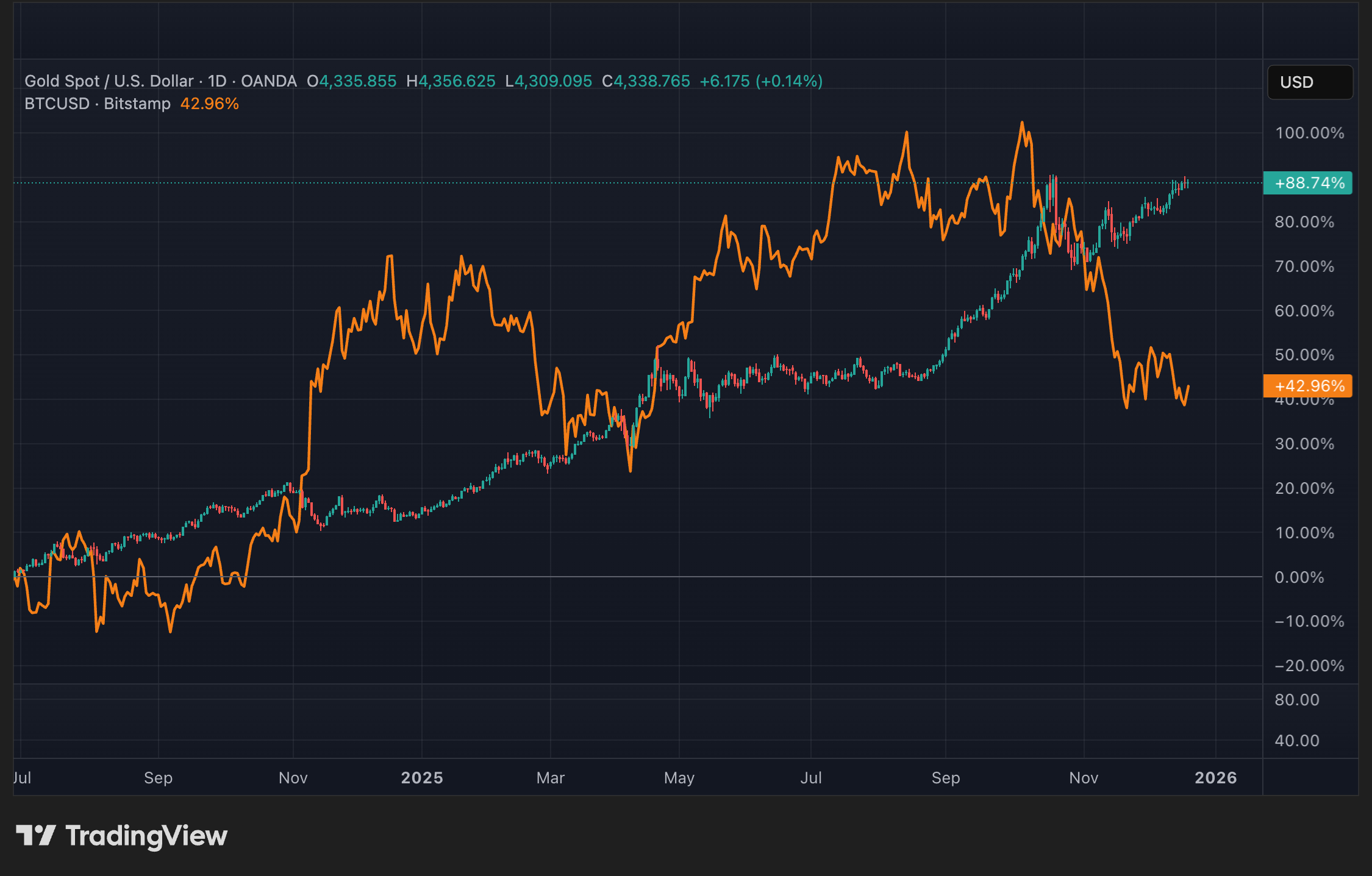
With gold prices climbing above $4,000 per ounce, investors have once again revived the long-running debate: Bitcoin or gold? While the surge in precious metals has pushed some market participants to reconsider their allocations, Bitcoin advocate and market analyst Matthew Kratter argues that this rally alone is not a sufficient reason for BTC holders to rotate into gold. According to Kratter, Bitcoin’s structural advantages make it a stronger long-term store of value than gold.
Supply Dynamics Matter More Than They Seem
One of Kratter’s core arguments centers on supply growth. Gold is often perceived as scarce, yet its global supply continues to expand by roughly 1%–2% annually. At first glance, this may appear negligible. However, when viewed over long time horizons, it implies that total gold reserves effectively double every few decades.
Moreover, gold supply is not immune to shocks. History provides multiple examples where sudden discoveries of large deposits disrupted economic stability. A notable case occurred in the 16th century, when vast amounts of gold flowing from the Americas into Europe triggered inflationary pressures that contributed to the decline of major empires such as Spain and Portugal.
Bitcoin, by contrast, operates under a strictly defined monetary framework. Its maximum supply is permanently capped at 21 million coins, a rule embedded in the protocol itself. This absolute scarcity, combined with transparent issuance, gives Bitcoin a predictability that gold cannot fully match.
Physical Gold in a Digital Economy
Kratter also highlights the operational limitations of physical gold. Transporting, storing, and insuring significant quantities of gold is costly and logistically complex. In today’s highly regulated and surveilled global environment, moving meaningful amounts of gold across borders has become increasingly difficult.
These constraints make gold poorly suited for a digitally native financial system. Unlike Bitcoin, gold cannot be transferred instantly across the internet. Bitcoin’s ability to move value globally within minutes offers a clear advantage in an economy that increasingly relies on digital infrastructure.
Are Tokenized Gold Products the Answer?
The rise of tokenized gold products is often presented as a solution to these challenges, but Kratter remains skeptical. Such instruments typically rely on custodians holding physical gold while issuing digital representations on a blockchain. This structure introduces counterparty risk, including concerns over reserve transparency, redemption limitations, or potential government intervention affecting stored assets.
As a result, tokenized gold may replicate many of the same vulnerabilities found in traditional financial systems, rather than eliminating them.
A Long-Term Perspective
While the discussion between gold and Bitcoin is unlikely to end anytime soon, Kratter maintains that Bitcoin is better aligned with the needs of a modern, digital economy. Its portability, divisibility, verifiability, and fixed supply position it as a compelling alternative to traditional stores of value. From this perspective, short-term rallies in gold do not undermine Bitcoin’s long-term value proposition.
This content is not investment advice.
You can also freely share your thoughts and comments about the topic in the comment section. Additionally, don’t forget to follow us on our Telegram, YouTube, and Twitter channels for the latest news and updates.