

 Haciyev Reşit
After years of volatility, Ethereum’s long-term structure is emerging as one of the most important factors that will determine its next major move. Unlike Bitcoin, Ethereum follows a different path, standing out with its higher volatility and narrative-driven price action. As 2026 approaches, ETH’s position at a technically important zone is prompting investors to ask a key question: Is Ethereum preparing for a major cycle move, or entering a prolonged consolidation phase?
Ethereum’s Long-Term Price Structure
The weekly ETH chart shows that despite major crashes over the years, Ethereum has continued to respect its long-term ascending trend line. Historically:
- ETH rallies tend to be sharper than Bitcoin’s
- Corrections are deeper and faster
- Long-term trend lines repeatedly act as accumulation zones
During bull markets, ETH often delivers explosive rallies and can outperform Bitcoin. In bear markets, however, drawdowns can be severe, sometimes exceeding 70%. These cycles make Ethereum more sensitive to market sentiment, liquidity conditions, and shifts in narrative—especially during periods of upgrades, scaling developments, and ecosystem growth.
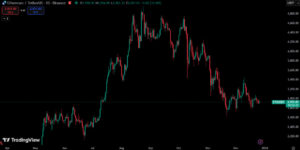
Ethereum’s Technical Position Heading Into 2026
As 2026 approaches, Ethereum is trading close to its long-term rising support line but remains below key historical resistance levels. Following previous expansion phases, the market is now experiencing a cooling of momentum, placing ETH in a critical decision zone.
This area represents a point where price could either break upward by reclaiming major resistance levels or enter a broader consolidation phase to establish long-term balance. Historically, volatility compression often occurs in such decision zones and tends to precede major moves in ETH. This highlights the importance for investors of focusing on long-term trends and support–resistance dynamics rather than short-term price swings.
Ethereum Scenarios for 2026
Bullish Scenario: If liquidity increases and risk appetite improves, Ethereum could reclaim key resistance levels. A breakout above long-term ranges may trigger a renewed uptrend, during which ETH could potentially outperform Bitcoin under favorable market conditions. In this scenario, 2026 would not represent a market peak, but rather a continuation year within a larger cycle.
Bearish / Consolidation Scenario: If macroeconomic pressures persist and liquidity conditions remain tight, Ethereum may trade within a defined range for much of the year, repeatedly testing long-term support zones. Historically, before major breakouts, ETH has often gone through extended periods of sideways movement. Therefore, investors are advised to focus on long-term trend behavior rather than short-term volatility.
What History Suggests for Ethereum in 2026
Looking at previous cycles, Ethereum has rarely experienced a complete structural breakdown of its long-term trend. Major ETH rallies typically begin after prolonged periods of disappointment and stagnation. Long-term investors often continue to accumulate during these quiet, sideways phases. This pattern suggests that 2026 may be less about an immediate explosive rally and more about positioning and preparation ahead of a larger move in the following phases of the cycle.
You can also freely share your thoughts and comments about the topic in the comment section. Additionally, don’t forget to follow us on our Telegram, YouTube, and Twitter channels for the latest news and updates.