
 Yeliz Akmaca
Xertra (STRAX) is a Layer-1 blockchain platform built on the engineering legacy of Stratis, which has been active in the blockchain ecosystem since 2016. Its primary goal is to enable enterprises, financial institutions, and public organizations to adopt decentralized technology in full compliance with regulatory frameworks.
The platform is not just a cryptocurrency; it provides infrastructure for companies, governments, and developers to create regulation-compliant smart contracts and applications. With Ethereum Virtual Machine (EVM) compatibility and Layer-2 high-speed solutions, it targets both scalability and enterprise integration. STRAX is the native token powering the Xertra ecosystem.
Xertra is more than a mere rebrand; it modernizes Stratis’ original C# architecture for contemporary Web3 requirements, aiming to reduce legal and technical barriers for corporate blockchain adoption.

Team and Founders
Xertra is managed by Stratis Group Ltd., based in the United Kingdom.
-
Chris Trew (CEO & Founder): Over 20 years of experience in technology and enterprise software. Founded Stratis to bring blockchain solutions to the C#/.NET ecosystem.
-
Development Team: Enterprise blockchain engineers and fintech specialists. Known for transparency and professional backgrounds, providing credibility rarely seen in blockchain projects.
Project Idea
Xertra focuses on two main reasons companies avoid blockchain: regulatory complexity and technical difficulty.
The platform’s approach:
“Develop in the languages you know (C#), we handle compliance and regulatory management in the background.”
Core pillars of the vision:
-
For Developers: Zero-Knowledge (ZK) and gasless transactions (Zero) remove technical barriers, allowing creative freedom.
-
For Enterprises: Regulation-compliant payment gateways (Pay) and corporate identity solutions ensure secure integration.
-
For Communities: Digital asset ownership (NFT/Metaverse) becomes functional value within the ecosystem, not just speculation.
Investors and Partnerships
Xertra prioritizes strategic partnerships over large VC funding:
-
Binance & Binance TR: STRAX listing and payment infrastructure integration.
-
Travala: STRAX-based payments for travel services.
-
ChainPort: Cross-chain asset transfers and technical integration.
-
Stablecoin Partnerships: Legal-compliant EUR-backed stablecoins for the European market.
This strategy emphasizes adoption and integration over financial speculation.
How the Project Works
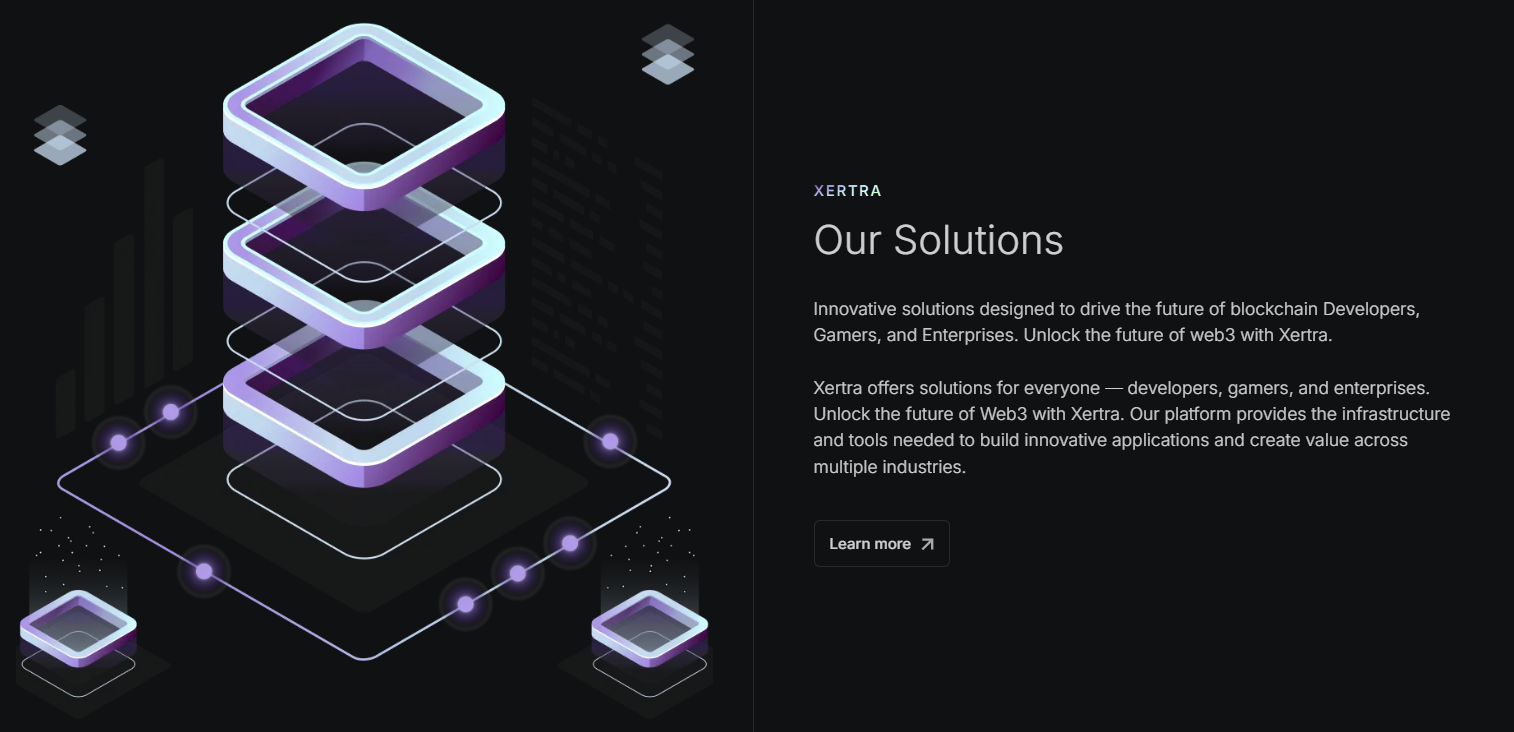
Xertra’s architecture is three-layered and hybrid:
-
StratisEVM: Enables Ethereum projects to migrate to Xertra without code modifications.
-
Zero-Knowledge Layer: Powered by Verium, accelerates transactions, lowers costs, and ensures privacy.
-
Masternode Structure: High-performance nodes lock STRAX to maintain network security.
Governance
STRAX holders gain voting power by locking tokens for defined periods. Voting covers: protocol upgrades, ecosystem fund allocation, and feature additions. The model emphasizes controlled, sustainable governance rather than fully decentralized community management.
Roadmap (2026 Outlook)
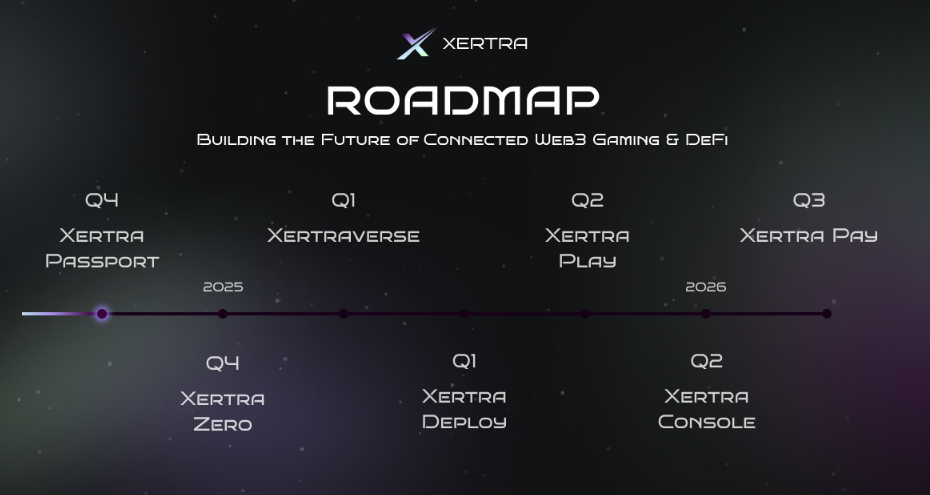
Xertra integrates Web3 Gaming and DeFi with a phased growth strategy:
-
2024: Passport and Zero modules deployed (user identity and low transaction fees).
-
2025 Q1: Xertraverse & Xertra Deploy (Metaverse integration and Sidechain/dApp setup tools).
-
2025 Q2: Xertra Play (Gaming ecosystem integration).
-
2026 Q2: Xertra Console (centralized management dashboard).
-
2026 Q3: Xertra Pay (corporate crypto payment gateway).
Token Use Cases
STRAX is the backbone of the Xertra ecosystem:
-
Transaction Fees: Required for all transfers and smart contract executions.
-
Staking & Masternodes: Rewards for securing the network.
-
Governance: Essential for participation in votes.
Token Information
-
Token Name: STRAX
-
Total Supply: 2.11B STRAX
-
Circulating Supply: 2.04B STRAX
-
Max Supply: Unlimited
-
Use Case: Utility + Governance
-
Network: Stratis Layer-1
-
Consensus: Proof-of-Stake
Note: Unlimited max supply allows network growth via staking and ecosystem incentives, which may impact inflation and liquidity.
Token Distribution
-
Community & Swap: Over 95% migrated from STRAT token holders.
-
Ecosystem Development: Grants for developers and new projects.
-
Future Reserves: Locked for long-term operational sustainability.
Ecosystem
Validator Launchpad supports decentralization, allowing participants to become validators and earn rewards. Key active modules:
-
StraxSwap: Native DEX
-
Ticketsphere: NFT-based corporate ticketing
-
Solplex: Web3 game development kit
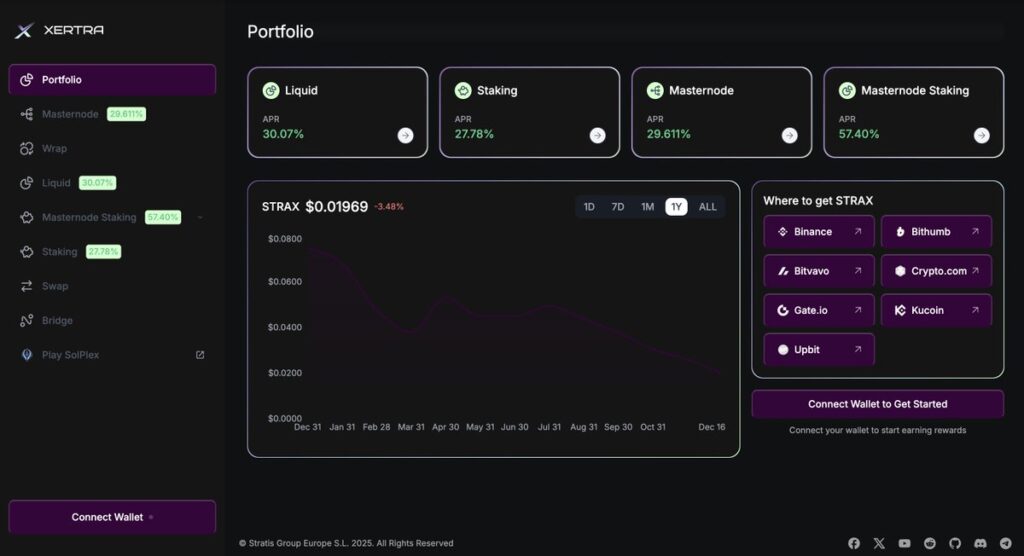
Exchanges & Liquidity: STRAX is listed on Binance, Upbit, Bithumb, KuCoin, and Crypto.com, providing high liquidity and global access.
DeFi & Bridging: StraxSwap enables decentralized trading; ChainPort allows cross-chain asset transfers.
Staking & Security: Launchpad and Stratis Launcher provide ~27.9% APR for validators.
Real-World Use & Gaming: Binance Pay, Travala, and Solplex enable enterprise payments and P2E gaming use.
Tools & Modules
-
Xertra Pay: Enterprise crypto payment gateway
-
Xertra Deploy: Sidechain and dApp deployment toolkit
-
Xertra Play: Gaming integration module
-
Xertra Verse: Metaverse & digital asset management
-
Xertra Console: Unified management dashboard
Key Features
-
Microsoft-Friendly: Accessible to .NET developers
-
Cost Advantage: Lower fees compared to Ethereum
-
Reliability: Battle-tested team since 2016
Official Links,
Also, in the comment section, you can freely share your comments and opinions about the topic. Additionally, don’t forget to follow us on Telegram, YouTube and Twitter for the latest news and updates