

 Emre Yumlu
Recent macroeconomic data from the United States has reshaped short-term market dynamics, strengthening the US dollar while putting pressure on precious metals. As expectations for an imminent interest rate cut by the Federal Reserve (Fed) continue to fade, gold and silver have entered a corrective phase following record-breaking rallies.
Gold Pulls Back After Historic Highs
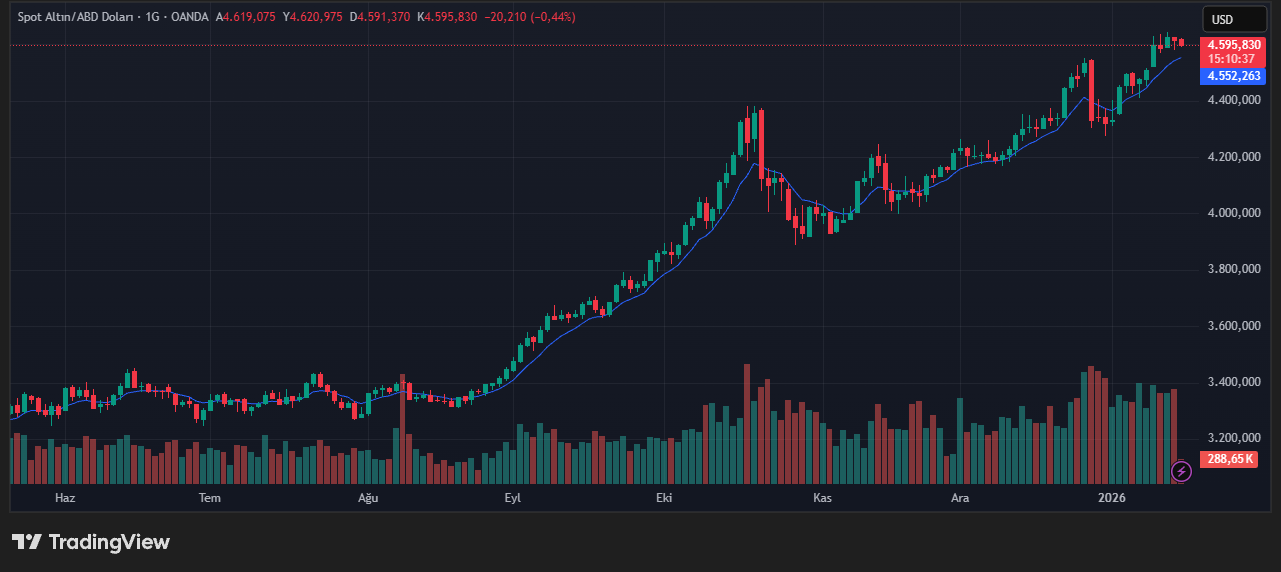
Spot gold prices slipped by around 0.4% during the final trading session of the week, falling to approximately $4,595 per ounce. Despite this decline, gold remains on track to close the week with nearly a 2% gain, supported by its surge to an all-time high of $4,642 earlier in the week. On the futures side, February US gold contracts edged 0.5% lower, trading near the $4,601 level.
The recent pullback is widely viewed as a technical correction rather than a reversal of the broader trend, following an extended period of strong upward momentum.
Shifting Expectations Around Fed Policy
One of the key drivers behind gold’s short-term weakness has been the growing belief that the Federal Reserve is under no immediate pressure to begin cutting interest rates. Strong US economic indicators suggest that current monetary conditions may remain in place longer than previously anticipated. This outlook tends to weigh on non-yielding assets like gold, as higher interest rates increase the opportunity cost of holding precious metals.
US Labor Data Boosts the Dollar
Data from the US Department of Labor showed weekly initial jobless claims falling to 198,000, significantly below market expectations. This stronger-than-expected labor market performance reinforced confidence in the US economy and supported the dollar, which is now heading toward its third consecutive weekly gain.
A firmer dollar typically makes dollar-denominated commodities more expensive for international buyers, contributing to downward pressure on gold, silver, and other precious metals.
Reduced Geopolitical Tensions Limit Safe-Haven Demand
Another factor dampening demand for safe-haven assets has been a relative easing of geopolitical risks. Developments in the Middle East, combined with more measured rhetoric from US leadership, have helped calm investor concerns. As a result, capital flows have shifted modestly toward riskier assets, reducing immediate demand for gold.
ETF Flows and Performance of Other Metals
Despite short-term price weakness, investor interest in gold-backed exchange-traded funds remains robust. Holdings at SPDR Gold Trust climbed above 1,074 tons, marking the highest level seen in several years and signaling continued long-term confidence in gold.
Silver prices also retreated after reaching historic highs, though the metal is still poised to record a double-digit gain on a weekly basis. Meanwhile, platinum and palladium have come under heavier selling pressure, underperforming both gold and silver in the current environment.
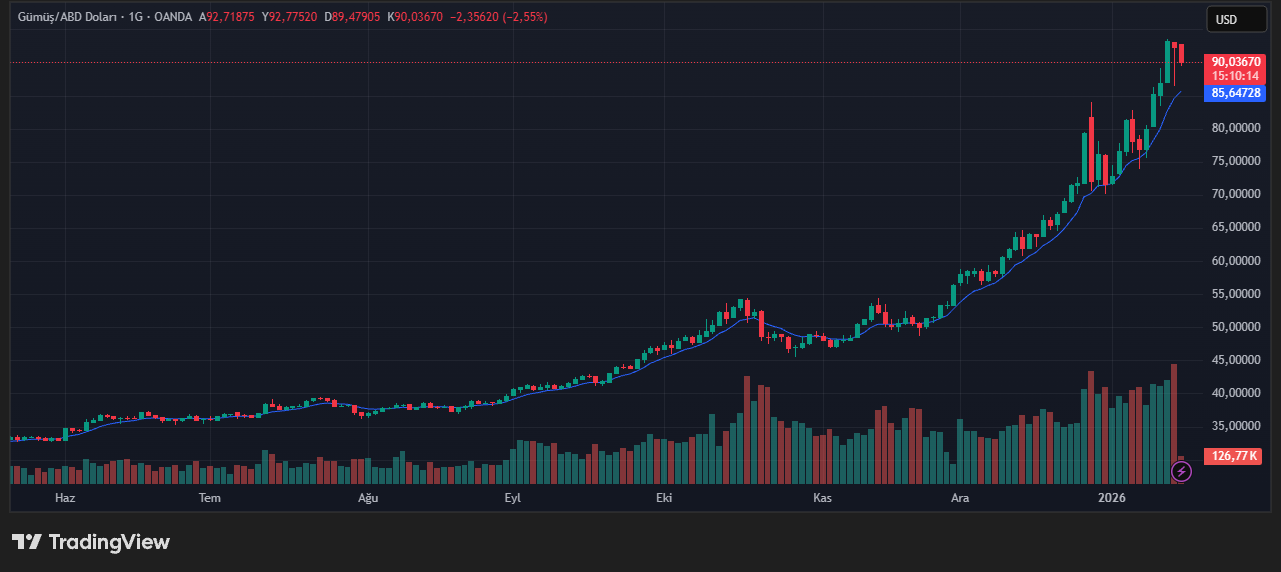
Overall, strong US data and easing geopolitical concerns have tilted the balance in favor of the dollar, while precious metals undergo a temporary consolidation phase following an exceptional rally.
*This content does not constitute investment advice.
You can also freely share your thoughts and comments about the topic in the comment section. Additionally, don’t forget to follow us on our Telegram, YouTube, and Twitter channels for the latest news and updates.