

 Emre Yumlu
Despite a sharp downturn across digital asset markets in recent months, not everyone believes the current phase resembles past crypto bear cycles. According to Chainlink co-founder Sergey Nazarov, this drawdown highlights how much the industry has matured rather than signaling structural weakness.
Since peaking at approximately $4.4 trillion in October, the total crypto market capitalization has fallen by around 44%, wiping out close to $2 trillion in value in just four months. While the scale of the decline appears severe on the surface, Nazarov argues that the underlying dynamics differ meaningfully from previous downturns.
No Systemic Failures This Time
One of the most striking differences, according to Nazarov, is the absence of major institutional collapses. In contrast to the 2022 cycle—defined by failures of centralized exchanges and crypto lending platforms—this downturn has not produced large-scale bankruptcies or cascading risk management breakdowns.
This resilience suggests that crypto infrastructure and institutional participants are better equipped to handle volatility. The fact that core market structures remain intact indicates that the ecosystem has strengthened its risk controls and operational foundations over time.
Real-World Asset Tokenization Keeps Expanding
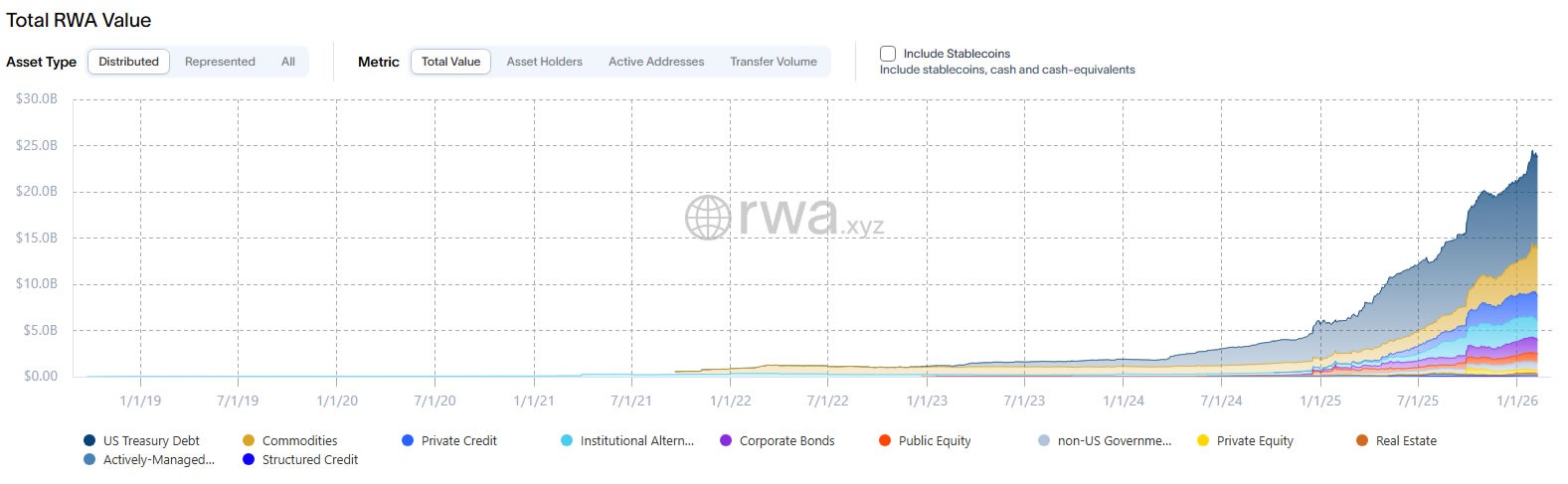
Another key factor separating this cycle from earlier bear markets is the continued growth of tokenized real-world assets (RWAs). Even as crypto prices remain under pressure, RWA tokenization and on-chain derivatives tied to traditional commodities continue to scale.
On-chain data shows that the total value of tokenized real-world assets has increased by roughly 300% over the past 12 months. This trend underscores that certain blockchain use cases are no longer tightly linked to speculative price movements and can grow independently based on real economic utility.
Prices Lag, Infrastructure Advances
While these structural developments are accelerating, they have not yet translated into price strength for all related assets. Chainlink’s native token, LINK, has declined approximately 67% from its October peak and remains more than 80% below its 2021 all-time high.
However, Nazarov emphasizes that long-term value creation is being driven by infrastructure rather than short-term market sentiment. Features such as 24/7 on-chain markets, transparent collateralization, and real-time data availability are increasingly attractive to institutional participants.
Not All Bear Markets Are the Same
These observations align with a broader view emerging among some institutional analysts who describe the current downturn as one of the weakest bear scenarios in Bitcoin’s history. Rather than reflecting systemic failure, the decline appears driven largely by confidence issues and broader macroeconomic conditions.
Taken together, the current environment suggests that while prices remain under pressure, the crypto industry continues to evolve beneath the surface—potentially reshaping its long-term role in global financial markets.
You can also freely share your thoughts and comments about the topic in the comment section. Additionally, don’t forget to follow us on our Telegram, YouTube, and Twitter channels for the latest news and updates.