

 Emre Yumlu
Expectations that Bitcoin (BTC) could climb to $150,000 by year-end continue to circulate across the market. While the target is ambitious, it is not entirely unrealistic. However, for such a move to materialize, several technical and macroeconomic conditions must align. The current corrective phase suggests that Bitcoin is at a pivotal juncture, where key structural signals will determine whether a new bull cycle can take shape.
The 200-Week Moving Average: A Structural Foundation
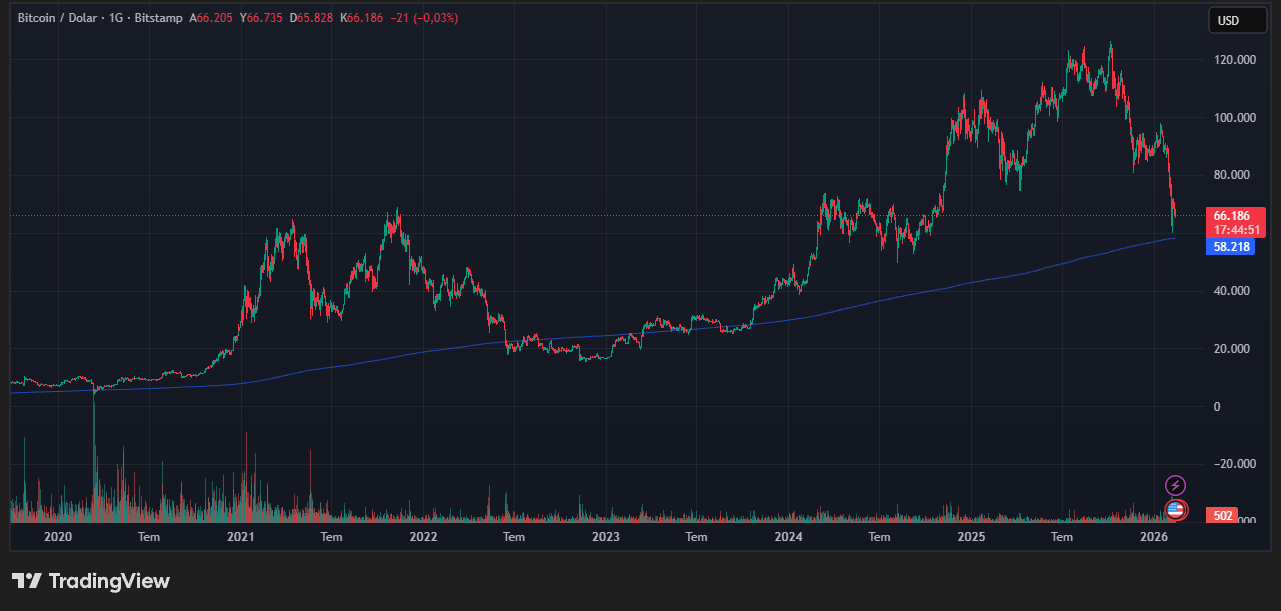
Historically, Bitcoin’s 200-week simple moving average (SMA) has marked the transition point between prolonged bear markets and the beginning of new expansion phases. In both 2015 and 2018, price action stabilized near this long-term trend line before launching multi-year uptrends.
Although the 2022 bear market briefly pushed Bitcoin below this level, the breakdown did not evolve into sustained capitulation. Holding above the 200-week SMA today would significantly reduce the probability of another 2022-style collapse and keep the broader bullish structure intact.
New Investor Flows Must Reverse
Durable bull markets are typically fueled by fresh capital entering the ecosystem. Pullbacks tend to attract new participants rather than trigger persistent outflows. Currently, however, wallets associated with first-time and short-term holders reflect approximately $2.7 billion in cumulative net outflows — the largest since 2022.
In previous cycles, including 2020, 2021, and 2022, sustained upside momentum only resumed once new-investor flows turned decisively positive. For a strong bullish case to develop in 2026, a similar reversal will be necessary. Early signs, such as renewed positive ETF net inflows, could indicate that sidelined capital is gradually returning.
USDT Dominance Needs to Decline
Tether (USDT) dominance has recently climbed into the 8.5%–9% range of total crypto market capitalization. Rising stablecoin dominance typically signals defensive positioning, with investors preferring cash equivalents over volatile assets.
Historically, pullbacks from this resistance zone have coincided with powerful Bitcoin rallies. Previous rejections were followed by gains of 76% and 169%, respectively. For a new bull phase to emerge, capital rotation from stablecoins back into Bitcoin will likely be a key catalyst.
Quantum Concerns and Market Confidence
Debates surrounding the long-term quantum computing threat to Bitcoin’s cryptography continue to surface. Some estimates suggest roughly 25% of addresses could be theoretically vulnerable. However, security experts argue that meaningful risk remains decades away, potentially 20–40 years.
Even so, visible progress toward quantum-resistant upgrades would strengthen investor confidence. Ongoing initiatives focused on long-term network security could play a critical role in restoring broader conviction.
Federal Reserve Policy as a Catalyst
On the macro front, at least two Federal Reserve rate cuts in 2026 could meaningfully improve Bitcoin’s outlook. Lower interest rates reduce the attractiveness of yield-based instruments such as U.S. Treasurys and often redirect capital toward risk assets, including cryptocurrencies.
In summary, a move toward $150,000 remains technically feasible. Yet it depends on sustained support above the 200-week SMA, renewed investor inflows, declining stablecoin dominance, reduced structural concerns, and a supportive monetary environment. Without these elements aligning, a durable bull cycle would remain difficult to establish.
You can share your opinions in the comment section, and don’t forget to follow us on Twitter, Telegram, and YouTube for more updates.