

 Emre Yumlu
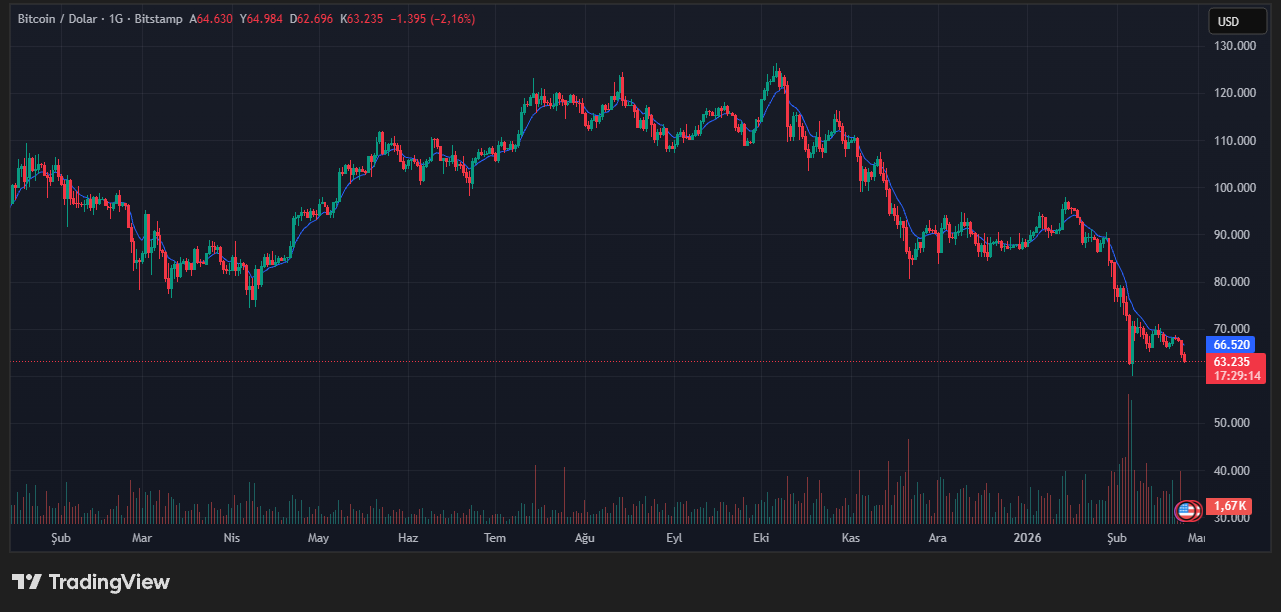
Recent on-chain analysis from CryptoQuant sheds light on the underlying drivers of Bitcoin latest pullback. Contrary to the common assumption that long-term holders are cashing out, the data suggests that the primary source of selling pressure is large investors who accumulated Bitcoin more recently.
When Bitcoin was trading around $65,800, approximately 70.41% of the assets transferred to exchanges came from large holders. However, this category is not homogeneous. A deeper breakdown reveals a sharp divergence in behavior between seasoned long-term whales and newer large-scale buyers.
Newer Whales Lead the Bitcoin Sell-Off
According to the data, large investors who entered positions at relatively higher price levels transferred roughly 138,000 BTC to exchanges. This accounts for nearly all major inflows during the observed period. In contrast, long-term large holders sent only about 7,500 BTC to trading platforms.
This distinction is critical. The current wave of exchange inflows appears to be driven less by profit-taking and more by defensive selling from investors facing unrealized losses. Rather than distributing gains, newer whales seem to be reducing exposure amid heightened uncertainty.
Rising Exchange Balances Signal Growing Supply
Since January, total Bitcoin reserves on exchanges have increased by more than 32,000 BTC, reaching approximately 2.75 million BTC. An increase in exchange balances is typically interpreted as a rise in readily sellable supply, which can amplify downward price pressure.
Technically, Bitcoin’s loss of the $65,000 support level triggered additional volatility. Within 24 hours, the price fell by 4% to 5%, setting off hundreds of millions of dollars in liquidations across leveraged derivatives markets. The forced unwinding of positions further intensified short-term weakness.
Macro Headwinds and the $60,000 Threshold
The broader macro backdrop has also played a role. The decision to raise global tariffs to 15% dampened overall risk appetite, prompting capital rotation toward traditional safe-haven assets such as gold. Bitcoin, often viewed as a risk-sensitive asset in such environments, faced renewed pressure.
CryptoQuant identifies the $60,000 level as a key short-term support zone. Whether exchange inflows begin to slow will likely determine the next directional move. Continued heavy transfers could sustain downside momentum, while a reduction in sell-side flows may allow the market to stabilize and reassess its footing.
In the comment section, you can freely share your comments and opinions about the topic. Additionally, don’t forget to follow us on Telegram, YouTube, and Twitter for the latest news and updates.