

 Emre Yumlu
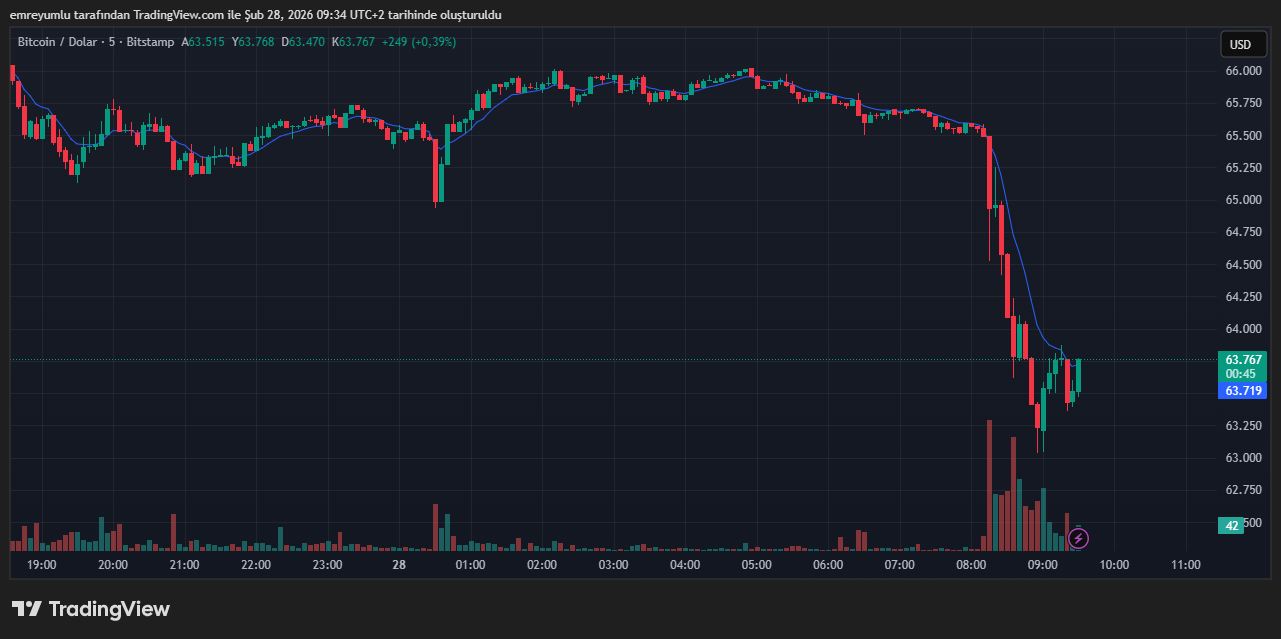
Global markets were jolted after the United States and Israel launched military strikes against Iran, sharply increasing geopolitical risk. In the immediate aftermath, Bitcoin fell roughly 3% during weekend trading, approaching the $63,000 level. The decline pushed the leading cryptocurrency close to its weakest levels since the February 5 sell-off, when it briefly dipped below $60,000.
The move underscores how sensitive digital assets can be to sudden geopolitical shocks, particularly when traditional financial markets are closed.
Weekend Selling Pressure and the 24/7 Market Structure
Bitcoin’s pullback is not solely a reaction to political developments; it is also a function of market structure. Unlike equities and bonds, which stop trading over the weekend, cryptocurrency markets operate continuously. This makes Bitcoin one of the few large and liquid assets available for investors seeking to reduce exposure when unexpected events occur outside standard trading hours.
As a result, Bitcoin often acts as a release valve for broader risk-off sentiment during weekends. When geopolitical tensions spike and traditional markets are inaccessible, traders can quickly sell crypto holdings to manage risk. This dynamic can amplify short-term volatility and produce sharp intraday declines, even if broader macro fundamentals remain unchanged.
Regional Risk and Escalation Concerns
The situation intensified after Israel’s defense leadership declared a nationwide state of emergency, while a U.S. official confirmed American participation in the operation. These developments followed weeks of heightened military activity and unsuccessful negotiations regarding Iran’s nuclear program. Adding to the uncertainty, Iranian officials signaled that Tehran is preparing a potential response.
Given the Middle East’s strategic importance to global energy markets and trade flows, any escalation raises concerns about wider regional instability. In such environments, investors typically rotate away from higher-risk assets, reinforcing downward pressure across speculative markets.

A Familiar Pattern for Bitcoin?
Historically, Bitcoin has often reacted to geopolitical shocks with immediate selling, followed by stabilization and eventual recovery. The current price action appears consistent with that pattern. While near-term volatility remains elevated, the broader trajectory will likely depend on how tensions evolve and whether the conflict expands.
For now, Bitcoin’s reaction highlights its dual nature: a globally accessible, liquid asset that offers flexibility, but also one that absorbs risk sentiment rapidly when uncertainty surges.
You can also freely share your thoughts and comments about the topic in the comment section. Additionally, don’t forget to follow us on our Telegram, YouTube, and Twitter channels for the latest news and updates.