

 Yeliz Akmaca
The robot economy is no longer theoretical. It is turning into a real market narrative. Fabric Protocol sits at the center of that shift. ROBO token is not yet in circulation. There is no price. No chart. But it has been added to the Coinbase listing roadmap, the airdrop process has been active, and investor interest is growing. The market is still waiting. And frankly, this is one of the most critical stages.
Short answer: ROBO token is the native utility token of Fabric Protocol’s decentralized economic system designed for robots and AI agents. Payments, governance, and network security are powered by this token. But the real point is bigger: machines beginning to generate and coordinate their own economic value.
What Is Fabric Protocol and What Is It Building?
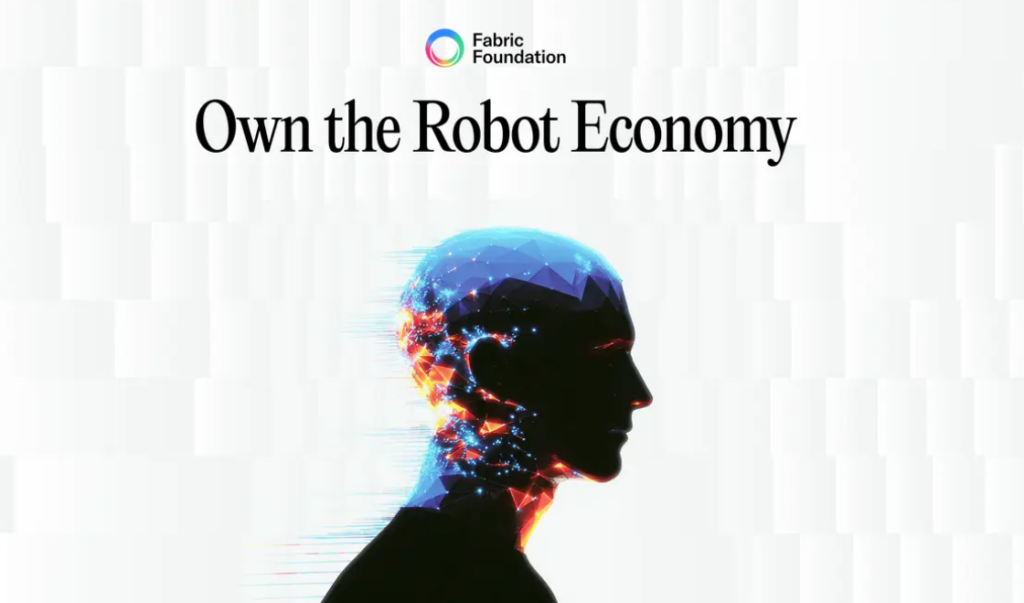
Fabric Protocol is a blockchain infrastructure that allows robots and AI agents to operate without relying on centralized platforms. Within this system, robots gain identity, receive tasks, and earn economic rewards.
Today, robots generate data. But that data typically remains locked inside corporate systems. Fabric aims to change that model. Robots are no longer just task-performing machines. They become economic participants.
This is where ROBO token comes in. All economic coordination inside the network is conducted through it.
In practical terms, the model enables robots not only to work, but to act as economic actors.

What Does ROBO Token Do?
ROBO token serves multiple critical roles within Fabric Protocol:
-
Used as a payment medium for robot tasks
-
Acts as collateral for robot operators joining the network
-
Supports network security
-
Enables governance through the veROBO model
-
Rewards users who contribute to the ecosystem
Important clarification: this is not an equity token. It does not provide revenue share or ownership rights.
Its value depends entirely on network usage.
Team Structure and Development Organizations
Fabric Protocol is supported by the non-profit Fabric Foundation, which oversees long-term protocol development and coordination.
On the technical side, OpenMind Labs serves as the initial core developer. The team consists of engineers specializing in AI and robotics infrastructure.
Token issuance operations are handled by Fabric Protocol Ltd.
Founder identities have not been publicly disclosed. Some modern infrastructure projects adopt this structure.
Investors and the Coinbase Roadmap Detail
Fabric Protocol has attracted strong institutional backing.
Notable investors include:
-
Pantera Capital
-
Coinbase Ventures
-
Digital Currency Group
-
Ribbit Capital
-
Amber Group
-
Hongshan
On February 20, 2026, ROBO token was added to the Coinbase listing roadmap.
This does not guarantee a listing. However, inclusion on the roadmap is widely considered a strong market signal.
Public Sale Process and Current Valuation
The ROBO token public sale was completed in January 2026 via Kaito Launchpad, targeting $2 million.
Allocation results were announced in early February. Participants were offered a short refund window. Most investors chose to remain in the project despite market volatility.
Reported valuation metrics:
-
Previous FDV: $200 million
-
Post-public sale FDV: $400 million
The token is still not in circulation.
Airdrop Process
The ROBO token airdrop verification portal remained open until February 24, 2026, 03:00 UTC.
At this stage, users could verify eligibility only. Allocation amounts have not yet been disclosed and are expected to be clarified during TGE or the claim announcement.
Eligibility criteria included:
-
Fabric dashboard activity
-
Community contribution
-
Developer participation
-
Partner ecosystem engagement
This marks one of the first major distribution phases of the token.
Token Economics, Supply, and TGE Reality
ROBO token has a maximum supply of 10 billion tokens.
Current circulating supply: zero.
An official Token Generation Event (TGE) date has not been announced. Some sources anticipate Q1 2026, though this remains unconfirmed.
Once tokens enter circulation, price discovery will begin. Early unlocks and initial supply flows typically create volatility in similar launches.
Fabric Protocol states it uses an adaptive emission model designed to align supply dynamics with network usage.
ROBO Token Distribution and Vesting Plan
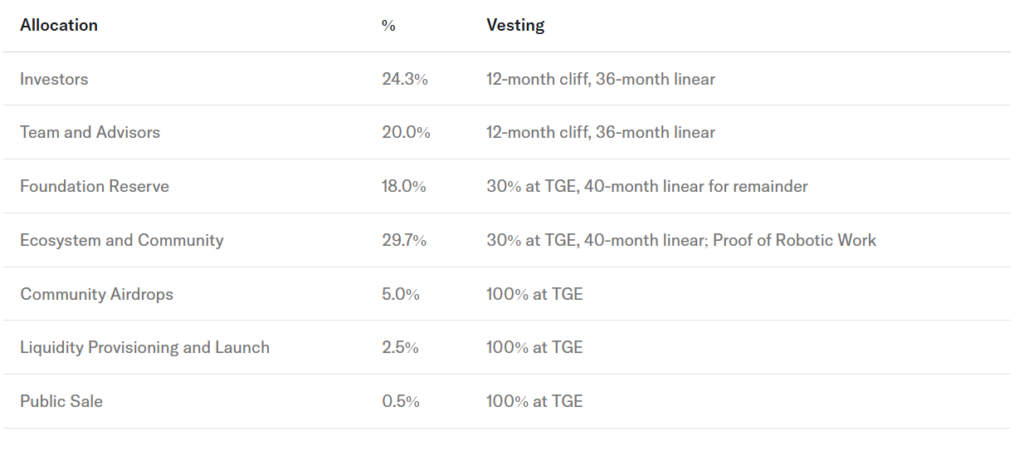
The token allocation follows a long-term structured vesting model:
-
Ecosystem & Community (29.7%) – 30% unlock at TGE, remaining distributed linearly over 40 months
-
Investors (24.3%) – 12-month cliff, followed by 36-month linear vesting
-
Team & Advisors (20%) – 12-month cliff, 36-month linear vesting
-
Foundation Reserve (18%) – 30% available at TGE, remainder over 40 months
-
Community Airdrop (5%) – 100% unlocked at TGE
-
Liquidity & Launch (2.5%) – Fully unlocked at TGE
-
Public Sale (0.5%) – 100% unlocked at TGE
Investor and team tokens remain locked for the first 12 months, limiting early structural sell pressure. However, airdrop, liquidity, and public sale tokens entering circulation at TGE may introduce short-term volatility.
veROBO Governance Model and Network Mechanics
Fabric Protocol uses a veROBO governance framework.
Participants:
-
Lock ROBO tokens
-
Receive veROBO
-
Gain governance power
Longer lock durations increase voting weight.
The network architecture also includes:
-
Robot identity system
-
Skill modules (skill chips)
-
Delegation mechanisms
-
Security staking model
This infrastructure enables secure and economically coordinated robot participation.
Early Stage, Strong Signals
ROBO token has not yet launched into the market. There is no technical chart or price data.
However, Coinbase roadmap inclusion, institutional investor backing, and an active airdrop cycle suggest strategic positioning.
Risk remains clear. Once tokens begin circulating, volatility could be significant due to unlock schedules and early supply dynamics.
Fabric Protocol positions itself as an early player in the robot economy thesis. Long-term success will depend entirely on real-world adoption and network usage.
Official Links
You can also freely share your thoughts and comments about the topic in the comment section. Additionally, don’t forget to follow us on our Telegram, YouTube, and Twitter channels for the latest news and updates.