

 Yeliz Akmaca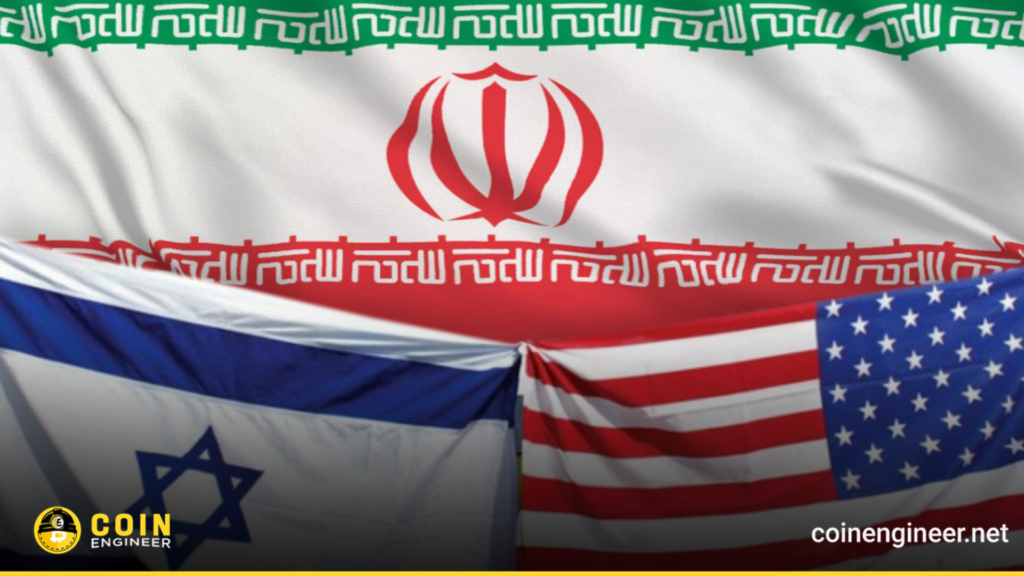
The Middle East had long been on the brink of a major disruption, but events on Saturday night reshuffled the balance entirely. In the US and Israel’s operation targeting Iran, Supreme Leader Ali Khamenei, who had held absolute power for over thirty years, was killed, directly affecting Tehran and global energy corridors.
Rising military risks immediately impacted energy markets. Oil prices surged while safe-haven assets such as gold and silver saw increased demand. Global equity markets experienced selling pressure. As the conflict enters its third day, both sides are preparing for harsher actions, reviving fears of a broader regional war.
Khamenei’s Death Shifts Power Dynamics in Iran
The Saturday strikes targeted Iran’s military and political infrastructure. The operation’s most critical outcome was the death of Ali Khamenei, the country’s most powerful political figure for decades. His death created an unexpected leadership vacuum in Iran.
Tehran has sought to fill this gap with a temporary transition mechanism. President Masoud Pezeshkian, the head of the judiciary, and a representative of the Guardian Council formed a three-person council to oversee leadership temporarily. However, the permanent leader has not been announced, creating uncertainty over Iran’s political future.
According to Iranian state media, over 200 people were killed in the attacks, while the US military confirmed three American soldiers dead and five severely wounded. These losses amplify concerns about the conflict’s rapid military escalation.
Iran’s Retaliation in the Gulf
Iran responded swiftly. In addition to targeting Israeli assets, Tehran launched missile and drone strikes against Gulf countries hosting US military bases, including United Arab Emirates, Qatar, Kuwait, and Saudi Arabia.
Some attacks hit civilian infrastructure. Explosions were reported near Fairmont The Palm in Dubai, and security was tightened around Dubai International Airport. These developments raise concerns that the conflict may not remain confined to military targets.
Notably, Iran did not directly target the US mainland, which analysts interpret as part of a controlled escalation strategy.
How Global Markets Priced the Conflict
Rising geopolitical risks triggered immediate reactions in financial markets, first visible in energy. US crude oil rose over 8% to $72.57 per barrel, while Brent crude climbed about 9% to near $79. Some gains were later trimmed, but a risk premium remains.
Demand for safe-haven assets also rose sharply. Gold and silver prices increased by around 2%. The US dollar index saw a slight uptick to 97, while 10-year Treasury yields stabilized near 3.97%.
Risk assets faced selling pressure. US Dow Jones futures dropped over 500 points, while S&P 500 and Nasdaq futures fell roughly 1%. Asian markets followed a similar trend, with Nikkei 225 and TOPIX Index declining in Japan and Hang Seng Index falling in Hong Kong.
- Will the Conflict Escalate or Will Diplomacy Intervene?
US President Donald Trump indicated that operations could last several weeks, estimating a roughly four-week military window. At the same time, he mentioned receiving messages that Iran’s new leadership is willing to resume negotiations.
From Tehran, officials sent a sterner message. Iranian politician Ali Larijani stated there are no plans to negotiate with the US. The contrast between these statements underscores that the crisis involves not only military but also diplomatic chess moves.
Within Washington, debate intensifies. Since the Constitution grants Congress the power to declare war, some lawmakers question the legal grounds of the strikes. Senate Intelligence Committee Chair Tom Cotton said no clear scenario exists for the outcome, while Democratic Senator Chris Murphy criticized the administration’s Middle East strategy.
How the World Views These Developments
International reactions have been sharply divided. Western allies including the UK, Canada, and Australia provided logistical and strategic support, whereas Russia and China adopted a strongly critical stance.
- China and Russia view the assassination as a violation of international law and an attack on a sovereign nation.
- Gulf States, concerned about US bases on their soil, expressed caution but affirmed a defensive stance.
- The European Union highlighted Iran’s population and its democratic aspirations, signaling support for political transition.
- Conclusion: Regional Conflict or Global Crisis?
The emerging picture is complex. Iran’s leadership vacuum, heightened military activity in the Gulf, and sharp movements in energy markets point to uncertainty.
If diplomacy does not take hold, a new balance of power could form in the Middle East. For now, the only certainty is that this crisis is still in its early stages.
You can also freely share your thoughts and comments about the topic in the comment section. Additionally, don’t forget to follow us on our Telegram, YouTube, and Twitter channels for the latest news and updates.