

 Emre Yumlu
Energy prices have once again moved to the center of global economic concerns. International Monetary Fund (IMF) Managing Director Kristalina Georgieva recently highlighted the potential inflationary pressure created by rising oil prices, emphasizing that sustained increases in energy costs could have widespread economic consequences.
According to Georgieva, if oil prices rise by 10 percent and remain elevated for most of the year, global headline inflation could increase by roughly 40 basis points. This relationship illustrates how closely energy markets are tied to overall price stability across the global economy.
The warning comes at a time when geopolitical tensions in the Middle East are intensifying, raising concerns about supply disruptions and the stability of critical energy routes.
Middle East Tensions Threaten Energy Supply
Recent conflicts in the region have begun to affect energy infrastructure directly. Reports indicate that several important oil and gas facilities have suffered damage, while some operations have experienced temporary shutdowns. These developments have heightened fears about supply interruptions in global energy markets.
At the same time, maritime traffic through the Strait of Hormuz—a vital corridor for global energy shipments—has reportedly dropped by around 90 percent. Any disruption to shipping activity in this area has the potential to impact global energy distribution, making it a significant concern for policymakers and markets alike.
The Strategic Importance of the Strait of Hormuz for Oil
The Strait of Hormuz plays a crucial role in global energy trade. Under normal conditions, roughly one fifth of the world’s oil supply and a substantial portion of global liquefied natural gas shipments pass through this narrow maritime route.
For many Asian economies, the strait represents a particularly critical supply line. Nearly half of Asia’s oil imports travel through this corridor, along with about one quarter of its LNG imports. Japan’s dependence is even more pronounced, with nearly 60 percent of its oil imports and around 11 percent of LNG imports relying on this route.
Because of this concentration of energy flows, disruptions in the region can quickly affect global market sentiment and price stability.
Sharp Surge in Oil Prices
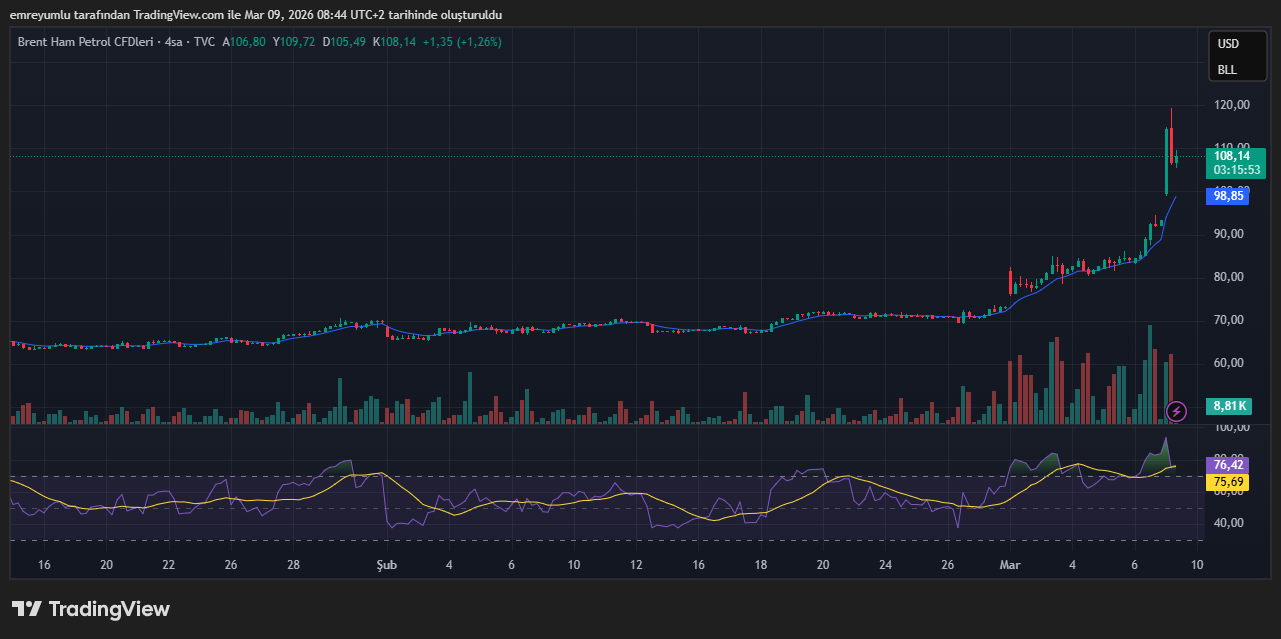
Energy market tensions have already had a visible impact on prices. Oil recently climbed by 16.10 percent in a single day, reaching approximately $108.51 per barrel. Over a broader time frame, the increase has been even more dramatic, with prices rising about 61.74 percent on a monthly basis.
Such rapid price movements often trigger concerns about inflationary pressure and economic slowdown, particularly in energy-dependent economies.
Potential Impact on Global Growth
Higher energy costs do not only affect inflation—they can also influence economic growth. Economic estimates suggest that a sustained 10 percent rise in oil prices could reduce global output by approximately 0.1 to 0.2 percent.
For policymakers and central banks, these developments create a challenging environment. As energy prices fluctuate and geopolitical risks intensify, governments may need to prepare for unexpected scenarios and adapt economic strategies accordingly. Monitoring energy markets will likely remain a key priority in the months ahead.
You can share your opinions in the comments about the topic. Also, follow us on Telegram, Twitter, and YouTube for more content like this.