

 Haciyev Reşit
The cryptocurrency market started the week with a decline. Bitcoin fell to around $66,000 as rising geopolitical risks and rapidly increasing oil prices created uncertainty across global markets. Sharp price increases in the global energy market have reduced investors’ risk appetite, and crypto assets are also being affected by this volatility. At the same time, Asian stock markets experienced heavy selling pressure. Declines were particularly noticeable in economies that are more sensitive to energy costs. Japan’s Nikkei index and South Korea’s KOSPI index started the week with significant losses, while other major regional markets also showed a negative outlook. These developments indicate that the growing uncertainty in global markets is putting pressure on both traditional financial markets and the crypto sector.
Bitcoin Drops 10% From Its Recent Peak
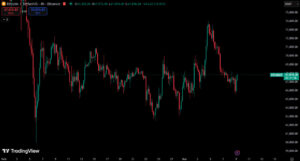
After a brief rally last week, Bitcoin once again came under selling pressure. According to market data, the leading cryptocurrency declined about 1.87% in the last 24 hours, falling to around $66,000. This drop represents roughly a 10% pullback from the recent peak of $73,500 recorded on March 5. Analysts suggest that the recent rally may have been a temporary recovery rather than the start of a new bull cycle. Crypto analytics firm CryptoQuant described last week’s price movement as a “relief rally,” noting that the market has not yet entered a strong upward trend.
(At the time of writing, Bitcoin is trading at around $67,800.)
Rising Oil Prices Impact Global Markets
One of the key factors behind Bitcoin’s decline is the sharp increase in oil prices. Growing geopolitical tensions in the Middle East and concerns over energy supply have triggered a rapid price surge in the global oil market. As a result, crude oil prices rose above $110 per barrel, reaching one of the highest levels in recent months. According to the data:
- Oil prices increased about 22% within a single day
- Over the past month, prices have surged by around 72%
This rapid rise in energy prices has the potential to increase inflationary pressure on the global economy. Higher energy costs can raise production and transportation expenses, which often leads investors to move away from riskier assets. As a result, selling pressure in the cryptocurrency market has also increased. U.S. President Donald Trump commented on the situation, stating that the temporary rise in oil prices is inevitable but that prices could stabilize in the long term.
“A short-term increase in oil prices is a very small price to pay. When the Iranian nuclear threat is eliminated, prices will stabilize again.”
Sharp Declines in Asian Stock Markets
Rising oil prices have particularly affected economies that rely heavily on energy imports. Concerns that higher energy costs could put pressure on global economic growth have led investors to move away from riskier assets. As a result, Asian stock markets experienced heavy selling on Monday, with several major indices starting the week with significant losses:
- Japan’s Nikkei Index: down 7%
- South Korea’s KOSPI Index: down 9%
- Hong Kong’s Hang Seng Index: down 7%
- Shanghai Composite Index: down 4%
The market volatility has not been limited to traditional financial markets. In recent years, Bitcoin’s correlation with global equity markets has also increased. According to analysis, the 30-day Pearson correlation between Bitcoin and the tech-heavy Nasdaq index has reached approximately 88%. This indicates that global economic developments and geopolitical risks are now having a more pronounced impact on the cryptocurrency market.
Critical Levels for Bitcoin
According to analysts, the $65,000 level is considered an important support zone for Bitcoin in the short term. On the upside, the $68,000 – $69,000 range stands out as a strong resistance area. According to Zeus Research analyst Dominick John, several macro catalysts may be needed for the market to regain upward momentum.
“A renewed increase in ETF inflows, clearer crypto regulations, and easing monetary policies by central banks could attract new institutional capital into the market.”
Rising geopolitical risks, rapidly increasing oil prices, and global market uncertainty continue to put pressure on Bitcoin. According to experts, the direction of the crypto market in the coming days will depend on U.S. inflation data, ETF fund flows, and broader macroeconomic developments.
Also, you can freely share your thoughts and comments about the topic in the comment section. Additionally, please follow us on our Telegram, YouTube and Twitter channels for the latest news and updates.