

 Emre Yumlu
Growing selling pressure in the cryptocurrency market has recently pushed investors into a more cautious stance. Rising macroeconomic uncertainty and escalating geopolitical tensions are fueling discussions that Bitcoin may test lower price levels in the near term.
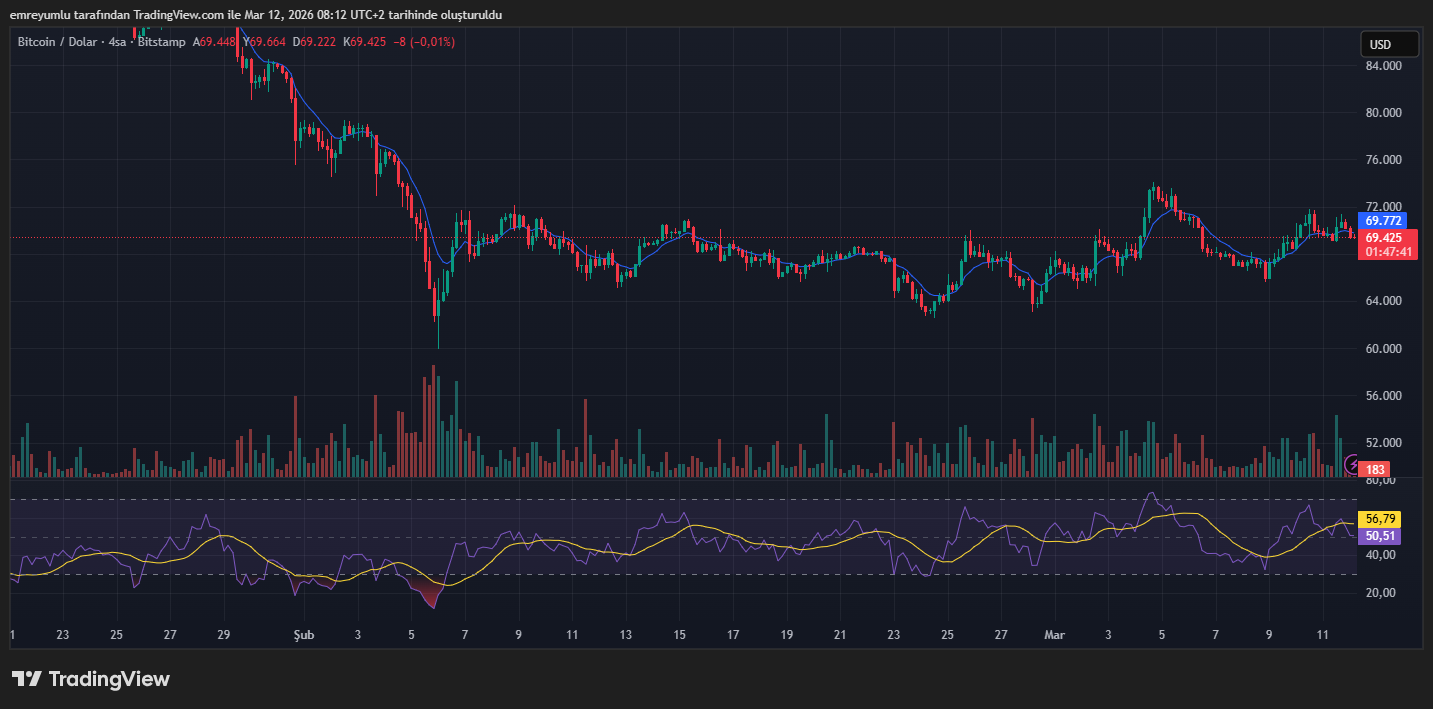
After a series of declines in recent weeks, Bitcoin has slipped below several key technical support levels. This shift in market structure has strengthened expectations that the price could potentially retreat toward the $65,000 region.
Bitcoin Slips Below a Key Support Level
Market data shows that Bitcoin has declined by roughly 4.8% over the past seven days. During this period, the price fell below the $70,000 support level, a threshold that many traders were closely monitoring.
At the time of writing, Bitcoin is trading around $69,385. This places the asset approximately 29% below its year-to-date high of about $97,500. It also remains nearly 45% below its all-time high, highlighting the extent of the recent pullback.
Overall, the current market structure suggests that short-term momentum has weakened.
Geopolitical Tensions Weigh on Market Sentiment
The downward pressure on Bitcoin is not driven solely by technical factors. Global political developments are also playing an important role in shaping investor sentiment.
Tensions in the Middle East have intensified, increasing uncertainty across financial markets. Iranian officials recently indicated that the country plans to adjust its military strategy in the region, shifting from reciprocal responses to a continuous strike approach aimed at the interests of Israel and the United States.
In addition, Iran has announced that it will continue blocking oil shipments bound for Israel and the United States from passing through the Strait of Hormuz. Since a significant portion of global oil trade flows through this route, such measures could create substantial volatility in energy markets.
Iranian authorities have also suggested that these actions could potentially drive oil prices as high as $200 per barrel.
A sharp rise in energy prices would likely increase inflationary pressures globally. Historically, periods of geopolitical uncertainty and rising inflation tend to push investors away from high-risk assets such as cryptocurrencies and toward more traditional safe-haven investments.
High Interest Rate Expectations Pressure Crypto
Another major factor weighing on Bitcoin is the outlook for monetary policy in the United States. The core Consumer Price Index (CPI) for February came in broadly in line with market expectations.
While the data did not produce a surprise, it also did little to strengthen the case for near-term interest rate cuts by the Federal Reserve. If energy prices continue to rise, inflation could accelerate again, forcing policymakers to maintain a restrictive stance for longer.
Higher interest rates typically reduce liquidity across financial markets, which can limit the growth potential of speculative assets like cryptocurrencies.
According to futures market expectations, there is currently about a 99.3% probability that interest rates will remain unchanged at the March FOMC meeting. The current target range stands at 350 to 375 basis points.
Meanwhile, the probability of a rate cut in April is only around 10.9%, down sharply from roughly 21% one month ago. This decline reflects a shift in market expectations, with investors becoming more cautious about the timing of potential monetary easing.
Rising Bond Yields Add More Pressure
Macroeconomic developments are also affecting the bond market. U.S. 10-year Treasury yields have continued to trend upward in response to inflation concerns.
Higher yields make government bonds more attractive to investors seeking stable returns. As a result, capital may shift away from risk-sensitive assets such as cryptocurrencies and into safer instruments.
This dynamic can further limit demand for digital assets during periods of economic uncertainty.
You can also freely share your thoughts and comments about the topic in the comment section. Additionally, don’t forget to follow us on our Telegram, YouTube, and Twitter channels for the latest news and updates.