

 Emre Yumlu
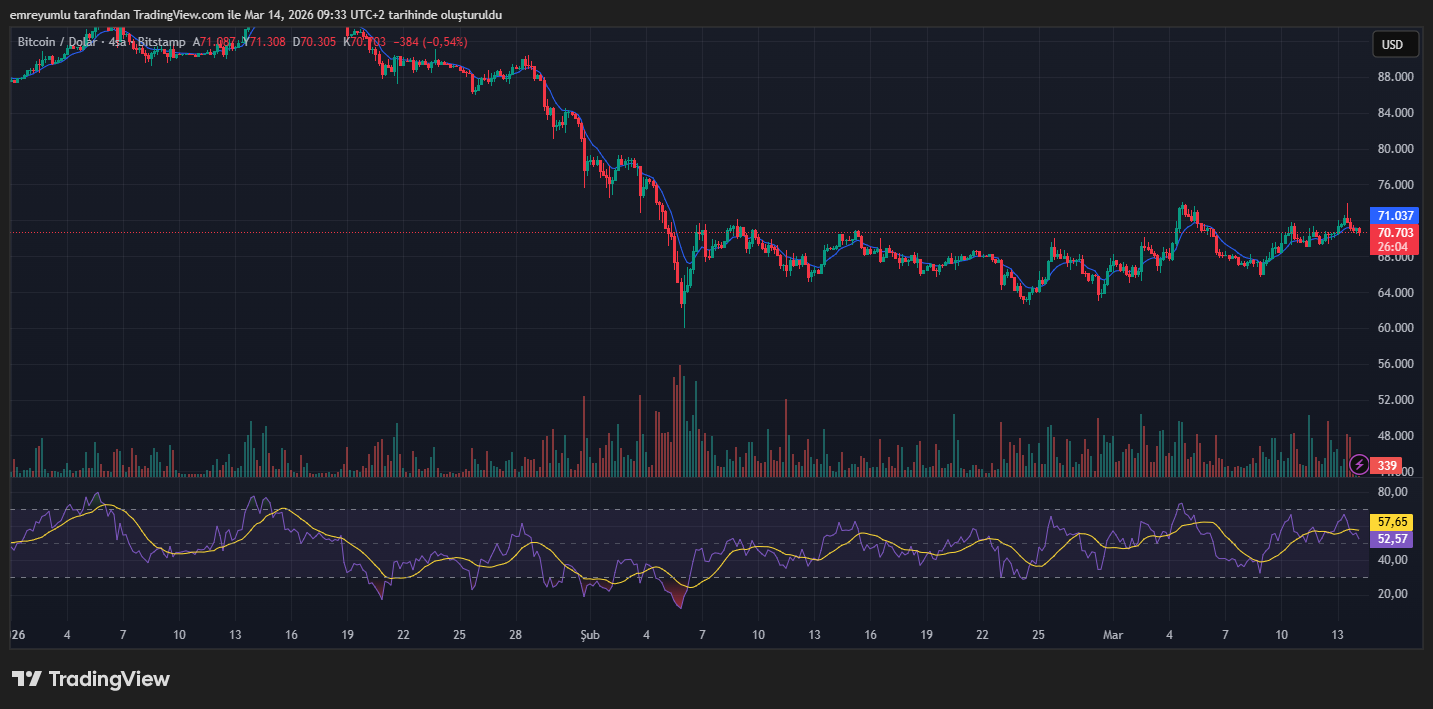
Bitcoin has managed to remain above the $70,000 level despite escalating geopolitical tensions in the Middle East. Following U.S. strikes on military targets on Kharg Island, Iran’s main crude oil export hub, markets briefly reacted with a pullback. However, the world’s largest cryptocurrency maintained its upward momentum on a weekly basis.
Over the past week, Bitcoin gained more than 4%, demonstrating resilience even as global uncertainty increased. Although the asset experienced a modest decline over the last 24 hours, it continues to trade above the levels seen before the latest escalation in the conflict.
Crypto Market Ends the Week in Positive Territory
Despite rising geopolitical risks, the broader cryptocurrency market posted gains throughout the week. Several major digital assets recorded notable increases during the same period.
Ether climbed roughly 5.5%, reaching around $2,090. Dogecoin advanced by about 5%, while Solana rose approximately 4% to trade near $88. BNB also recorded a weekly gain of around 4.5%, reaching roughly $655.
For Bitcoin, however, the key technical hurdle remains the resistance zone between $73,000 and $74,000. Over the past two weeks, the asset has tested this range multiple times but has yet to achieve a decisive breakout.
Markets Are Adapting to War-Related Headlines
In the early stages of the conflict, financial markets reacted sharply to each new development due to uncertainty surrounding potential risks. Over time, however, traders appear to have developed a clearer framework for pricing geopolitical events.
A pattern has gradually emerged: military escalation tends to push oil prices higher, leading to short-term volatility in risk assets, including Bitcoin. Yet after the initial reaction, markets have repeatedly stabilized.
This suggests that investors are increasingly treating war-related news as temporary shocks rather than long-term market disruptors.
Oil Supply Risks and the Strait of Hormuz
Another factor contributing to market uncertainty is the risk to global oil supply. The U.S. strike on Kharg Island has raised concerns about further disruptions in energy markets.
Former U.S. President Donald Trump stated that oil infrastructure had been spared for the time being but warned that the situation could change if Iran attempted to block the Strait of Hormuz, one of the world’s most important oil shipping routes.
Iran, in turn, warned that attacks on energy facilities could trigger retaliatory actions against U.S.-linked assets in the region. According to energy analysts, the current situation already represents one of the largest oil supply disruptions in modern history.
Focus Shifts to the Upcoming Federal Reserve Meeting
While geopolitical developments remain a key factor, financial markets are also closely watching the upcoming Federal Reserve meeting scheduled for March 17–18.
Oil prices remaining above $100 per barrel, combined with ongoing global uncertainty, have revived concerns about stagflation. Market data currently indicates a strong expectation that the Federal Reserve will keep its policy rate unchanged within the 3.5%–3.75% range.
However, the economic projections and comments from Federal Reserve Chair Jerome Powell may prove more influential than the decision itself. Any indication that interest rate hikes could return to the policy agenda may put pressure on risk assets, including cryptocurrencies.
For now, Bitcoin’s ability to maintain levels above $70,000 highlights the market’s resilience. Still, global developments continue to carry the potential to trigger new waves of volatility across the crypto sector.
Also, in the comment section, you can freely share your comments and opinions about the topic. Additionally, don’t forget to follow us on Telegram, YouTube and Twitter for the latest news and updates.