

 Emre Yumlu
In the crypto ecosystem, airdrops continue to be one of the most asymmetric return opportunities for early users. Especially ahead of Token Generation Events (TGEs), projects that develop strong products, announce clear token distribution plans, and generate real user activity stand out from a 2026 perspective. In this article, we examine high-potential airdrop candidates that should be kept on the radar as we approach 2026 and their possible distribution dynamics.
Backpack: Community Distribution Focused on Wallet and Exchange
Backpack stands out as a self-custodial wallet that allows users to manage their crypto assets, NFTs, and DeFi applications through a single interface. Offering both mobile and desktop support, the platform is developed by the team behind projects such as xNFT and Mad Lads.
Real volume generated on the wallet and exchange side, trading activity, and product usage may be decisive factors for airdrop criteria. Although a clear TGE date has not been announced, the first half of 2026 is considered a strong scenario.
Click Here to Register on Backpack Exchange with a 10% Trading Fee Discount!
OpenSea ($SEA): Could Be the Largest Distribution in the NFT Ecosystem
As one of the most established platforms in the NFT market, OpenSea enables users to retain full control over their assets thanks to its non-custodial structure. Supporting NFT trading, minting, and listing across multiple networks—primarily Ethereum—the platform has become one of the core infrastructures of the NFT ecosystem due to its long-standing volume and user base.
The announced tokenomics make the OpenSea airdrop particularly ambitious. Allocating 50% of the total supply to the community, with half of that unlocked at the initial distribution, is notable for early users. In addition, directing 50% of platform revenues to a buyback mechanism signals a long-term value creation objective for the token.
Users who have actively traded, minted NFTs, or created listings in the past are considered strong candidates for the airdrop.
Solana Seeker: A Hardware-Based Airdrop Model
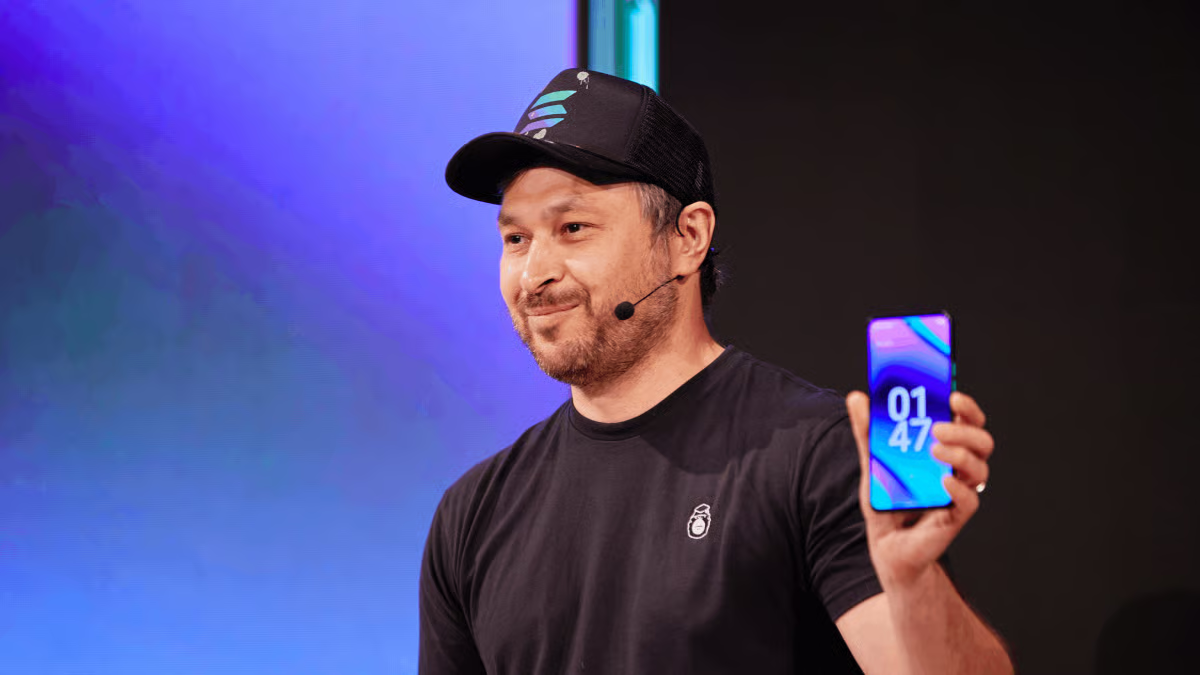
Solana Seeker is positioned as an Android-based crypto phone that brings the Web3 experience to mobile. The device allows users to manage crypto assets, access dApps, and interact directly with the Solana ecosystem.
Allocating 30% of the token supply directly to device users differentiates Seeker from similar projects. Instead of a one-time distribution, the airdrop is planned to be spread across multiple seasons. This structure suggests that users who actively use the device and regularly interact with the ecosystem may benefit more over time.
The token’s use in governance and incentive mechanisms also makes the airdrop functionally significant.
Ranger Finance ($RNGR): A Perp DEX Airdrop on Solana
Ranger Finance is a perpetual trading platform built on Solana that aggregates liquidity from different DEXs. Its USDC-based infrastructure and integration with popular wallets such as Phantom provide a strong user experience for professional traders.
The $RNGR token sale will be conducted via MetaDAO, with guaranteed allocation for point holders. A total of 10 million RNGR (39.02%) will be offered for sale, with a minimum raise target of $6 million. Users who accumulate points through testnet usage, trading activity, and platform interaction are expected to receive priority in both the airdrop and the token sale.

Project 0: A Prime Broker Approach for DeFi
Project 0 is positioned as a DeFi-native prime broker protocol developed on Solana. By enabling assets from platforms such as Drift, Kamino, and Jupiter to be combined under a single portfolio and used as unified margin, it offers a significant advantage for advanced DeFi users.
Although final tokenomics have not yet been announced, the team previously proposed allocating 20% of the total supply to the community. Of this, 15% was planned for Marginfi and Project 0 point holders, and 5% for power users. This structure makes the Project 0 airdrop particularly attractive for users who engage early.
Moonbirds: Signs of a Transition from NFT to Token
Moonbirds is an iconic 10,000-piece NFT collection developed on Ethereum by PROOF Collective, positioning NFTs as a membership model rather than just digital art. Through the “Nest” mechanism, staked Moonbirds gain different levels that unlock exclusive access and benefits.
The ongoing SBT (soulbound token) distribution is considered a key part of the potential Moonbirds airdrop process. It is critical for eligible wallets to check this distribution.

SolsticeFi: Revenue-Generating DeFi and Airdrop Expectations
SolsticeFi is a project founded by Deus X Capital that focuses on institutional DeFi solutions. The USX stablecoin developed on Solana aims to deliver sustainable returns through delta-neutral strategies. Its YieldVault product stands out with real revenue generation.
Despite raising only $900,000 in funding, generating a similar amount of revenue in a short period is notable. The TGE planned for January and the clearly defined buyback model strengthen airdrop expectations. However, the possibility of a delay should also be considered due to a previous depeg event.
How Should a 2026 Airdrop Strategy Be Built?
As we approach 2026, the common traits among these standout projects are working products, real user metrics, and community-focused token distribution plans. For users building an airdrop-oriented strategy, it is more critical than ever not only to follow announcements but also to deliberately plan on-chain interactions.
You can freely share your thoughts and comments about the topic in the comment section. Additionally, don’t forget to follow us on our Telegram ,YouTube and Twitter channels for the latest news and updates.