

 Haciyev Reşit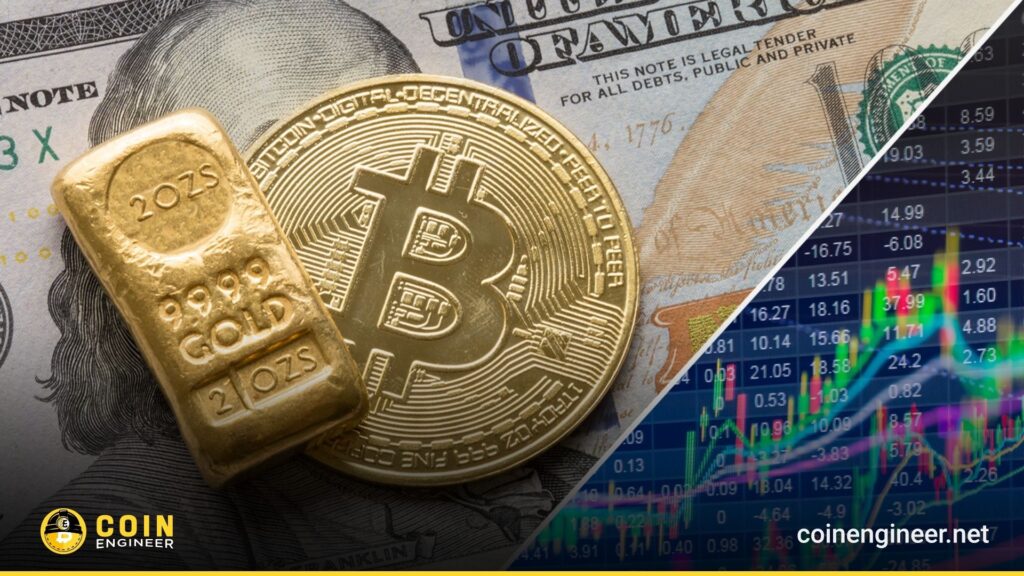
According to a new report published by JPMorgan analysts, a clear divergence in capital flows has emerged between Bitcoin and gold ETFs following the start of the Iran war. The report states that investor positions have shifted in different directions between the two assets, leading to a noticeable change in ETF flows. While inflows into Bitcoin ETFs have started to regain momentum, gold ETFs have experienced limited outflows. According to analysts, this development suggests that investors are rebalancing their portfolios in response to geopolitical developments and market uncertainty. At the same time, the recent increase in institutional interest in crypto assets and the fact that Bitcoin ETFs provide investors with a regulated investment vehicle are also considered key factors behind this shift in flows.
Outflows in Gold ETFs, Inflows in Bitcoin ETFs
According to JPMorgan analysts, since the start of the war, the largest gold ETF, SPDR Gold Shares (GLD), has seen outflows equivalent to approximately 2.7% of its assets under management. In contrast, BlackRock’s iShares Bitcoin Trust (IBIT), a spot Bitcoin ETF, recorded inflows equal to roughly 1.5% of its assets during the same period. These figures indicate that investors have been rebalancing their portfolios after geopolitical developments, with some shifting from gold to Bitcoin. Analysts also noted that the divergence in flows observed since February 27 has largely reversed the advantage that gold ETFs had over Bitcoin ETFs earlier this year.
JPMorgan analysts included the following statement in their report:
“Recent fund flows indicate that investor positions are being redistributed between Bitcoin and gold, creating a clear divergence in the ETF market.”
Institutional Investor Positions
The JPMorgan report also reveals significant changes in institutional investor positions in recent months. According to analysts, short interest in IBIT has increased, while short interest in the gold ETF GLD has declined. This suggests that hedge funds and other large investors have at times reduced their Bitcoin exposure and shifted toward gold, which is traditionally viewed as a safe-haven asset. However, analysts also note that due to gold’s long-standing investment history and broader institutional adoption, short positions in gold generally remain lower compared to Bitcoin.
Data from the options market points to a similar trend. The put-to-call ratio for the IBIT ETF rising above that of GLD indicates that investors are implementing more hedging strategies against downside risk in Bitcoin. According to analysts, this shows that institutional investors are adopting a more cautious approach toward Bitcoin and are actively using hedging strategies against potential price volatility. Additionally, the increase in options usage suggests that the Bitcoin ETF market is becoming more sophisticated, with more advanced financial instruments being used and the market structure gradually maturing.
Signals of Volatility Compression in Bitcoin
Another notable point in the report concerns the changing volatility profile of Bitcoin. JPMorgan analysts stated that with deeper institutional ownership and increasing market liquidity, Bitcoin’s volatility is showing signs of compression. In contrast, implied volatility in gold ETF options has increased more rapidly in recent months, indicating that investors expect larger price swings in gold. According to JPMorgan’s assessment, the divergence in capital flows between Bitcoin and gold ETFs after the Iran war highlights a shift in investor portfolio allocation. While inflows into Bitcoin ETFs support market confidence, outflows from gold ETFs point to a short-term change in investor preferences. In the long term, however, analysts maintain their positive outlook on the crypto market. In previous evaluations, JPMorgan reiterated its long-term Bitcoin price target of $266,000, based on volatility-adjusted valuation models.
Also, you can freely share your thoughts and comments about the topic in the comment section. Additionally, please follow us on our Telegram, YouTube and Twitter channels for the latest news and updates.