

 Haciyev Reşit
The claim that the U.S. Department of Justice (DOJ) may have violated an existing presidential executive order by selling approximately $6.3 million worth of Bitcoin seized in the Samourai Wallet investigation has caused a major stir in the crypto world. According to the allegations, the sale took place despite an order requiring confiscated Bitcoin to be held in the Strategic Bitcoin Reserve.
Were the Seized Bitcoins Sold?
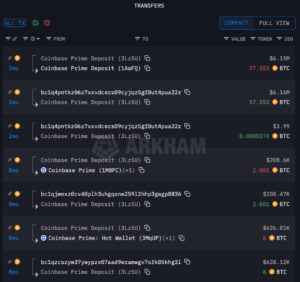
As part of the Samourai Wallet case, the confiscated Bitcoins were transferred directly to a Coinbase Prime address on November 3, 2025. It is alleged that this transfer occurred outside the oversight of the U.S. Marshals Service (USMS). The fact that the referenced address currently has a zero balance strengthens claims that the Bitcoins were liquidated. If confirmed, this would raise serious questions about whether the DOJ acted contrary to existing federal regulations.
What Did Trump’s Executive Order Say?
Executive Order 14233, signed during the Trump administration, explicitly prohibits the sale of seized Bitcoins except under clearly defined and limited exemptions. The order mandates that confiscated digital assets be held as part of the Strategic Bitcoin Reserve. Legal experts note that no explicit exception appears to apply in the Samourai Wallet case, suggesting that the decision to sell may have been made at prosecutorial discretion. This has reignited debate over whether the executive order was effectively violated.
Samourai Wallet was known as a privacy-focused Bitcoin application. The investigation into its developers was launched over alleged money laundering activities, with the case initiated under a previous administration and handled by the U.S. Attorney’s Office for the Southern District of New York. The continuation of the prosecution has also drawn criticism, as it appears to conflict with a 2025 DOJ memorandum recommending limits on cases against non-custodial crypto developers.
Political Implications and Pardon Speculation
The issue has also taken on a political dimension. Reports suggest that President Trump has shown support for Rodriguez, a figure linked to the Samourai Wallet case, and may be considering a potential pardon. Critics argue that this case and similar prosecutions paint a contradictory picture of the administration’s crypto stance. Pro-crypto advocates maintain that strict enforcement of EO 14233 and the suspension of such cases are essential to clearly signal that the U.S. government’s “war on crypto” is truly over.
Assessment
The allegation that the DOJ sold $6.3 million worth of Bitcoin seized in the Samourai Wallet case raises serious legal and political questions. If confirmed, it could spark renewed debate over violations of a presidential executive order, inter-agency authority conflicts, and inconsistencies in the U.S. government’s crypto asset strategy. Official statements from the DOJ in the coming period are expected to be decisive in determining the course of this case.
You can also freely share your thoughts and comments about the topic in the comment section. Additionally, don’t forget to follow us on our Telegram, YouTube, and Twitter channels for the latest news and updates.