

 Yeliz Akmaca
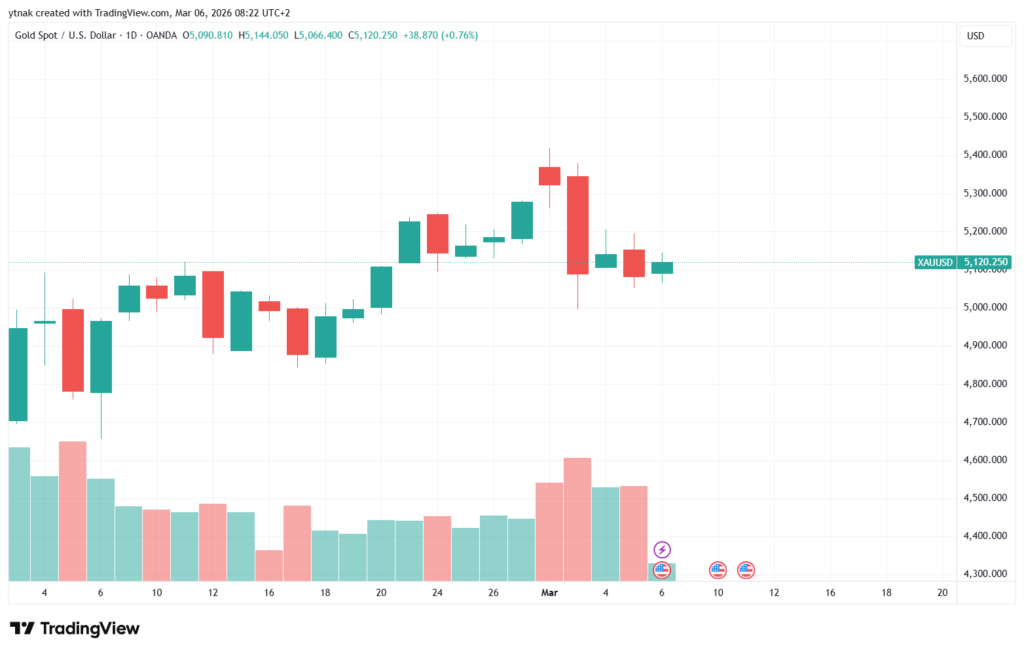
Tensions in the Middle East are strengthening the dollar, while investors are closely monitoring gold and oil prices. Currently, gold XAU/USD is trading at 5,122.71 USD, Brent crude is around 85 USD, and gram gold as of March 6 is approximately 7,379 TRY.
Meanwhile, the Dollar Index traded slightly lower at 99, but the weekly picture is different: the index is set for about a 1.4% gain this week, its strongest since November 2024.
- Gold (XAU/USD): 5,122.71 USD
- Euro (EUR/USD): 1.1612 USD
- USD/JPY: 157.5 Yen
- Brent Crude: 85 USD
Middle East Tensions Drive Dollar Demand
At the start of the week, markets had priced in a short-lived diplomatic easing. However, news from the field quickly erased that expectation.
US and Israeli warplanes struck certain areas in Iran, while Gulf cities faced renewed bombardment. Iran warned that the sinking of an Iranian warship would be “a step Washington will bitterly regret.”
Investors’ reflexes in this atmosphere are familiar:
-
Dollar strengthens
-
Risk assets face pressure
-
Energy prices surge
IG market analyst Tony Sycamore notes that if the current intensity of the tension persists, the picture could become clearer: higher inflation, a stronger dollar, and a reduced chance of Fed rate cuts.
Oil Prices Rekindle Inflation Concerns
The first market impact of geopolitical risk has been on energy.
Brent crude futures surged to 85 USD, reaching the highest level since 2024. Weekly gains are roughly 5%, marking one of the sharpest weekly jumps since March 2022.
This surge in energy prices particularly means new inflationary pressures for economies dependent on energy imports.
The market scenario is simple:
high oil → higher inflation → later interest rate cuts.
This shift in rate expectations is also visible in money market instruments. Overnight Index Swaps (OIS) indicate that the Federal Reserve’s first rate cut has been postponed to either September or October.
Euro and Yen Under Pressure
Against the stronger dollar, major currencies spent the week on the defensive.
-
Euro: around 1.1612 USD, flat
-
Japanese Yen: 157.5 per USD
-
Sterling: 1.3361 USD
Major pairs may look stable, but the trend is clear: dollar strength dominates.
Skye Masters, head of market research at National Australia Bank, highlights two historical experiences in investors’ minds: post-pandemic supply shocks and inflation after the Russia-Ukraine war. A new energy-driven price spike is therefore seen as a serious risk.
Global Markets Volatility
Tensions are not limited to currency markets. Equities and bonds also faced pressure.
On Thursday, US stock indices saw sharp declines:
-
Dow Jones: down ~785 points (%1.6)
-
S&P 500: down ~0.6%
-
Nasdaq Composite: down ~0.3%
Dow Jones thus approaches its worst weekly performance since October.
Meanwhile, futures markets show limited recovery signs:
-
Dow Jones futures
-
S&P 500 futures
-
Nasdaq 100 futures
All trade slightly higher on the final day, yet market sentiment remains cautious.
Crypto Markets See Limited Pullback
During geopolitical risk periods, crypto markets often react in complex ways. This time is no exception.
-
Bitcoin: ~70,956 USD
-
Ethereum: ~2,074 USD
Daily declines for both assets hover around 0.3%, suggesting risk mitigation rather than panic selling.
Eyes on US Employment Data
Geopolitical developments dominate, but macro data still matters.
Recent data show:
-
Weekly jobless claims remained unchanged
-
Layoffs fell sharply in February
Economists are now focused on nonfarm payrolls. Surveys predict 59,000 new jobs in the US for February, after 130,000 in January.
Economists expect the unemployment rate to remain at 4.3% in February.
Short-Term Market Outlook
Analysts see room for the dollar to stay strong short-term, largely tied to the risk premium in oil prices.
Jayati Bharadwaj, head of FX strategy at TD Securities, notes that dollar gains will depend on how the Iran geopolitical process unfolds. If the conflict remains contained, markets may rebalance.
For now, the picture is different. Risk appetite is low. Energy prices are high. And the dollar… naturally strong.
Also, in the comment section, you can freely share your comments and opinions about the topic. Additionally, don’t forget to follow us on Telegram, YouTube and Twitter for the latest news and updates.