

 Emre Yumlu
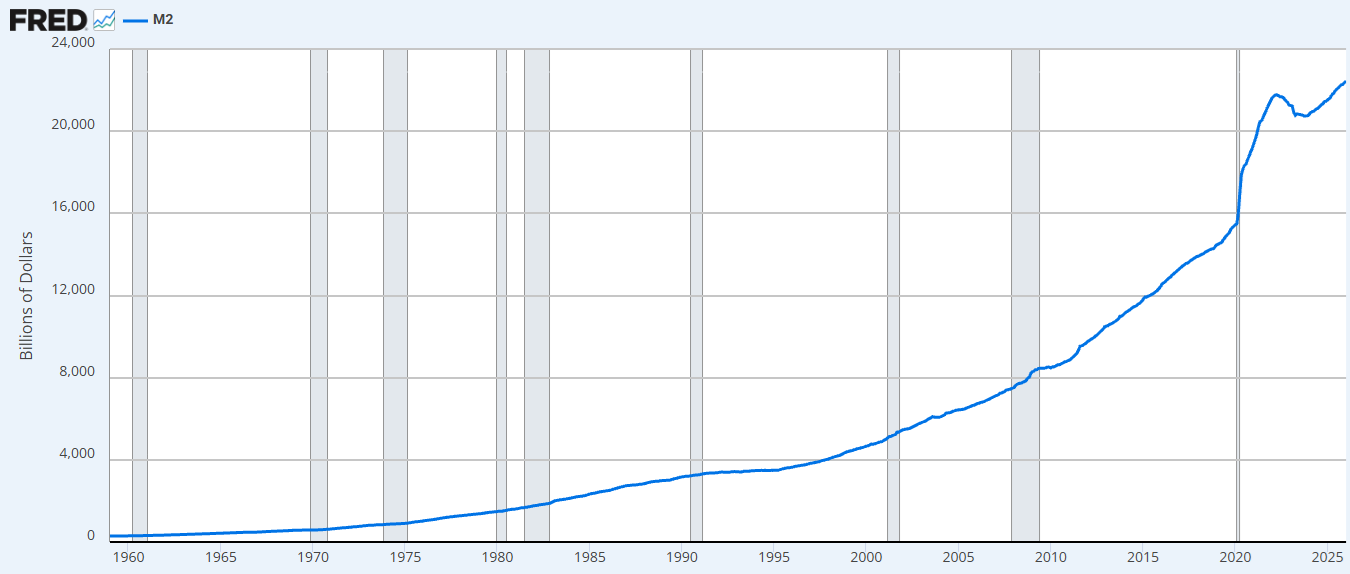
As of December 2025, global broad money supply climbed to an unprecedented $144 trillion, marking a new all-time high. Historically, such an expansion in liquidity has provided a strong tailwind for hard assets. Gold has responded in line with that pattern, maintaining its upward trajectory. Bitcoin, however, has displayed a far more uneven and hesitant performance despite operating in the same liquidity environment.
A Rapid Expansion in Global Liquidity
Year-over-year, global money supply increased by $13.6 trillion, representing growth of 10.4%. December marked the third consecutive month of accelerating expansion. Since the 2020 pandemic period, total money supply has surged by $44 trillion, or approximately 44%. The fastest pace of increase during this cycle was recorded in February 2021 at 18.7%, an exceptionally strong expansion rarely observed outside crisis conditions.
From a classical macro perspective, the relationship appears straightforward: more liquidity tends to benefit scarce assets. As capital becomes more abundant, investors often seek instruments perceived as stores of value or inflation hedges. Gold’s recent behavior aligns closely with this framework.
Gold and Bitcoin: A Growing Divergence
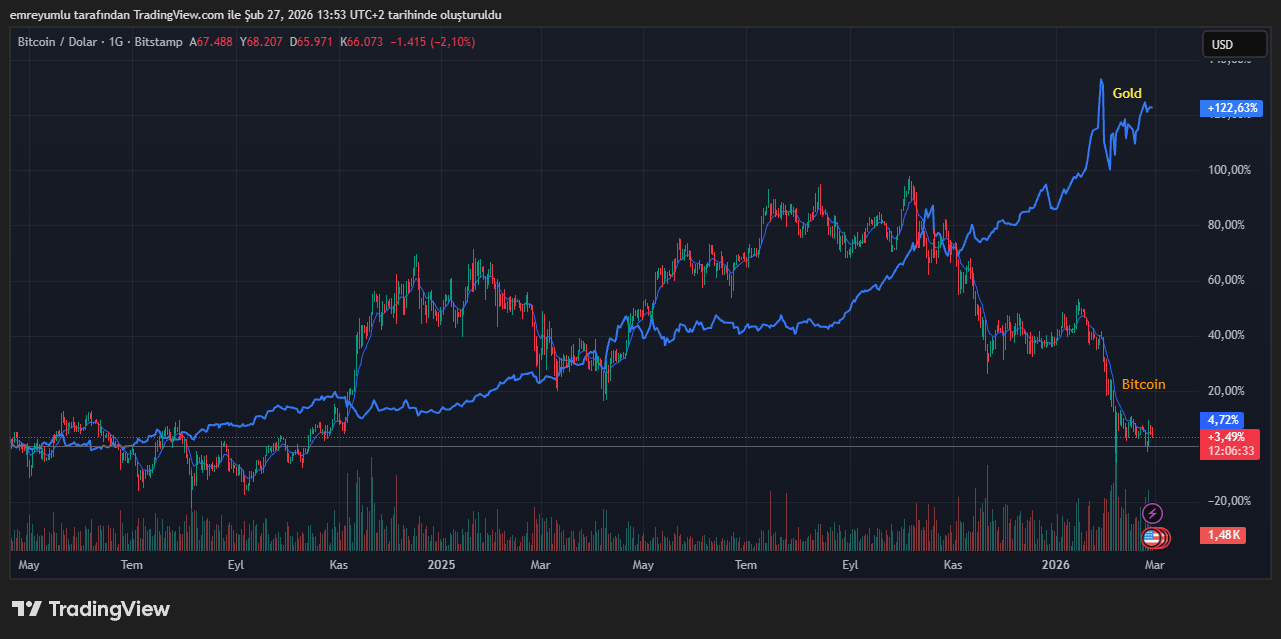
Jurrien Timmer, Director of Global Macro at Fidelity, has emphasized that gold is tracking global liquidity growth with notable consistency, while Bitcoin is not. Even after experiencing a sharp 21% drawdown earlier in the month, gold quickly attracted renewed buying interest and preserved its broader upward structure. Such short-lived pullbacks followed by swift recoveries are characteristic of established bull markets.
Bitcoin, in contrast, has exhibited more erratic price action. The key distinction lies in its dual identity. Gold is widely recognized as a singular “hard money” asset. Bitcoin, meanwhile, occupies two roles simultaneously: a potential digital store of value and a speculative risk asset.
The Role of Speculative Appetite
According to Timmer’s assessment, expanding money supply alone is insufficient to drive Bitcoin higher. When speculative segments of the market—such as software and SaaS equities—experience weakening momentum, that decline in risk appetite can counterbalance the liquidity tailwind that would otherwise support crypto prices.
Historically, the strongest bull markets in digital assets have emerged when abundant liquidity coincided with strong speculative enthusiasm. At present, liquidity growth remains robust, but speculative appetite is subdued. As a result, gold continues to benefit from monetary expansion, while Bitcoin struggles to align with the same macro forces.
In this environment, rising liquidity creates a favorable backdrop, but without renewed speculative demand, Bitcoin’s upside potential remains constrained.
In the comment section, you can freely share your thoughts and comments about the topic. Additionally, please follow us on our Telegram, YouTube, and Twitter channels for the latest news.