

 Emre Yumlu
As global markets grapple with rising uncertainty, gold has crossed a historic threshold, reinforcing its role as a traditional safe-haven asset. Escalating geopolitical risks, renewed trade tensions, and political uncertainty in the United States have pushed investors toward hard assets, while Bitcoin has struggled to maintain momentum. This divergence between gold and crypto assets has become increasingly pronounced.
Trade Tensions Drive Gold to New Highs
Gold prices climbed to an all-time high of $5,080 on Monday, marking a significant milestone for the precious metal. Since the beginning of the year, gold has gained 17%, reflecting strong demand from investors seeking protection against macroeconomic instability.
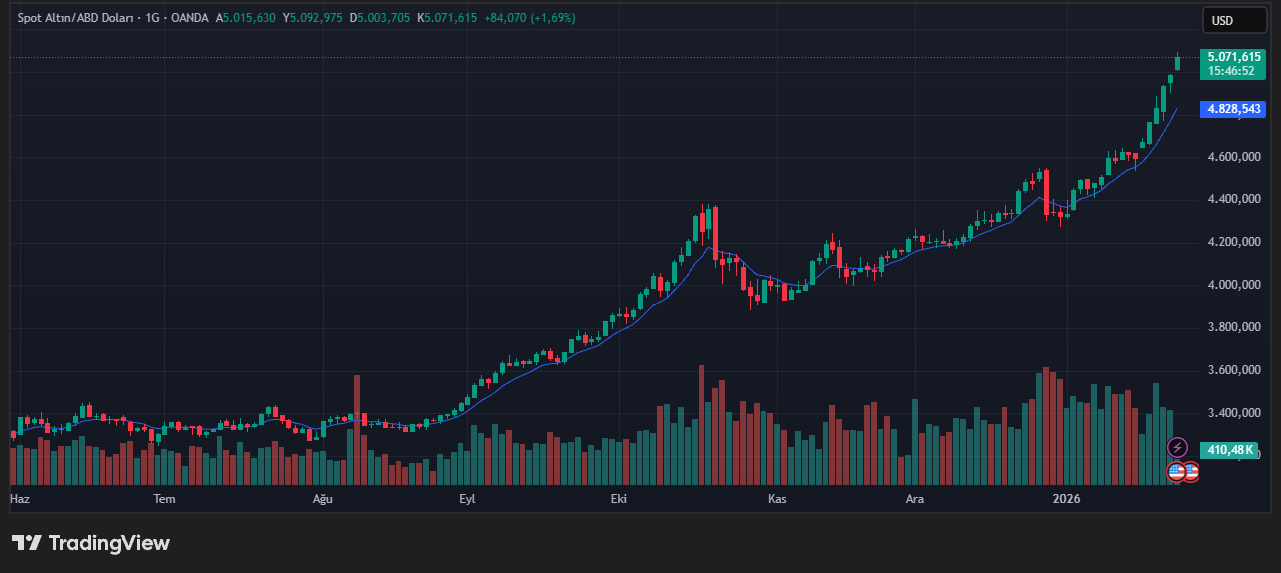
Concerns surrounding a potential US government shutdown have added further pressure to markets, amplifying risk aversion. At the same time, the Trump administration’s increasingly aggressive trade rhetoric has unsettled global investors. In particular, renewed tariff threats have reignited fears of prolonged trade disputes and supply chain disruptions.
US President Donald Trump’s warning of a 100% tariff on Canada, linked to broader China-related trade negotiations, has once again placed global commerce under scrutiny. These developments extend beyond short-term volatility and have reinforced longer-term demand for assets perceived as stores of value.
Silver and Precious Metals Join the Rally
The surge in gold is not occurring in isolation. Silver prices have also reached a historic milestone, surpassing $107 per ounce for the first time ever. Since the start of 2026, silver has risen 48%, underscoring a broader bullish trend across the precious metals complex.
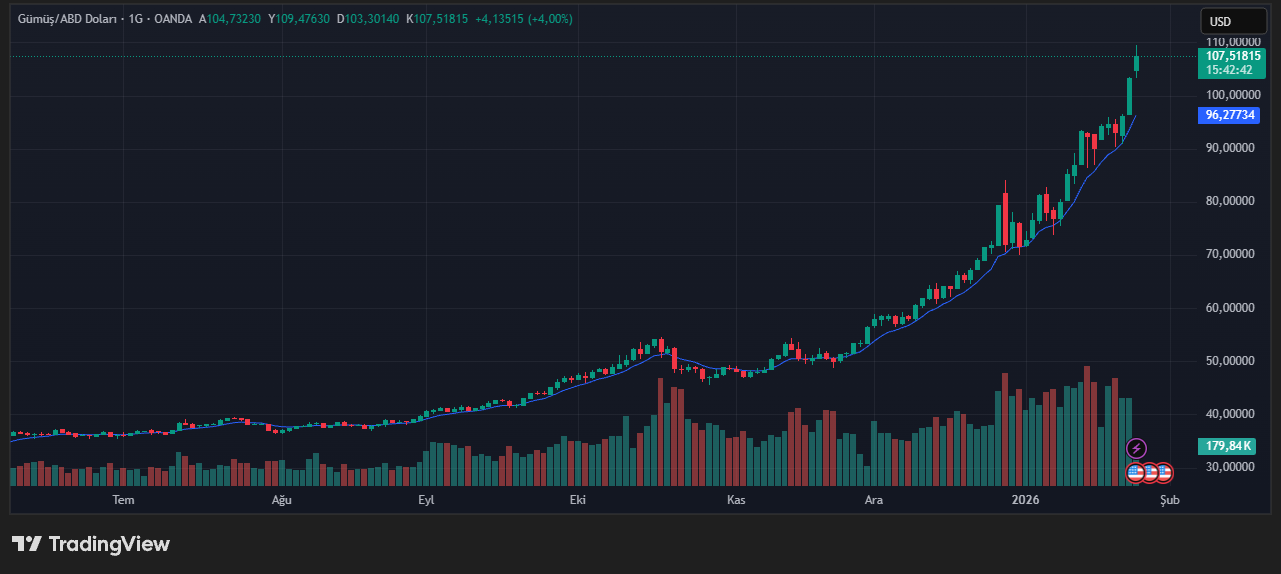
This coordinated move suggests that investors are positioning defensively across multiple hard assets rather than reacting to a single headline-driven catalyst.
Bitcoin and Gold Continue to Decouple
While precious metals advance, Bitcoin tells a different story. The leading cryptocurrency has retreated to around $86,000, roughly 30% below its October peak of $126,000. This decline has widened the gap between Bitcoin and gold, challenging the narrative that digital assets consistently function as “digital gold” during periods of macro stress.
Investors Favor Gold Over Treasuries
Another notable shift is the relatively muted demand for US Treasuries. Expectations that the Federal Reserve will keep interest rates unchanged—supported by resilient economic growth and labor data—have reduced the appeal of bonds as a defensive play.
Combined with political uncertainty and fiscal risk, these conditions have pushed global investors away from government debt and toward gold instead.
In summary, gold’s record-breaking rally highlights how capital flows behave during periods of elevated uncertainty. While Bitcoin remains a long-term speculative asset for many, recent price action suggests that, for now, investors continue to place greater trust in traditional safe havens.
You can also freely share your thoughts and comments about the topic in the comment section. Additionally, don’t forget to follow us on our Telegram, YouTube, and Twitter channels for the latest news and updates.