

 Haciyev Reşit
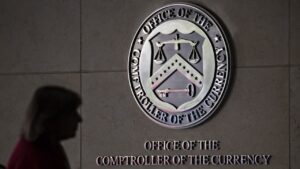
The U.S. banking system has taken one of its most significant steps toward digital assets. The Office of the Comptroller of the Currency (OCC) announced that national banks are now officially allowed to hold crypto assets on their balance sheets in order to pay blockchain network fees (gas fees). Reported by Bloomberg, this development paves the way for banks to take a more active role in blockchain-based payment and custody services.
Authority to Hold Crypto for Blockchain Network Fees Becomes Official
In Interpretive Letter No. 1186, published on Tuesday, the OCC stated that banks may hold a certain amount of cryptocurrency as required for operational needs. Under this framework, banks may keep crypto assets on their balance sheets to:
- conduct transactions on blockchain networks,
- pay gas fees required on behalf of customers,
- use the necessary tokens during custody or transfer services.
The OCC emphasized that this decision aligns with the U.S. stablecoin bill (“National Innovation Guidance and Establishment Act”) and is necessary for banks to effectively carry out permitted digital-asset activities.
What Changes for Banks?
The new regulation removes one of the biggest obstacles banks faced when operating on blockchain-based platforms. Networks such as Ethereum, Solana, and Avalanche require native tokens to process transactions. Before this clarification, banks were extremely cautious about holding these tokens due to regulatory uncertainty.
With the new rule:
- banks can pay gas fees directly using crypto assets,
- digital asset custody operations will become faster and more efficient,
- blockchain infrastructure can be utilized more comfortably in internal banking operations.
This step makes Web3 integration far smoother for traditional financial institutions.
A New Era for U.S. Regulators
The timing of the decision is notable. The Federal Reserve, FDIC, and the U.S. Treasury are currently working on new stablecoin regulations. Combined with the crypto-friendly stance of the Trump administration, a more “innovation-driven” regulatory perspective is becoming influential.
Under Comptroller Jonathan Gould appointed by President Trump the OCC has begun abandoning its years-long caution, granting national banks a broader operational scope in digital assets. This latest announcement is seen as one of the clearest examples of that shift.
Overall Assessment
The OCC’s decision coming from one of the most influential banking regulators in the U.S. — marks a major step toward aligning the crypto sector with traditional finance. Banks will no longer remain passive observers of the blockchain ecosystem; they will be directly integrated into its operational mechanics. This could create significant momentum for institutional crypto adoption in the years ahead.
You can also freely share your thoughts and comments about the topic in the comment section. Additionally, don’t forget to follow us on our Telegram, YouTube, and Twitter channels for the latest news and updates.