

 Emre Yumlu
As Bitcoin continues to fluctuate around the $85,000 range, market attention is gradually shifting away from short-term volatility toward broader macroeconomic and structural forces. Many analysts argue that the first months of 2026 could represent a decisive turning point for the crypto market, potentially setting the stage for a new long-term trend.
At the heart of this optimistic outlook are expectations surrounding U.S. monetary policy and the political calendar.
Federal Reserve Policy and Liquidity Expectations
One of the main pillars supporting long-term bullish projections for Bitcoin is the belief that the U.S. Federal Reserve may begin moving away from its restrictive monetary stance. Market participants are closely watching for signals that quantitative tightening could come to an end, alongside the possibility of interest rate cuts and short-term liquidity support via Treasury bill mechanisms.
Some analysts also point to softening labor market data as a factor that could push the Fed toward a more accommodative policy approach. Under such conditions, capital tends to rotate toward higher-risk assets, a scenario in which Bitcoin has historically benefited.
If these macro conditions align, long-term forecasts suggest that Bitcoin could potentially rise into the $200,000 to $250,000 range over time. While this scenario is not guaranteed, it reflects growing confidence in Bitcoin’s role as a macro-sensitive asset rather than a purely speculative instrument.
Short-Term Price Action Remains Unstable
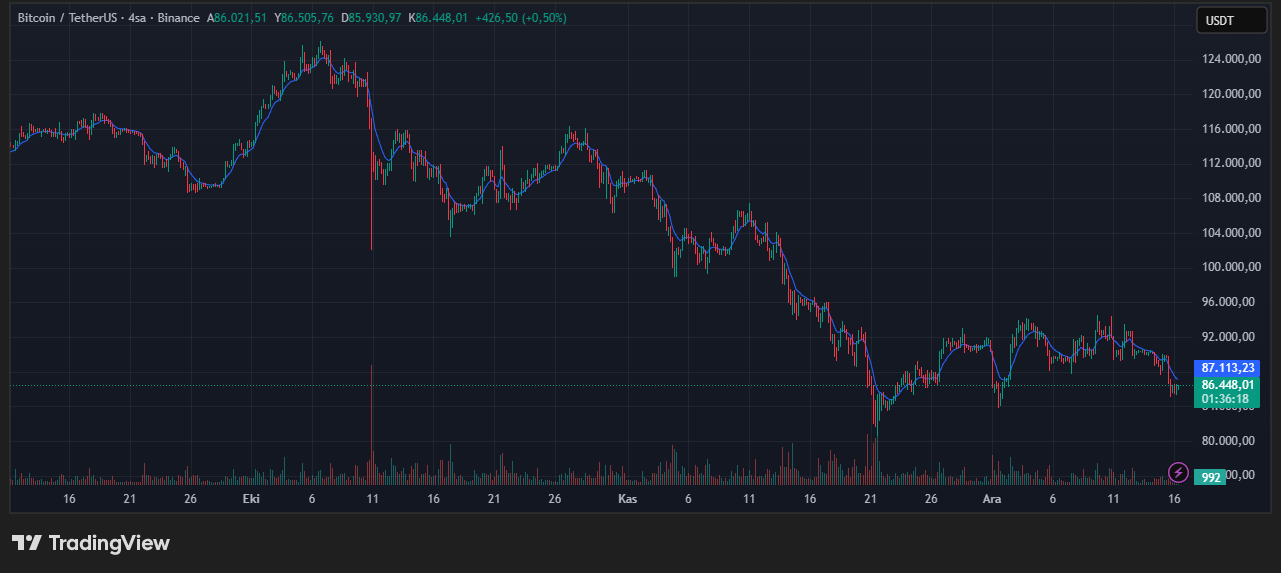
Despite constructive long-term narratives, Bitcoin’s short-term price behavior remains choppy. After briefly slipping below $83,000, BTC rebounded toward the $86,000 level during Asian trading hours. Upcoming U.S. inflation releases, including CPI and Core PCE data, are expected to play a key role in shaping expectations around Fed policy heading into 2026.
Recent performance data shows Bitcoin down roughly 2% on a weekly basis and close to 7% over the past 30 days. Nevertheless, BTC continues to dominate the market, maintaining a 57% share of total crypto market capitalization.
The Broader 2026 Crypto Narrative
Looking beyond price targets, analysts emphasize that the crypto market is entering a phase of structural maturation. Increasing Bitcoin holdings by public companies and ETFs, declining exchange balances, and a growing preference for long-term custody all point to a shift away from speculative trading toward institutional participation.
From a technical perspective, $90,000 remains a critical resistance level. A confirmed breakout could reopen the path toward the $92,000–$94,000 range and eventually bring the psychological $100,000 level back into focus. Failure to clear this zone, however, could result in deeper corrective moves.
Overall, the outlook suggests caution in the short term, while 2026 continues to stand out as a potentially transformative period for Bitcoin and the broader crypto market.
This content does not constitute investment advice.
You can also freely share your thoughts and comments about the topic in the comment section. Additionally, don’t forget to follow us on our Telegram, YouTube, and Twitter channels for the latest news and updates.