

 Haciyev Reşit
Rising geopolitical tensions in the Middle East have begun to shake global energy markets. Following the war launched by the U.S. and Israeli coalition against Iran, the closure of the Strait of Hormuz and the inability of commercial ships to move in the Persian Gulf have raised serious concerns about global oil supply. The closure of this critical waterway through which a significant portion of the world’s oil trade passes has created panic in energy markets and caused a sharp surge in oil prices. Starting the new week with a strong jump, Brent crude oil prices rose above $115, testing even higher levels shortly afterward. This sudden rise in energy markets has increased global inflation expectations while strengthening the risk-off sentiment across financial markets. These developments have not only affected the oil market but have also directly impacted global stock markets, commodity prices, and crypto assets, drawing investors’ attention to the unfolding situation in the Middle East.
Sharp Rise in Oil Prices
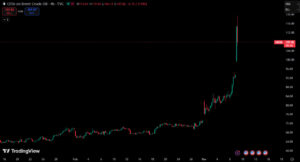
The war threatening energy supply has triggered a historic surge in oil prices. During overnight trading when markets opened, Brent crude oil climbed as high as $119. By the morning hours, prices stabilized around $115. This rapid surge in energy markets has once again raised concerns about global supply disruptions and shifted investor focus toward developments in the Middle East. West Texas Intermediate (WTI) crude oil, the U.S. benchmark, also recorded a strong increase. According to the data:
- WTI rose 18.98%, reaching $108.15 per barrel
- Brent crude increased 16.19%, reaching $107.70
This rally is considered one of the strongest moves in energy markets in recent years. U.S. crude oil prices rising around 35% last week marked one of the largest weekly increases in the futures market since 1983. According to experts, oil market volatility is expected to remain high if geopolitical risks continue.
Strait of Hormuz Crisis Threatens Energy Supply
Approximately 20% of global oil trade passes through the Strait of Hormuz. Therefore, the continued closure of the strait and tanker companies avoiding the region due to security risks are putting serious pressure on global oil supply. This situation has also raised concerns that a significant part of the global supply chain could be disrupted. Increasing security risks and transportation issues have led oil-producing countries to reassess their production strategies.
Several producers have already begun adjusting production levels to manage supply and storage capacity:
- Kuwait announced “preventive cuts” in oil production
- Iraq’s production dropped from 3 million barrels per day to about 1.3 million barrels
- The United Arab Emirates is cautiously reducing production to manage storage capacity
Declining production and difficulties in transporting oil are putting significant pressure on global supply and increasing uncertainty in energy markets. Experts warn that if the situation continues, oil prices could rise even further.
Experts Warn of Even Higher Oil Prices
Qatar’s Energy Minister Saad al-Kaabi, in an interview with the Financial Times, warned that the current crisis could push oil prices even higher. He noted that tensions in the region could have long-lasting effects on energy markets and that restoring the supply chain would take time.
“Even if the war ended today, it would take weeks to stabilize the system again.”
Energy experts believe that if the crisis in the Strait of Hormuz continues, it could cause a serious contraction in global oil supply. In such a scenario, oil prices could rise to $150 per barrel in a short period of time. The war in the Middle East threatening energy supply has created a major shock in global oil markets. The closure of the Strait of Hormuz, production cuts, and disruptions in tanker traffic have pushed oil prices sharply higher while also increasing volatility in global financial markets. Experts warn that if geopolitical tensions persist, a new global energy crisis could emerge, potentially creating widespread effects on the global economy.
Also, you can freely share your thoughts and comments about the topic in the comment section. Additionally, please follow us on our Telegram, YouTube and Twitter channels for the latest news and updates.