

 Haciyev Reşit
Following the outbreak of war over the weekend between Iran and the Israel–United States axis, global markets entered the new week with sharp price movements. As geopolitical risks escalated suddenly, investors turned to safe-haven assets, with strong buying pressure particularly in gold and oil. Uncertainty surrounding energy supply and rising risks around the Strait of Hormuz pushed oil prices sharply higher. Increasing safe-haven demand drove gold prices closer to new highs, while fears of potential supply disruptions and insurance-related logistical issues fueled the surge in oil. In contrast, the cryptocurrency market showed a different picture. Although Bitcoin experienced sharp volatility in the early hours of the conflict, panic selling remained limited, allowing the price to rebalance and maintain a sideways trend. While deepening geopolitical tensions led to aggressive pricing in energy and commodity markets, global equity markets opened the week cautiously and with volatility. Investors are now focused on how long the conflict will last and how severely it will impact energy supply.
Gold and Oil Prices Surge
As the war entered its third day, risk perception in the markets continued to rise. As of Monday morning:
- Gold per ounce climbed to $5,340
- Silver per ounce rose to $93
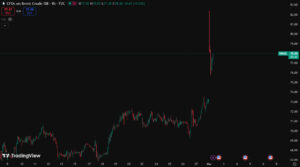
- Brent crude surpassed $75, marking one of its sharpest increases in the past four years
Despite traditional markets being closed over the weekend, tokenized gold assets such as Tether Gold and PAX Gold surged above $5,500, drawing attention. The rise in Brent crude oil is reported to be the fastest since the Russia–Ukraine war. The most significant impact on energy markets has been felt through the Strait of Hormuz, which handles roughly 25% of global oil trade and 20% of LNG shipments. Following reports that two commercial vessels were struck after Iranian intervention, major insurers reportedly suspended issuing war risk policies. Although the strait has not been officially closed, uninsured ships are unable to pass, creating serious uncertainty in oil supply. While approximately 20 million barrels of oil reportedly transited the strait on Saturday, no vessels were said to have passed in the last 24 hours.
Bitcoin Remains Stronger Than Expected
Despite heightened geopolitical risks, Bitcoin managed to remain relatively stable. On the first day of the conflict, BTC fell to around $63,000 amid rising uncertainty but quickly rebounded to the $68,000 range following reports that Iran’s Supreme Leader Ali Khamenei had died. The rebound was largely attributed to expectations that the conflict might be shorter than anticipated and that market risk perception could ease rapidly. Although global markets were dominated by panic over the weekend, Bitcoin saw limited selling pressure. Notably, there were no significant outflows from large spot wallets, and liquidations in derivatives markets remained contained, helping prices stabilize.
On the first trading day of the new week, Bitcoin maintained its sideways movement and appeared more resilient compared to the sharp volatility in traditional markets. While gold and oil experienced aggressive rallies, Bitcoin’s stabilization within the $68,000–$70,000 range led to commentary suggesting that the asset has recently shown stronger resistance to geopolitical shocks. Continued institutional demand and ongoing ETF inflows are considered key factors preventing a sharper downside break.
Statement from Donald Trump: Operations Will Continue
U.S. President Donald Trump stated overnight that military operations would continue. According to White House sources, air and missile operations coordinated between the United States and Israel are not yet complete and will continue until strategic objectives are met.
In his remarks, Trump emphasized that the intervention is not short-term:
“Operations will continue until we reach our objectives. Our losses may increase.”
He also stated that much of Iran’s senior military command structure has been neutralized and that operations are proceeding according to plan. His comments reinforced expectations that geopolitical tensions will not ease in the short term, sustaining elevated risk perception in global markets. Following his statements, upward momentum in energy and commodity markets accelerated.
Asian Markets Open Lower
Rising geopolitical risks also triggered selling pressure in Asian markets:
- Japan’s Nikkei 225 fell 1.2%
- Hong Kong’s Hong Kong Stock Exchange declined 1.5%
- The Shanghai Stock Exchange rose nearly 1%
Airline stocks faced the steepest losses due to rising fuel costs and increased risks. Overall, escalating tensions in the Middle East have heightened uncertainty around energy supply and global trade, driving gold and oil prices higher. Meanwhile, Bitcoin has demonstrated relative stability despite turbulence in traditional markets. The course of the war will remain a decisive factor for price movements in energy markets and crypto assets alike.
You can also freely share your thoughts and comments about the topic in the comment section. Additionally, don’t forget to follow us on our Telegram, YouTube, and Twitter channels for the latest news and updates.