

 Emre Yumlu
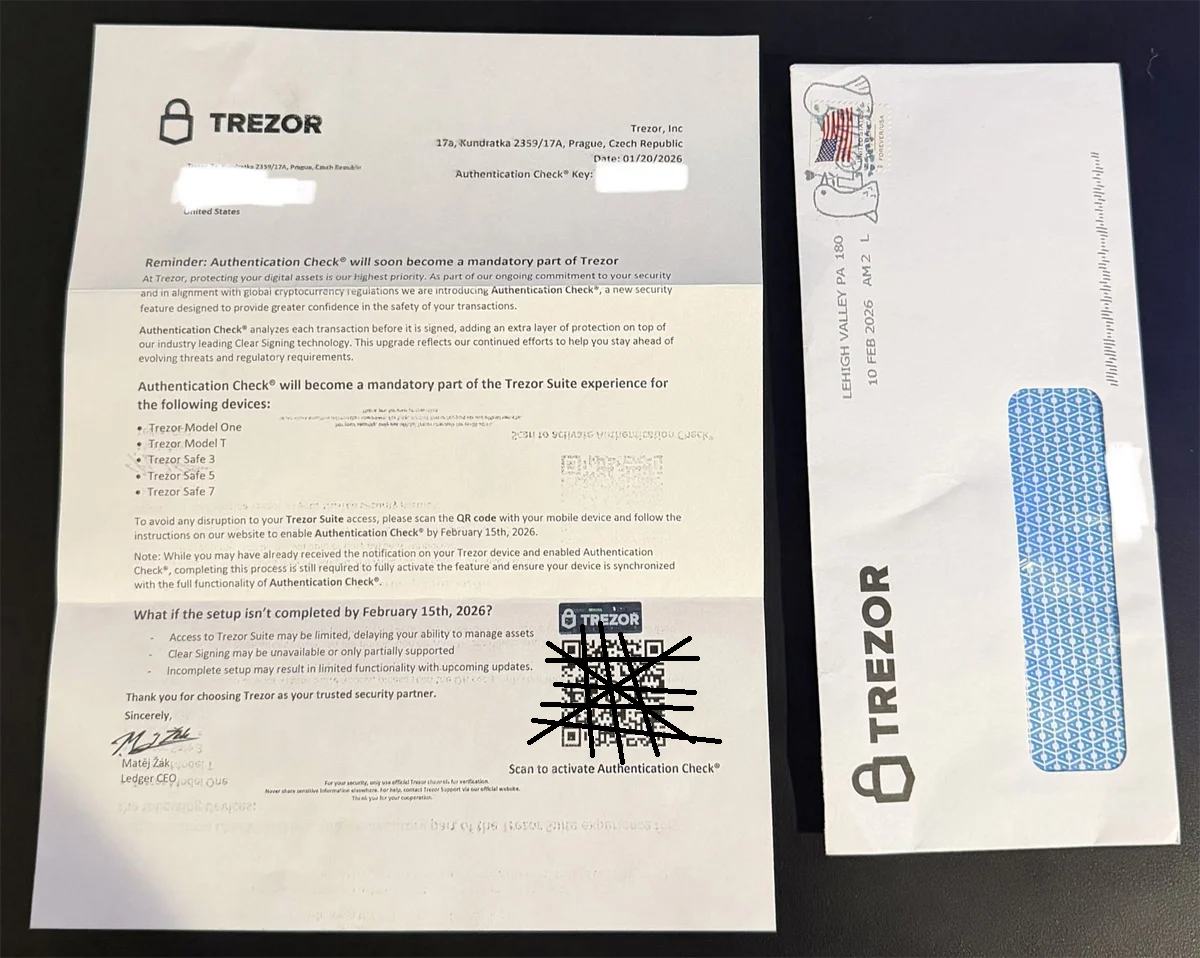
A new wave of scam is targeting hardware wallet owners through an unexpected channel: physical mail. As of February 2026, reports indicate that users of Ledger and Trezor have received counterfeit letters posing as official support communications. The goal is simple but dangerous: trick recipients into revealing their 24-word recovery seed phrases.
Unlike typical phishing emails, this campaign leverages the perceived legitimacy of printed correspondence. The letters feature realistic branding, formal layouts, and urgent language designed to pressure users into taking immediate action.
How the Scheme Operates
The scammer letters typically claim that a “mandatory authentication check” or “transaction verification” is required to maintain wallet access. Some warn recipients that failure to comply by a specific deadline could result in loss of access to their funds. Others instruct users to scan a QR code for what is described as a critical security update.
Scanning the code directs victims to websites that closely imitate official domains. These fake portals prompt users to enter their recovery phrases under the guise of verification. Once the seed phrase is submitted, attackers gain full control of the wallet and can transfer all stored crypto assets.
To build credibility, the letters often include reminders never to share recovery phrases online—an ironic tactic that lowers suspicion before directing users to malicious sites.
Why Hardware Wallet Users Are Vulnerable
Previous security incidents have made hardware wallet customers attractive targets. In 2020, a data breach exposed the personal information of more than 270,000 Ledger customers, including email addresses and physical mailing details. In 2021, scammers distributed tampered devices and fake executive letters urging users to migrate funds. A 2023 supply-chain compromise affecting Ledger’s Connect Kit software also resulted in significant losses tied to Ethereum-based applications.
These past exposures provide attackers with verified contact data, enabling more convincing and targeted campaigns.
How to Stay Protected
Legitimate wallet providers never request recovery phrases under any circumstances. If an unexpected letter arrives, users should independently visit the company’s official website by manually typing the address into their browser rather than scanning QR codes or clicking links.
Seed phrases must remain strictly offline and should never be entered on any website. Additional safeguards such as two-factor authentication, multi-signature setups, and regular wallet monitoring can further reduce risk.
This campaign highlights an evolving threat landscape where offline communication channels are weaponized. Hardware wallet owners must treat every unsolicited request with skepticism and rely on verified sources before taking action.
Also, you can freely share your thoughts and comments about the topic in the comment section. Additionally, please follow us on our Telegram, YouTube and Twitter channels for the latest news and updates.