

 Emre Yumlu
Bitcoin has been hovering in the mid-$60,000 range in recent weeks, showing relatively muted price action. Yet beneath the surface, on-chain data reveals a notable shift in ownership dynamics. While smaller investors continue to accumulate, whales appear to be trimming exposure — a divergence that could shape the market’s next major move.
Growth in Small Wallet Holdings on Bitcoin
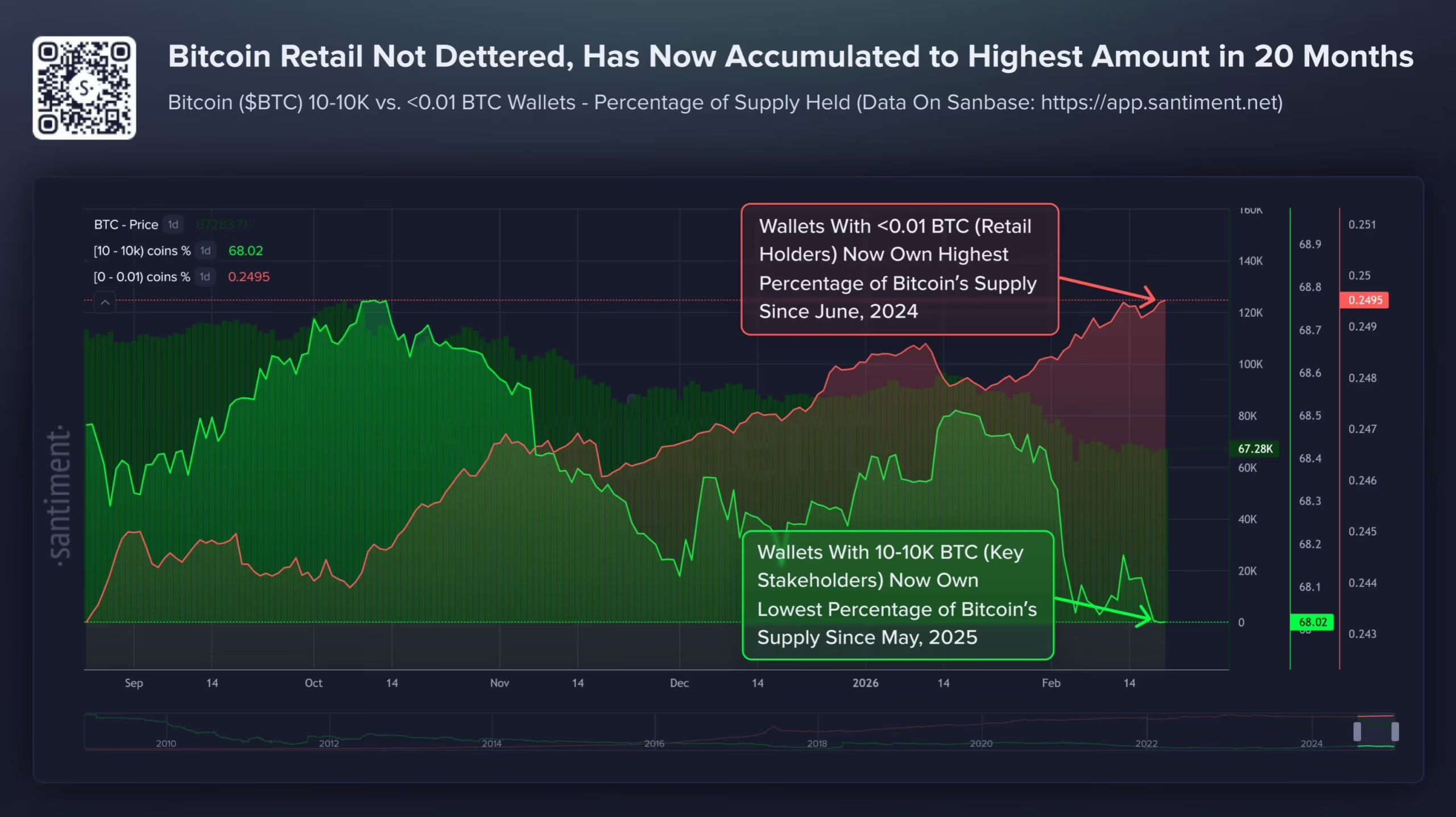
According to data from Santiment, wallets holding less than 0.1 BTC — typically associated with retail participants — have increased their total holdings by 2.5% since Bitcoin’s October peak of $126,100. This cohort’s share of total supply has climbed to its highest level since mid-2024.
The trend suggests that individual investors are viewing recent pullbacks as buying opportunities. In particular, after Bitcoin dropped toward $60,000 on February 5, smaller and mid-sized wallets showed signs of renewed accumulation. Retail participants appear willing to step in during periods of weakness, helping establish a potential price floor.
Large Holders Reduce Exposure
In contrast, wallets holding between 10 and 10,000 BTC — often categorized as whales and sharks — have reduced their holdings by approximately 0.8% over the same period. Historically, sustained price trends tend to require alignment from this larger capital base.
During the sharp February sell-off, Glassnode’s Accumulation Trend Score rose to 0.68, marking the strongest broad-based accumulation signal since late November. This metric evaluates the relative strength of accumulation across wallet sizes over a 15-day period, with values closer to 1 indicating accumulation and values near 0 signaling distribution. At that time, the 10–100 BTC cohort stood out as aggressive dip buyers.
However, when examining Santiment’s broader 10–10,000 BTC range, net positioning since October remains negative. One possible interpretation is that mid-sized wallets accumulated during panic conditions, while the largest holders continued selling into subsequent recoveries, offsetting those gains.
What’s Needed for a Sustainable Rally?
Retail investors can help stabilize prices and generate short-term momentum. But durable uptrends typically require meaningful participation from large holders prepared to absorb supply.
At this stage, Bitcoin may not need an influx of new retail capital — that segment is already active. Instead, the key variable is whether large wallets stop distributing and begin accumulating again. Without that shift, each rally attempt risks being met with renewed selling pressure.
Smaller investors are doing their part. The market’s next decisive move likely depends on whether the whales decide to follow.
Also, you can freely share your thoughts and comments about the topic in the comment section. Additionally, please follow us on our Telegram, YouTube and Twitter channels for the latest news and updates.