

 Yeliz Akmaca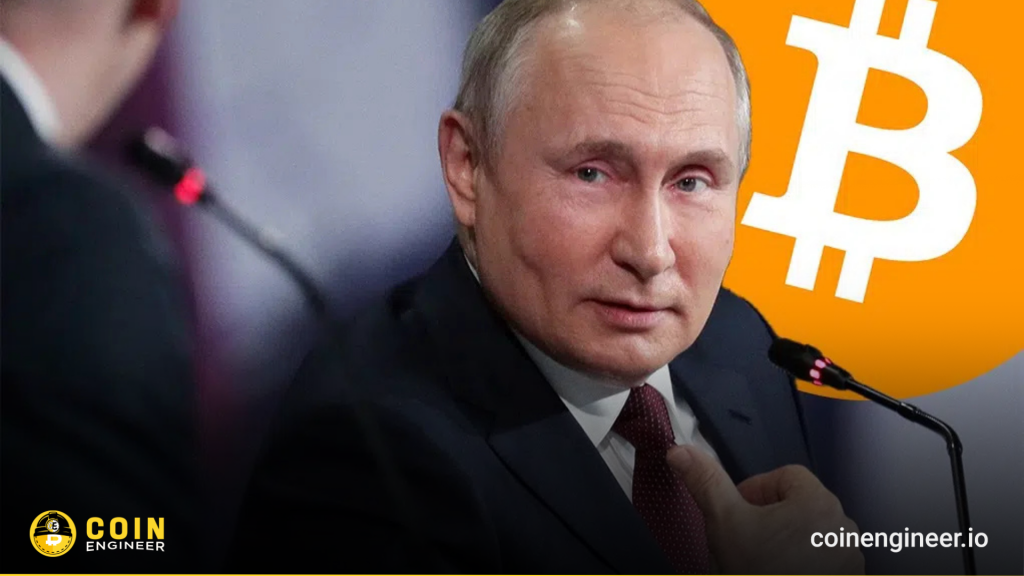
Moscow’s latest move signals a new phase in Russia’s crypto policy. Russian President Vladimir Putin has signed a law granting courts and law enforcement the authority to seize digital assets, including Bitcoin. The decision comes at a time when access to foreign cryptocurrency exchanges may face tighter restrictions, while a criminal investigation involving Telegram founder Pavel Durov continues to unfold.
Crypto Assets Recognized as “Intangible Property”
Vladimir Putin signed the legislation, first reported by Kommersant, which formally recognizes crypto assets as “intangible property.” The technical classification matters. Amendments to the Criminal Code and Criminal Procedure Code now explicitly place Bitcoin and other digital assets within the scope of confiscation.
Courts may seize digital assets in criminal proceedings. Requests filed by investigators or prosecutors must specify the type, amount, and wallet address of the crypto assets in question. In practice, authorities have already carried out such seizures; this law provides a clearer legal framework.
In certain cases, funds may be transferred to a designated state-controlled address. The government will determine the procedures for transfer and storage separately. The framework is defined, but operational details are still pending.
Signals of Restrictions on Foreign Crypto Exchanges
Russia is moving toward stricter crypto regulations this year. Officials have emphasized that investors should use domestic platforms with a physical presence in Russia. Analysts suggest the Kremlin could gradually limit citizens’ access to foreign cryptocurrency exchanges.
Government sources claim Russian citizens spend approximately $650 million per day on crypto trading. The figure underscores why regulatory oversight is intensifying. Capital control concerns and sanctions risk management appear to be converging.
Meanwhile, regulatory developments in the United States and the European Union increasingly target crypto transactions linked to sanctioned Russian entities. Blockchain analytics firm Elliptic has identified several exchanges associated with Russia-linked transactions attempting to bypass Western sanctions.
Against this backdrop, policymakers are reportedly considering elements of the Belarus model — restricting unlicensed foreign platforms without fully eliminating access. Whether a complete ban emerges or a filtered access regime takes shape remains uncertain.
Pavel Durov and the Telegram Front
Pavel Durov has confirmed that Russian authorities opened a criminal case against him on charges of “aiding terrorism.” He argues the move aims to suppress privacy and freedom of expression.
Telegram has had a tense relationship with Russian regulators for years, including prior access restrictions. A renewed ban is now under discussion.
For the crypto ecosystem, Telegram functions as more than a messaging app. It hosts trading communities, token project coordination, and over-the-counter deal flows. In that sense, the Durov investigation intersects indirectly with the broader regulatory shift in Russia’s digital asset space.
Where Russia’s Crypto Strategy May Be Heading
New market regulation measures are expected before July 1. The broader objective appears to be a more controlled and domestically anchored crypto ecosystem. State oversight is increasing, while cross-border flows are becoming more visible.
Importantly, Russia has not banned crypto outright. By granting seizure authority, the state simultaneously acknowledges digital assets within its legal structure. Governments tend to formalize what they intend to regulate.
In the near term, the direct price impact on Bitcoin may remain limited. However, geopolitical risk, sanctions enforcement, and diverging regulatory frameworks continue to reshape global crypto liquidity patterns. Russia’s move represents not only a domestic legal shift, but another chapter in the ongoing debate over sovereignty and control in the digital asset era.
You can freely share your thoughts and comments about the topic in the comment section. Additionally, please don’t forget to follow us on our Telegram, YouTube and Twitter channels for the latest news and updates instantly.