

 Emre Yumlu
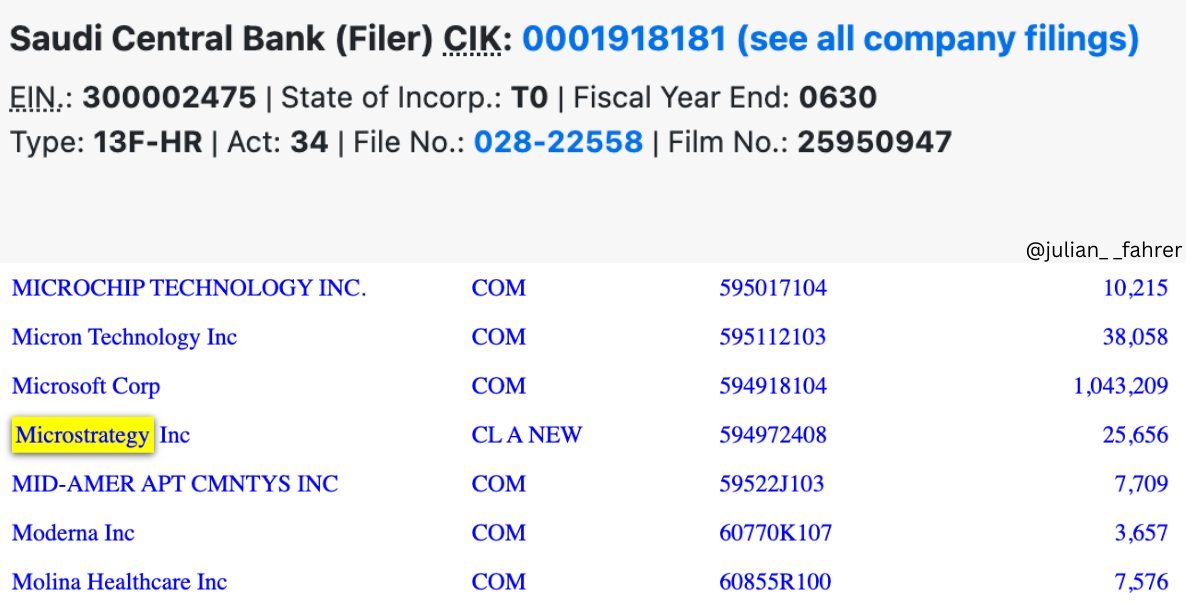
In a groundbreaking shift from its traditional investment approach, the Saudi Central Bank has taken a step toward the digital asset space by acquiring shares in Strategy (formerly known as MicroStrategy), a company renowned for its heavy Bitcoin exposure. According to recent disclosures, the bank purchased 25,656 shares, valued at approximately $10.19 million.
Indirect Exposure to Bitcoin Through a Strategic Asset
While the Saudi Central Bank has not directly purchased Bitcoin, its investment in Strategy effectively gives it indirect exposure to the world’s leading cryptocurrency. Strategy currently holds 568,840 BTC, worth around $68 billion at current market prices, making it the largest corporate holder of Bitcoin globally. The company has long embraced BTC as its primary treasury reserve asset.
This move signals a shift in how central banks may view reserve diversification, stepping beyond traditional holdings like gold and U.S. dollars to explore the long-term potential of digital assets.
A Growing Trend Among Global Institutions
Saudi Arabia’s decision mirrors that of sovereign entities like Norway’s Government Pension Fund, which has previously invested in crypto-exposed firms such as Strategy, Coinbase, and Metaplanet. This indirect method of gaining crypto exposure enables institutions to participate in the digital asset market without directly holding cryptocurrencies.
Traditionally viewed as risk-averse, the Saudi Central Bank’s latest move marks a notable evolution in sentiment toward digital assets. Analysts believe this could set a precedent for other sovereign wealth funds and central banks seeking to modernize their portfolios in a rapidly changing global financial landscape.
Market Reaction and Industry Response
Following the news, Strategy’s stock (MSTR) experienced a 5% dip, closing at $397. Despite the temporary decline, the crypto industry largely welcomed the development. Many view this as a strong endorsement of Strategy’s Bitcoin-centric approach, particularly from a financial institution as conservative as Saudi Arabia’s central bank.
Still, critics remain cautious. Longtime Bitcoin skeptic Peter Schiff questioned the wisdom of Strategy’s debt-funded Bitcoin purchases. Nonetheless, Saudi Arabia’s backing adds legitimacy to the notion that Bitcoin could serve as a long-term reserve asset for large institutions.
Bitcoin’s Role in the Future of Global Finance
The Saudi Central Bank’s investment is more than just a portfolio adjustment — it’s a signal that Bitcoin is being taken seriously by major financial players. As central banks seek new strategies to balance risk and growth, Bitcoin is increasingly viewed as a viable component in diversified national reserve frameworks.
This development could be a tipping point for institutional crypto adoption, encouraging further exploration of digital assets by sovereign institutions worldwide. With Saudi Arabia entering the scene, the path toward broader mainstream acceptance of Bitcoin appears more solid than ever.
You can freely share your thoughts and comments about the topic in the comment section. Additionally, don’t forget to follow us on our Telegram ,YouTube and Twitter channels for the latest news and updates.