

 Haciyev Reşit
As one of the largest institutional holders of Bitcoin, Strategy witnessed a rare development in the crypto markets this week. The company’s market capitalization briefly fell below the total value of the Bitcoin it holds, dipping under a 1 NAV ratio for the first time since January 2024. This situation signaled a notable shift in investor sentiment.

Why Did MicroStrategy’s Market Value Fall Below Its Bitcoin Holdings?
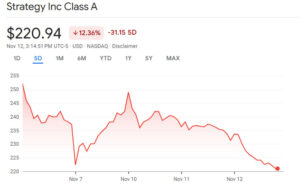
The company’s 641,692 BTC are worth approximately $66.59 billion at current prices, yet Strategy’s market capitalization dropped to $65.34 billion during the day. Thus, despite historically trading at a premium over its assets, the company temporarily moved into negative premium (discount) territory.
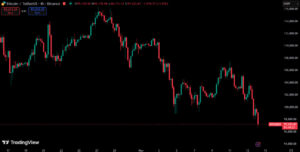
This divergence indicates that investors view MicroStrategy’s operational structure, leverage level, and dilution risks as more concerning compared to Bitcoin itself. While Bitcoin fluctuated between $99,000 and $96,000 throughout the week, MicroStrategy shares experienced far greater volatility.
Why Is NAV Falling? Institutional Risk and Capital Expansion in Focus
Although MicroStrategy is known for its aggressive Bitcoin accumulation strategy, it frequently raises capital through equity and preferred stock offerings to sustain this approach. This increases dilution risk for shareholders while also raising the company’s debt burden.
The company recently added 487 BTC for $49.9 million. But according to analysts, even these additional purchases aren’t enough to ease selling pressure on the stock. Investors increasingly perceive direct Bitcoin exposure as a cleaner and less risky way to invest.
Why Is MicroStrategy Stock Weaker While Bitcoin Remains Strong?
The Crypto Fear and Greed Index falling into the “extreme fear” zone reflects how fragile market psychology has become. Yet Bitcoin held a relatively tight trading range compared to MicroStrategy stock, demonstrating stronger resilience.
This highlights a key distinction:
- Bitcoin is a direct asset,
- MicroStrategy is a company with operational risks, debt, and ongoing capital raises.
Therefore, from a risk perspective, MSTR shares are seen as a more leveraged proxy for BTC.

Fear of Bitcoin Selling: Is It Realistic?
The drop of NAV below 1 sparked debates on social media and among analysts: “Will MicroStrategy sell Bitcoin?”
However, this scenario appears highly unlikely.
There are two main reasons:
- MicroStrategy’s business model is entirely built around Bitcoin.
Selling BTC would contradict its core strategy. - A major sell-off would trigger a snowball effect, damaging the market and hurting the company itself.
This makes selling an irrational decision.
Separately, a large transfer of 76,000 BTC (worth around $4.5 billion) from company wallets was detected today. But these transfers are believed to be part of cold-storage restructuring, not sale-related activity.
Strategy Trading Below NAV Signals a Shift in Market Behavior
MicroStrategy briefly trading below the value of its Bitcoin holdings shows a subtle yet important change in institutional investor behavior. The market still rewards direct exposure to Bitcoin, but companies with leverage, debt, and dilution risks are no longer receiving the same premium. This indicates that despite weak market conditions, Bitcoin remains strong, while MicroStrategy carries higher volatility and structural risks.
You can also freely share your thoughts and comments about the topic in the comment section. Additionally, don’t forget to follow us on our Telegram, YouTube, and Twitter channels for the latest news and updates.