

 Ahmet Bedirhan Arvas
Anoma is a distributed operating system (OS) architecture aimed at developing “intent-centric” applications for Web3. In the classic chain/VM (virtual machine) paradigm, users specify execution permissions (transactions) individually; in Anoma, the user declares the outcome (intent), and the rest is coordinated by solvers, service providers, and Anoma nodes. This approach aims to unify the multi-chain world in a single development environment, decentralize counterparty discovery, and make privacy and data sovereignty programmable.
What is Anoma?
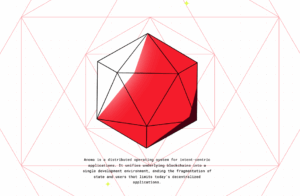
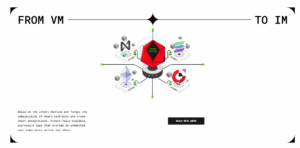
Anoma is defined as a distributed operating system where developers can write intent-centric applications, users can broadcast their intents across the network, and these intents can be aggregated and executed atomically across different chains by solvers. The project emphasizes the transition from “VM to IM (Intent Machine)”: application logic is defined in Anoma’s Resource/Intent Machine layer, while settlement initially occurs on existing service providers like Ethereum and L2s. Anoma thus aims to “defrag” multi-chain fragmentation (liquidity, users, and state) with a single development surface.
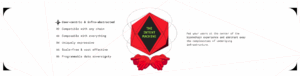
- User-centric & infrastructure abstracted: The user only specifies the outcome.
- Multi-chain compatible & unified: Single deployment, multi-chain access.
- Intent-level composition: Only intents, not transactions, are composed.
- Scale-independent: Distributed data/computation approach reduces cost and scales efficiently.
- Programmable data sovereignty: The application defines who sees what.
How Does Anoma Work?
Intents and Intent Propagation (Gossip)
The user interface shapes the user’s preferences and constraints as intents; nodes propagate these intents through the intent network (intent gossip). Solvers match individual or multiple intents to generate an executable plan (e.g., atomic swaps across multiple DEXs, cross-chain settlement) and send it to the target chain(s) as a transaction. This enables multi-party & multi-chain coordination beyond the traditional “single-chain, single-transaction” model.
Resource Machine and Application Model
Anoma’s developer documentation relies on a resource-based state model with concepts such as state/logic/kind/lifecycle, balanced transactions, projections, and intents. Developers write application logic with Juvix, and clear interfaces exist for indexing and solving services. This model aims to surpass the limits of VM-centric designs through application portability and intent-level composition.
Minimum Viable Resource Plasma (MVRP) Architecture
The first mainnet version is defined using the “Resource Plasma” approach: existing providers (Ethereum mainnet and L2s, search/solver services) are used for ordering/computation/storage; Anoma nodes and the P2P system weave these into a single intent machine. Here:
- Operators run Anoma nodes and participate in intent propagation, solving, and settlement.
- Solvers can combine Anoma intent liquidity with EVM intent liquidity to achieve single-transaction atomic settlement.
- Developers write intent-centric applications using resource machine + Juvix.
- Users select relays, accounts, storage, and ordering providers as part of the intent and define their own security model.
4) Advanced Features in the Roadmap
Anoma progresses through devnet → testnet → mainnet (Phase 1: Ethereum ecosystem; Phase 2+: other ecosystems). Future plans include private solving, FHE, MPC, threshold encryption, Chimera chains, and eventually Anoma native “on-demand consensus” with native token. The consensus phase aims for low latency/cost by allowing multiple parallel instances and local settlement.
Research and prototypes in the Anoma ecosystem include Taiga, Typhon, Vamp-ir (ZK proof tools), and Juvix. Literature and forum posts on multi-asset shielded pools (MASP) and intent-centric design further detail the architecture’s privacy and discovery aspects.
What is the Purpose of Anoma?
- Starting the application age: Offering an OS that abstracts chain differences, encouraging building applications instead of chains.
- Radically simplifying user experience: Specify the outcome, and let the infrastructure/bridges/MEV/multi-chain complexity be coordinated in the background.
- Decentralized counterparty discovery & settlement: Ending server-dependent intent matching and enabling fully decentralized discovery/solving/settlement.
- Privacy & data sovereignty: Programmable data sharing; the application decides who sees which data for what purpose.
- Scale independence: Distributing data/computation to edge devices and using on-chain verification (ZK, etc.) to keep costs low.
Anoma team posts frame this as a web browser-like OS that combines different service providers into a single intent machine. Even in the early mainnet phase, applications can run with real value without Anoma-specific token/consensus.
Who Founded Anoma?
Awa Sun Yin, Adrian Brink, and Christopher Goes are the key founders. The official blog’s funding announcement is signed by the Anoma Foundation Council. The team comes from Cosmos/Tendermint, privacy-focused cryptography, and ZK research.
Who Are Anoma’s Investors?
Anoma raised a total of ~$57–60M across three main rounds between 2021–2023.
- April 2021 — $6.75M: Led by Polychain Capital; Electric Capital, Coinbase Ventures, etc. participated.
- November 2021 — $26M: Led by Polychain Capital; Electric Capital, CMCC, etc. (Anoma Foundation, Switzerland-based; funds Heliax for development).
- May 2023 — $25M: Co-led by CMCC Global; Electric Capital, Delphi Digital, Dialectic, KR1, Spartan, NGC, MH Ventures, Bixin, No Limit, Plassa, Perridon, Anagram, Factor, and numerous angel investors participated.

The Backers section on Anoma’s official website also lists: Polychain Capital, Coinbase Ventures, Electric Capital, Delphi Digital, Spartan Group, CMCC Global, Figment, CMS, Zola/Zola Global, Dialectic, MH Ventures, Plassa Capital, Anagram, Cygnilabs.
Anoma Tokenomics
No official tokenomics has been announced by the project yet.
Official Sources
For the latest cryptocurrency news, click here