

 Yeliz Akmaca
Auki (AUKI) is a decentralized infrastructure project designed to allow AI and digital devices to perceive the physical world with a shared understanding. At its core is posemesh, enabling robots, augmented reality (AR) glasses, mobile devices, and other XR hardware to interpret physical spaces within the same reference frame. Auki is built on the premise that making the physical world accessible to AI will significantly expand the global AI market.
Today, a large portion of the global economy still relies on physical locations and human labor. Auki bridges this gap by making these physical environments interoperable with digital systems.
Project Concept
Auki addresses the limitation of AI systems that perceive the physical world individually and in isolation. Devices typically map their surroundings independently, with data rarely shared or sent to centralized platforms. Auki proposes a decentralized system where devices can temporarily collaborate to create shared spatial awareness.
Instead of creating a single, massive “digital twin” of the world, Auki enables smaller, interconnected domains that can adapt to local needs and collaborate seamlessly.
How It Works
The Auki Network operates on the posemesh protocol. This protocol allows devices to:
- Share location, orientation, and environmental sensing data
- Distribute computational and spatial processing across the network
- Collaborate without sending data to a central server
Visual-inertial odometry improves spatial accuracy by reducing GPS uncertainty. Posemesh domains correspond to physical spaces, enabling shared AR experiences.
Team & Founders
Auki was founded by a multidisciplinary team:
- Nils Pihl (Founder & CEO): Expertise in behavioral engineering and data science.
- Santeri Aramo (Founder & COO): Software and blockchain infrastructure specialist.
- Robin Lindh: Spatial computing and AR systems.
- Elden Tse: Computer vision and sensor fusion engineer.
The team focuses not only on software but also on robotics and hardware integration.

Investors & Notable Partnerships
Auki has raised approximately $19M in funding.
Key Investors: Kenetic Capital (lead), Animoca Brands, Maelstrom Capital (Arthur Hayes), NGC Ventures, Outlier Ventures.
Notable Partnerships:
- GAIB: Strategic collaboration to deploy 500 retail robots in 2026.
- Zappar: AR content creation and accessibility solutions.
- tagSpace: Location-based AR experiences and navigation.
- Akuret AI: Inventory management and AI analytics for retail.

Governance
The AUKI token functions as the economic engine of the network. Auki is designed with decentralized governance; token holders can influence network development, incentive mechanisms, and protocol updates. The network operates independently of any single corporate entity.
Roadmap
Key focus areas for late 2025 and 2026 include:
- 2026 Goal: Deploy 500 grocery store robots in partnership with GAIB.
- Series A: Scaling the robotics and AR glasses network with a major funding round.
- World Mapping: Community-driven 3D mapping to create open datasets for AI and robotics, with participants rewarded.
Token Use Cases
AUKI tokens are used for:
- Paying for spatial data and computational resources
- Accessing posemesh domains
- Network service and resource incentives
- Participation in governance processes
Token Information
- Token Name: Auki
- Symbol: AUKI
- Total Supply: 9,990,000,000
- Max Supply: 10,000,000,000
- Circulating Supply: 1,200,000,000
Token Distribution
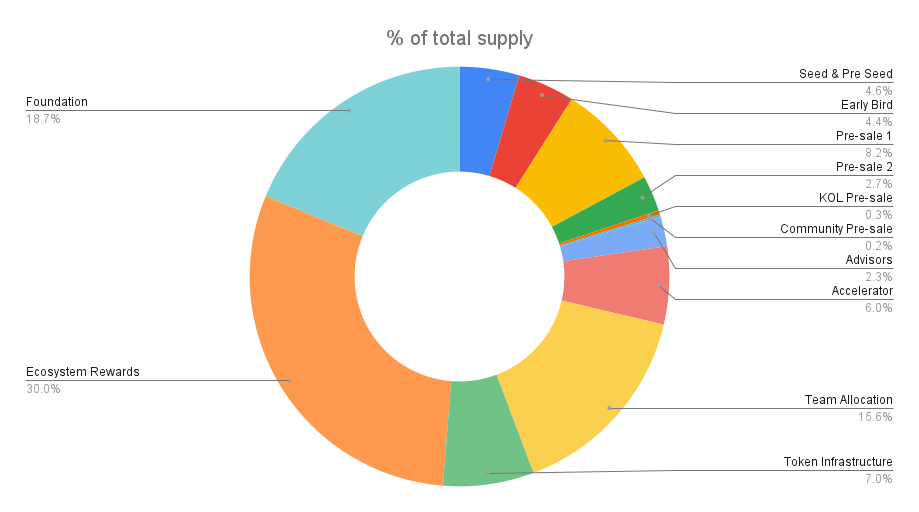
- Ecosystem Rewards: 30.00%
- Foundation: 18.74%
- Team Allocation: 15.58%
- Token Infrastructure: 7.00%
- Accelerator: 6.00%
- Seed & Pre-Seed: 4.60%
- Early Bird: 4.38%
- Pre-sale 1: 8.18%
- Pre-sale 2: 2.73%
- Advisors: 2.30%
- Other sales & community: 0.49%
Features
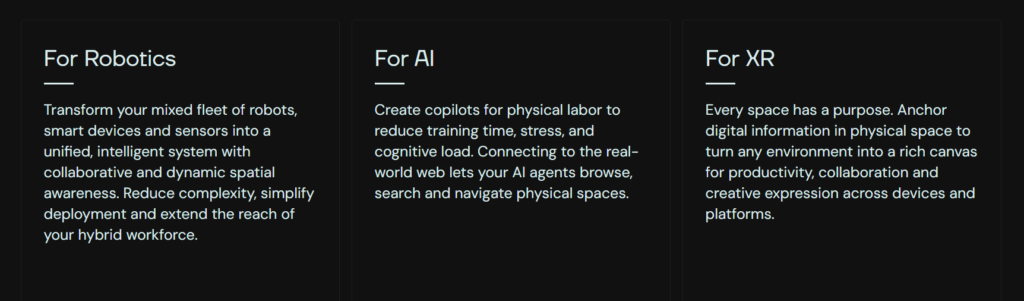
Robotics: Robots and sensors gain shared spatial awareness via posemesh, enabling more efficient operation.
AI: AI agents can navigate, search, and scan physical environments while integrating digital and labor resources.
Extended Reality (XR): Digital information can be permanently anchored in physical spaces; for example, AR notes left on a wall can be viewed by other devices in the same location.
Ecosystem
The Auki ecosystem consists of robots, AR applications, developer tools, and physical space owners. The network operates in thousands of commercial and private locations, hosting revenue-generating applications.
Current Applications:
- Cactus: Spatial AI platform for retail.
- Gotu: Indoor navigation for events and property management.
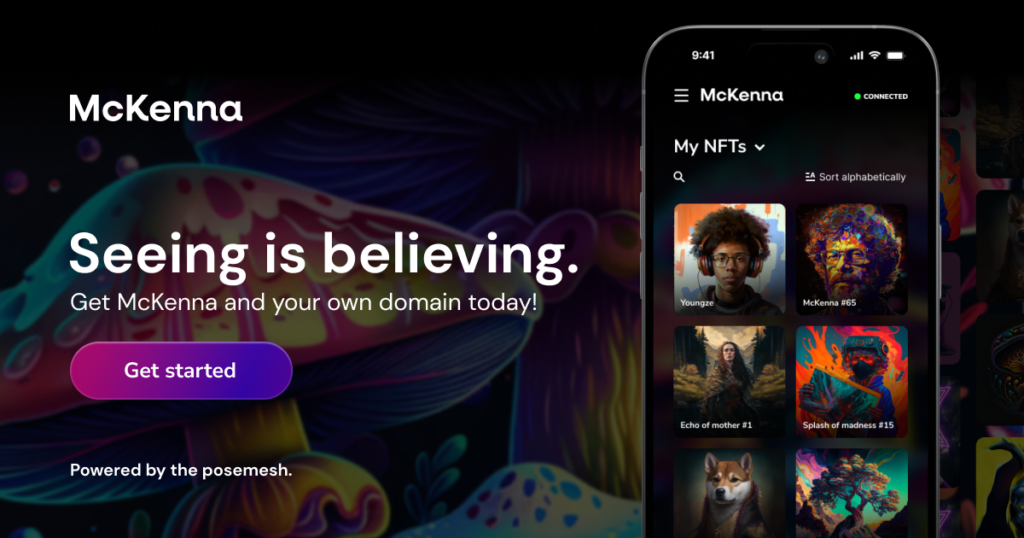
- McKenna: AR home and exhibition decoration.
- Floorcraft: Local multiplayer shared AR game.
Auki (AUKI) sits at the intersection of Web3, AI, and robotics, with real-world deployment experience. While it has strong vision, scalability, regulatory compliance, and hardware dependency are key aspects to monitor. Its long-term success depends on posemesh becoming a widely adopted standard.
Official Links
You can also freely share your thoughts and comments about the topic in the comment section. Additionally, don’t forget to follow us on our Telegram, YouTube, and Twitter channels for the latest news and updates.