

 admin
admin 
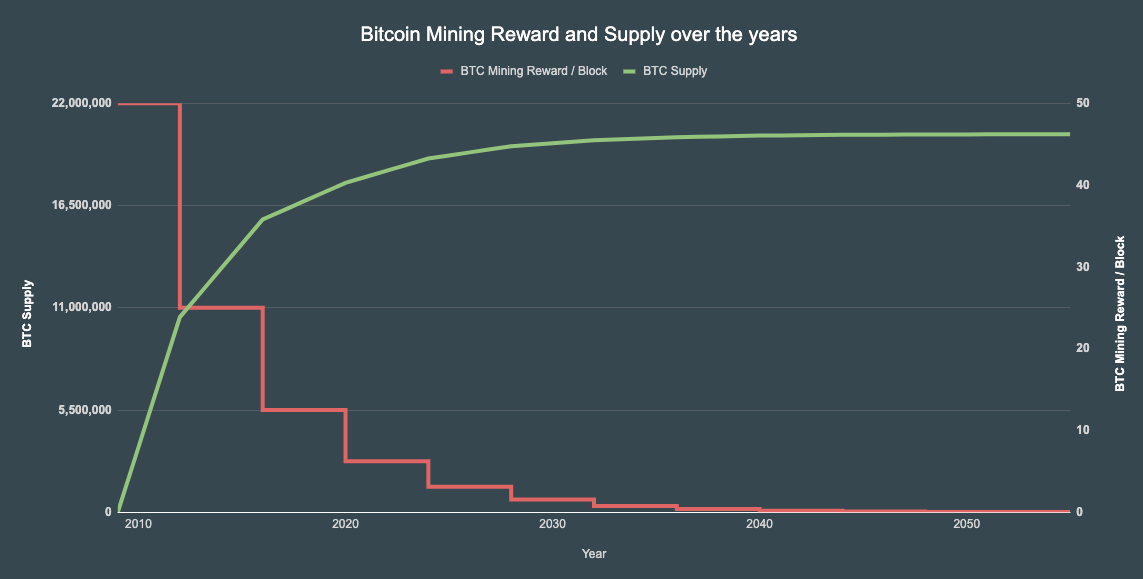
Bitcoin halving is a fundamental mechanism embedded in the Bitcoin (BTC) network protocol that halves the reward given to miners for validating blocks at certain intervals. This process occurs every 210,000 blocks and repeats approximately every four years. The main purpose of halving is to gradually reduce the Bitcoin supply over time and slow down the rate of new Bitcoin production in a controlled manner.
One of the most important features that distinguishes Bitcoin from traditional currencies is that its monetary policy is based on mathematical rules rather than a central authority. The halving mechanism is one of the most critical parts of this structure.
What is Bitcoin Halving?
When Bitcoin was designed by Satoshi Nakamoto in 2009, it was structured as a digital currency with a maximum supply capped at 21 million BTC from the very beginning. This limit prevents Bitcoin from being produced indefinitely and separates it from inflationary fiat currencies.
The halving mechanism regulates how and at what rate this limited supply enters the market. With each halving:
- The amount of newly produced Bitcoin decreases
- The growth rate of the circulating supply slows down
- Bitcoin gradually becomes a scarcer asset
Thanks to this structure, Bitcoin has a predictable and transparent monetary policy.

How Does Bitcoin Halving Work?
The Bitcoin network operates with a consensus mechanism called Proof-of-Work (PoW). In this system, miners use high computational power to validate transactions and create new blocks. A new block is created approximately every 10 minutes, and the miner who successfully validates this block receives a certain amount of Bitcoin reward.
When halving occurs, this block reward is automatically reduced by 50%. This process is not managed by any person or institution; it is entirely executed by the Bitcoin protocol.
Bitcoin Halving Dates
The halving periods that Bitcoin has experienced so far are as follows:
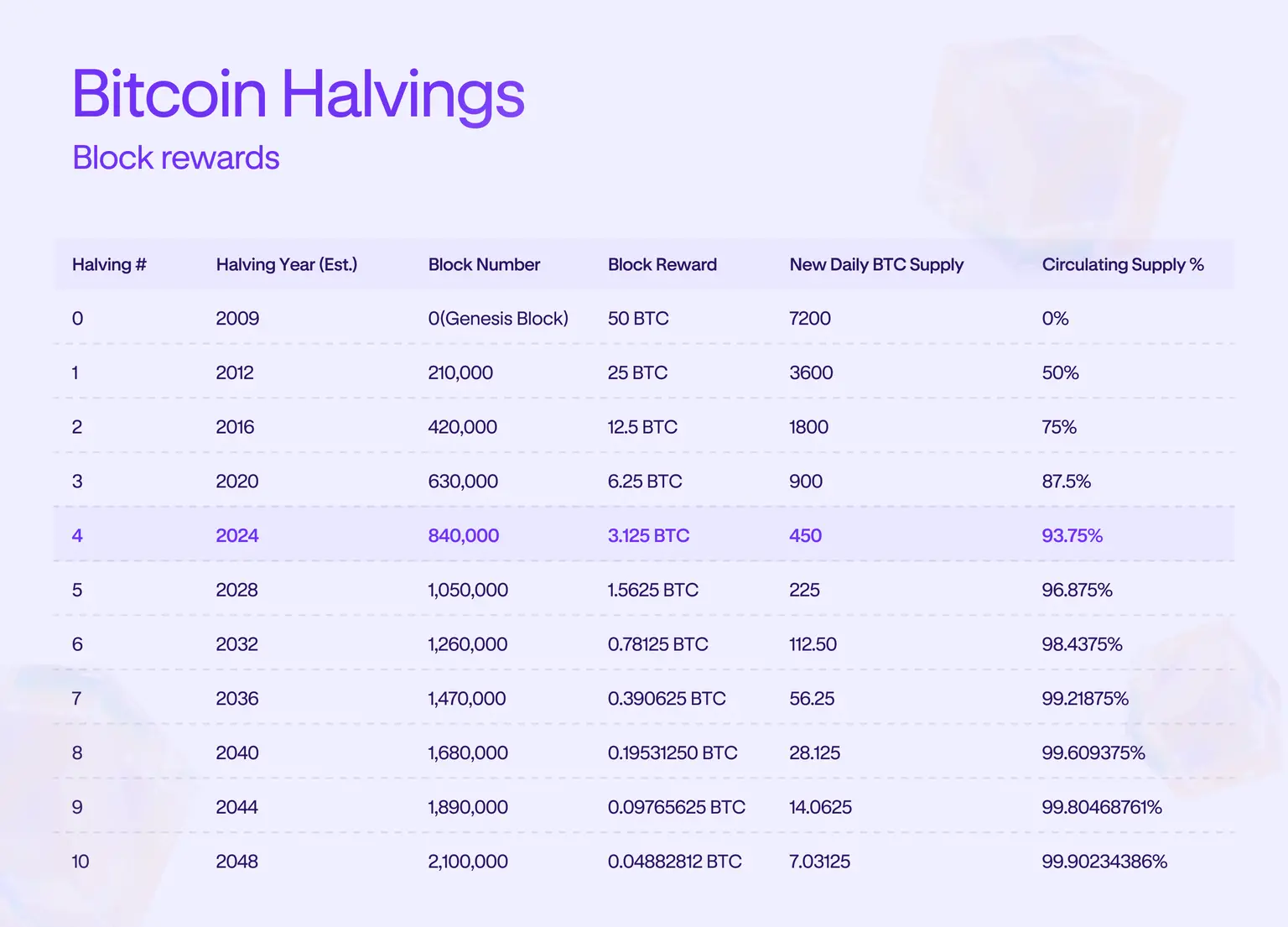
- First Halving – November 28, 2012 Block reward: 50 BTC → 25 BTC
- Second Halving – July 9, 2016 Block reward: 25 BTC → 12.5 BTC
- Third Halving – May 11, 2020 Block reward: 12.5 BTC → 6.25 BTC
- Fourth Halving – April 19, 2024 Block reward: 6.25 BTC → 3.125 BTC
With the fourth halving in 2024, the amount of new Bitcoin produced every 10 minutes has dropped to 3.125 BTC. This reward amount will remain fixed until the next halving.
When Did the Last Bitcoin Halving Occur?
The most recent Bitcoin halving occurred on April 19-20, 2024. As of this date:
- The block reward dropped from 6.25 BTC to 3.125 BTC
- The daily produced Bitcoin amount decreased from approximately 900 BTC to 450 BTC
- The growth rate of Bitcoin supply has slowed significantly
As of late 2025, the circulating Bitcoin amount exceeds approximately 19.96 million BTC, meaning a very large portion of the maximum supply has already been produced.
When Will the Next Bitcoin Halving Occur?
The next Bitcoin halving is expected to occur in 2028. With this halving:
- The block reward will drop from 3.125 BTC to 1.5625 BTC
- The new Bitcoin production rate will halve once again
According to the Bitcoin algorithm, approximately 33 halvings are expected in total. The last Bitcoin is projected to be mined around the year 2140. After this date, miners will only earn income from transaction fees.
Why is Bitcoin Halving Important?
Bitcoin halving is not just a technical protocol update; it is also one of the cornerstones of Bitcoin’s economic model.
- Reduction in Supply With each halving, the amount of new Bitcoin entering the market decreases. If demand remains constant or increases, this can create upward pressure on the price.
- Protection Against Inflation Bitcoin’s limited supply and decreasing production rate make it resistant to inflationary monetary policies.
- Strengthening the Perception of Scarcity Halving reinforces Bitcoin’s digital scarcity feature. This is one of the main reasons Bitcoin is seen as “digital gold.”
- Increasing Market Attention Halving periods increase media interest and investor awareness. This can pave the way for increased demand for Bitcoin.
The Impact of Halving on Miners
Halving has direct economic consequences for miners. The halving of the block reward reduces miners’ income. This situation:
- Encourages investment in more efficient hardware
- Promotes better optimization of energy costs
- Leads to less efficient small miners exiting the network
In the long term, this process acts as a filter that supports the security and sustainability of the Bitcoin network.
What Happens to Bitcoin Price After Halving?
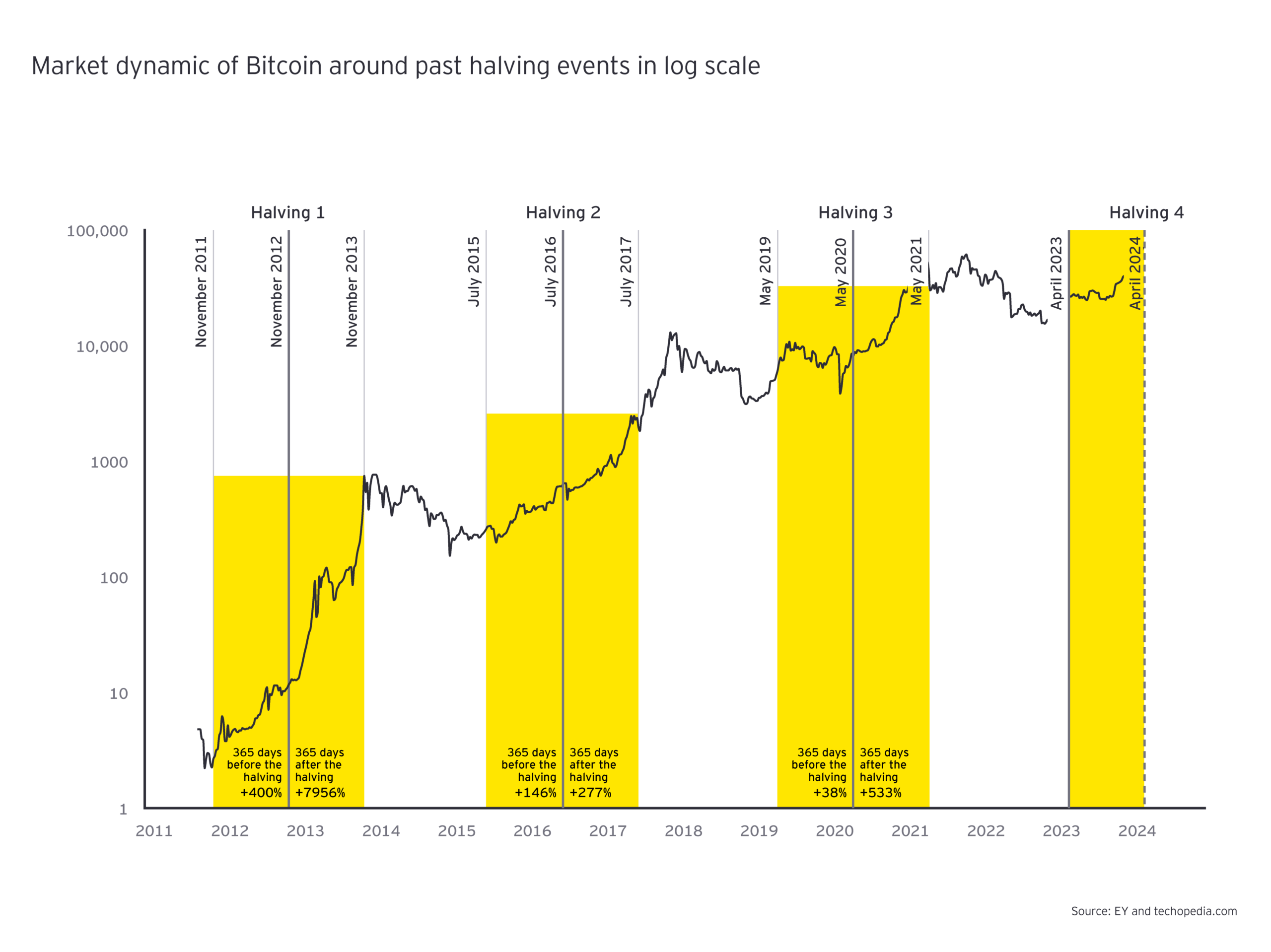
In past halving periods, Bitcoin price has shown a long-term upward trend. However, this does not mean that the price rises immediately with the halving.
Bitcoin price is influenced by many factors such as:
- Macroeconomic conditions
- Regulatory developments
- Global liquidity
- Investor psychology
Halving is just one of these factors. Therefore, there is no guarantee of a definite price increase after each halving.
Halving, Supply and Demand Balance
The market impact of halving largely depends on the supply-demand balance. If new Bitcoin supply decreases while demand stays the same or increases, upward pressure on price may occur. However, if demand decreases, this effect may be limited.
For this reason, Bitcoin halving should be evaluated as a long-term structural effect rather than a single event that determines price on its own.
Bitcoin Halving and Long-Term Value
Bitcoin halving is one of the fundamental elements that position Bitcoin as a store of value in the long term. Thanks to its limited supply, transparent monetary policy, and predictable production model, Bitcoin offers an alternative structure to traditional monetary systems.
In this respect, halving is regarded as a mechanism that forms not only the technical but also the economic and ideological foundation of Bitcoin.
*This content is absolutely not investment advice.
Also, In the comment section, you can freely share your comments and opinions about the topic. Additionally, don’ t forget to follow us on Telegram, YouTube and Twitter for the latest news and updates.