

 Yeliz Akmaca
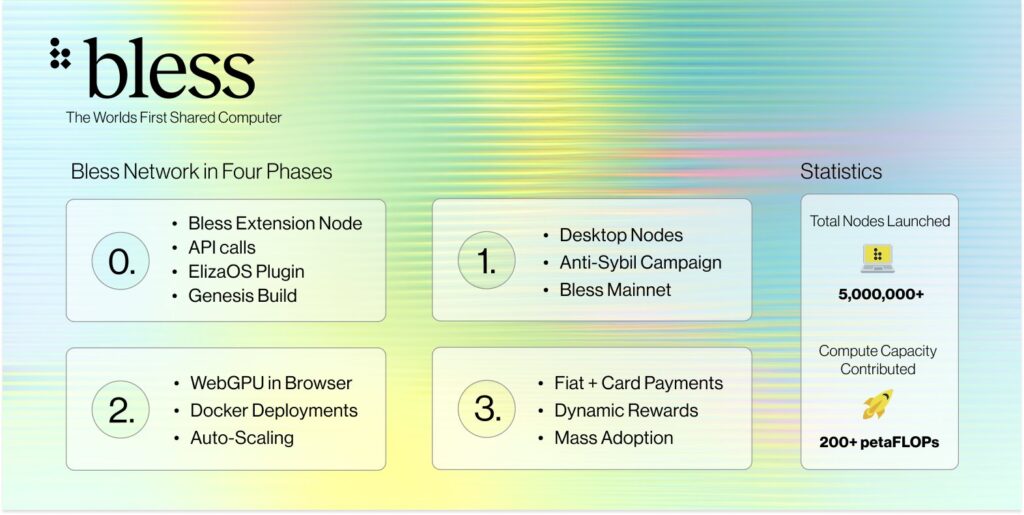
Bless Network is a decentralized edge computing platform that transforms the idle processing power of everyday devices (laptops, desktops, mobile devices) into a global “shared computer” network. Founded in 2022 in San Francisco as “Blockless,” the project had validated over 5 million nodes on its testnet by 2025. Bless aims to reduce reliance on centralized cloud providers, especially for AI and blockchain applications.
Team and Founders
- Butian Li – Investment/strategy experience at NGC Ventures.
- Michael Chen – Blockchain expertise from Binance Labs/Research.
- Liam Zhang – Academic and research background.
The team brings expertise in distributed computing, Web3 research, and venture capital to the project.
Investors and Partnerships
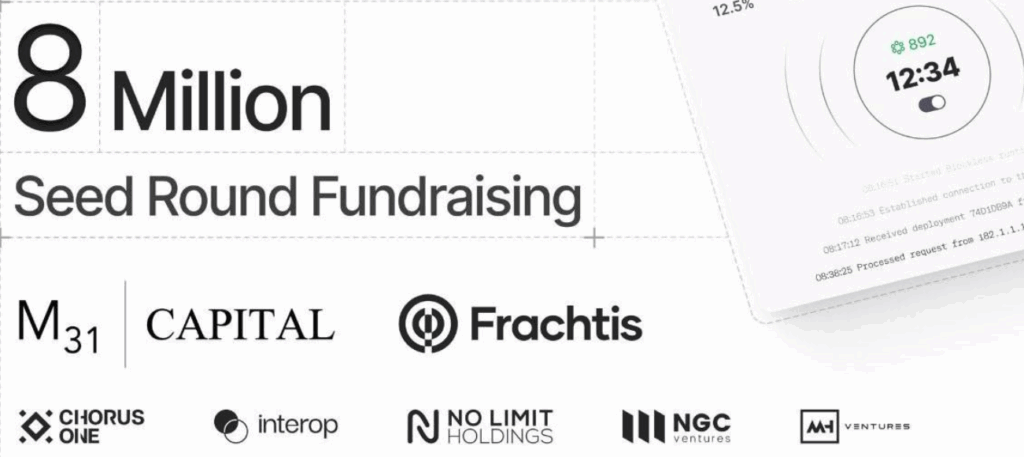
Bless has received backing from prominent funds such as NGC Ventures, Interop, Frachtis, and M31 Capital. The ecosystem plans integration with AI and blockchain infrastructure providers.
Project Concept
Centralized cloud providers (AWS, GCP, Azure) currently host most Web3 applications. Bless solves this “centralization paradox” by turning user devices into infrastructure.
More users = more computing power.
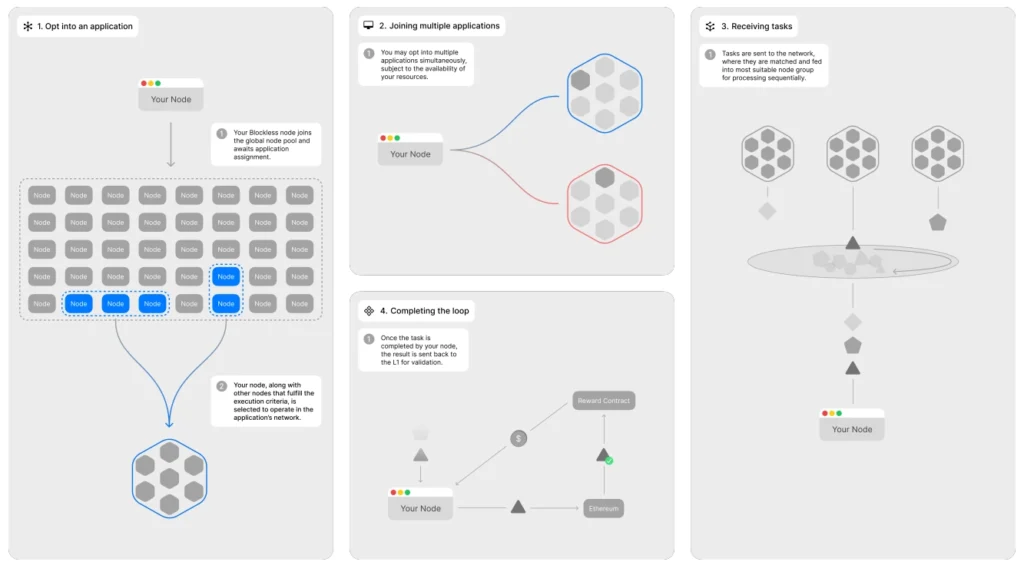
Developers deploy apps directly to distributed nodes via the nnApp framework.
How It Works (Technology & Architecture)
Bless has four core technologies:
- Dynamic Resource Matching: Automatically assigns tasks based on device performance/location.
- Randomized Distribution: Uses Greco-Latin square schemas to make task allocation unpredictable and secure.
- WASM Secure Runtime: Provides secure sandboxed environments protecting both devices and applications.
- Dynamic Verification: Modular verification using pBFT, RAFT, and ZK-Proof to secure computations.
- The orchestration system continuously monitors nodes and distributes tasks in real time.
Governance
- Network operates on a Proof of Stake (PoS) model.
- Node operators stake BLESS tokens to participate; misbehavior results in slashing.
- Delegated staking is supported.
- Multi-application nodes allow a single device to serve multiple applications.
TIME Token
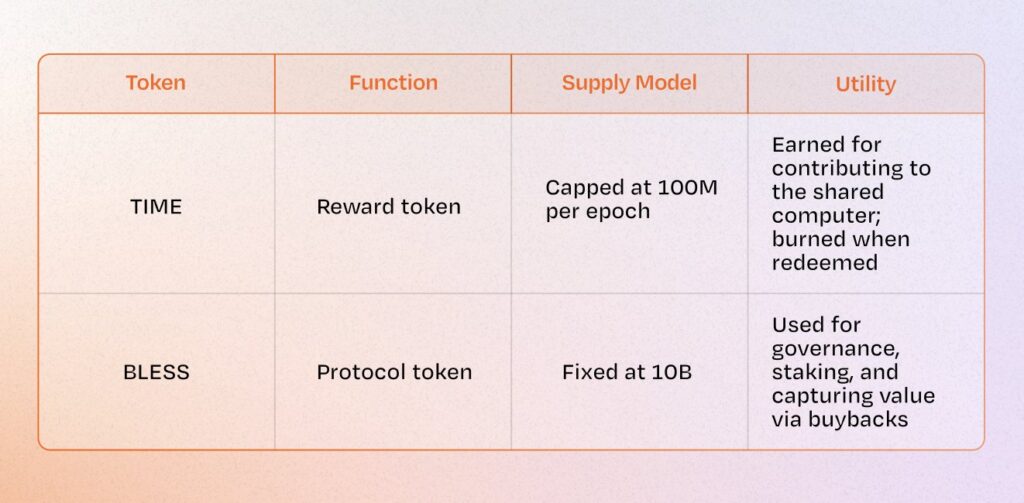
TIME is a reward token with no governance role. It is earned by running nodes or contributing to the network and can later be converted into BLESS and burned.
Roadmap
- Current: Testnet with >5M nodes (including Solana testnet integration).
- Short Term: Mainnet launch, enhanced language support, stronger verification mechanisms.
- Long Term: AI framework integrations, compatibility with major blockchain networks, broader developer ecosystem.
Token Use Cases
Bless Network has two main tokens:
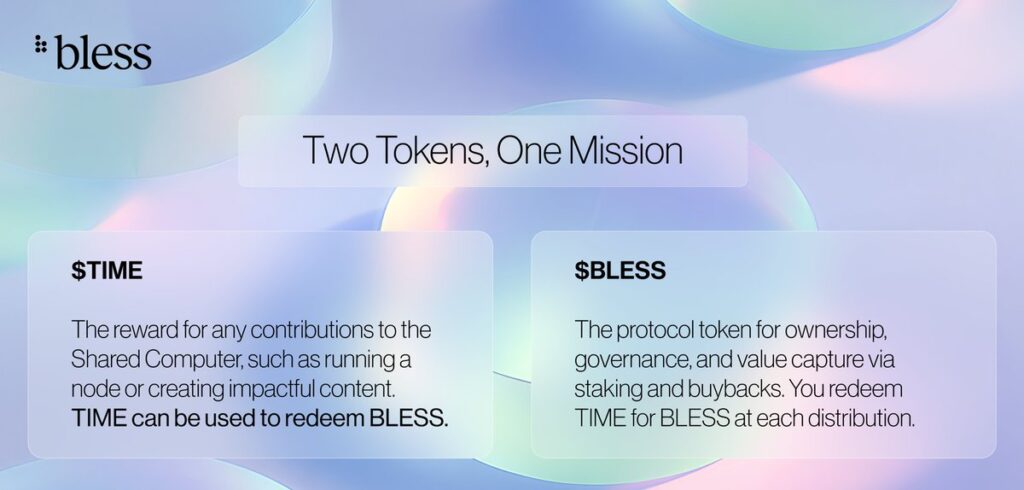
- $BLESS Token: Governance, ownership, staking, and payment for network resources. 90% of revenue from app payments is used to buy back and burn BLESS, reducing supply.
- $TIME Token: Rewards node operators during testnet, convertible to $BLESS.
Token Mechanics
- Users earn TIME by contributing.
- At the end of each epoch, TIME converts to BLESS (immediate or with lockup).
- Applications pay in fiat; 90% of revenue goes to BLESS buyback and burn, 10% retained for treasury.
- Staking BLESS allows users to earn more BLESS.
Supply and Distribution
- BLESS Total Supply: 10B (fixed)
- Circulating Supply: 1.84 milyar BLESS
- TIME Supply: 100M per epoch (burned on demand)

Token Distribution
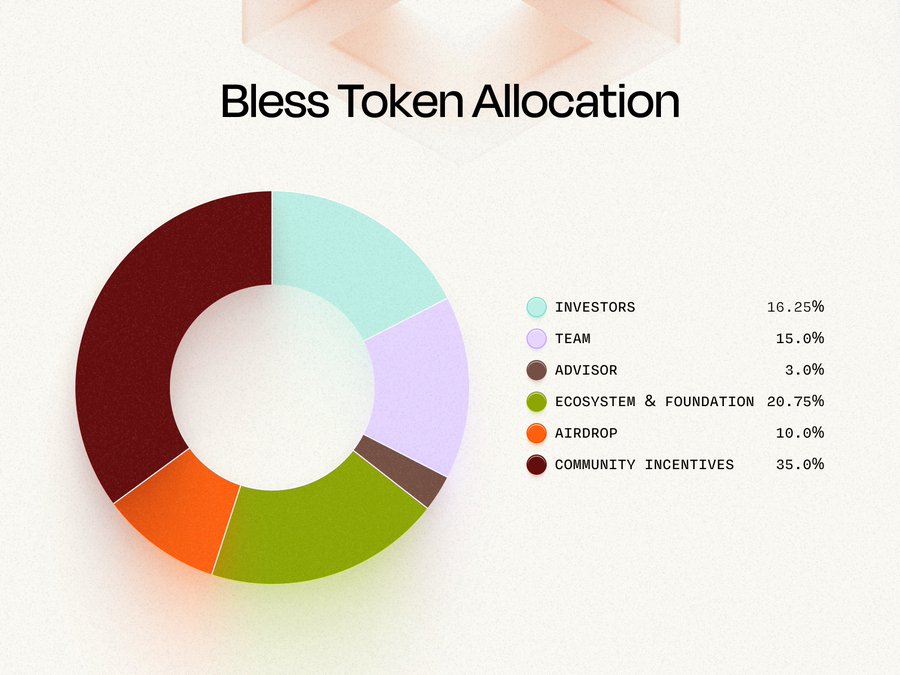
- Community Incentives: 35%
- Ecosystem & Foundation: 20.75%
- Investors: 16.25%
- Team: 15%
- Airdrop: 10%
- Advisors: 3%
Ecosystem
- Developer tools: Bless CLI, Docker images, Chrome extension, mobile/desktop node software.
- Language support: JavaScript & TypeScript (more coming).
- Applications: AI/ML, blockchain validators, IoT/edge computing, content delivery networks.
Features
- Ultra-low latency edge computing
- Up to 90% cost savings vs. cloud
- WASM sandbox + ZKP for security
- Easy participation with consumer-grade devices
- Sustainable energy/infrastructure savings
Official Links & Social Media
Also, you can freely share your thoughts and comments about the topic in the comment section. Additionally, please follow us on our Telegram, YouTube and Twitter channels for the latest news and updates.