
 Yeliz Akmaca
Concordium is a public Layer-1 blockchain platform focused on security, privacy, and scalability. Launched on mainnet in 2021, it is one of the first platforms to require identity verification at the blockchain consensus level. With Zero-Knowledge Proof (ZKP) integration, users can disclose their identity information only when necessary.
Concordium’s native token, CCD, is used for transaction fees, staking, governance, validator rewards, and as collateral in the DeFi ecosystem.

Founders and Team
Concordium was founded by Lars Seier Christensen, co-founder and former CEO of Saxo Bank. He currently serves as the Chairman of the Concordium Foundation Board.
The project has a team of over 80 experts across the Board of Directors, Science Team, Technical Team, Business and Operations Teams, and Advisory Board.

Academic Contributions and Partnerships
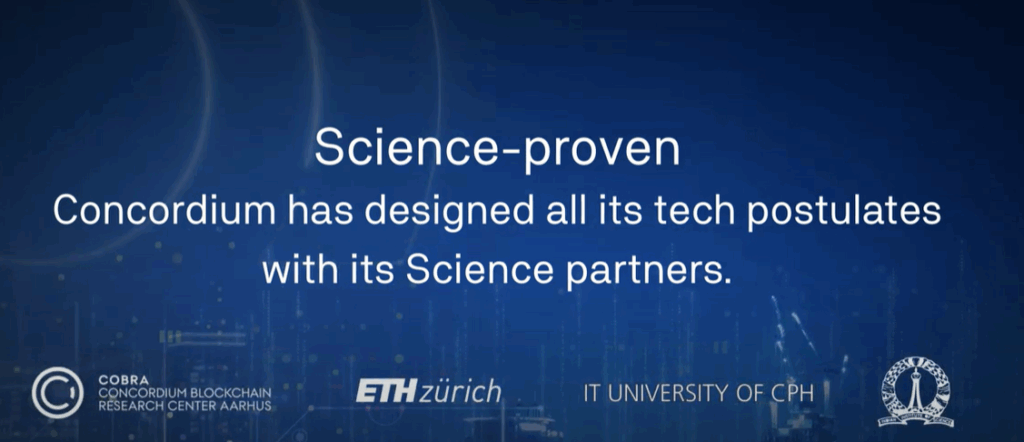
Concordium benefits from strong academic support. Partner institutions include:
- COBRA (Concordium Blockchain Research Center Aarhus)
- ETH Zurich (Swiss Federal Institute of Technology)
Notable contributors:
- Prof. Ueli Maurer: Pioneer in cryptographic security models.
- Prof. Ivan Damgård: Co-inventor of the Merkle-Damgård hash function.
- T.P. Pedersen: Architect of modern ZK protocols.
Investors and Partnerships
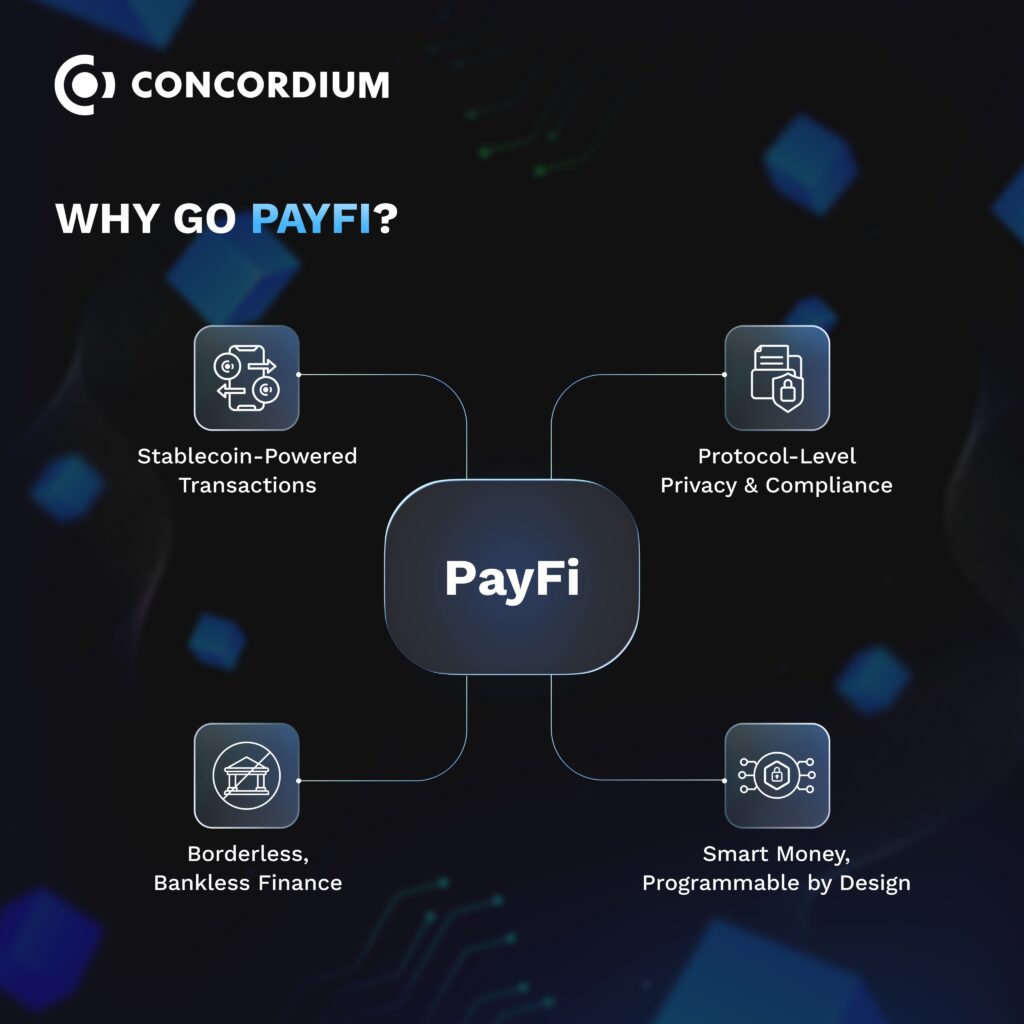
Concordium focuses less on traditional VC investments and more on academic institutions, financial organizations, and corporate partnerships. Under the new CEO, the project is targeting the PayFi sector, aiming to build strategic collaborations with stablecoin issuers, financial institutions, and payment providers.
Project Concept
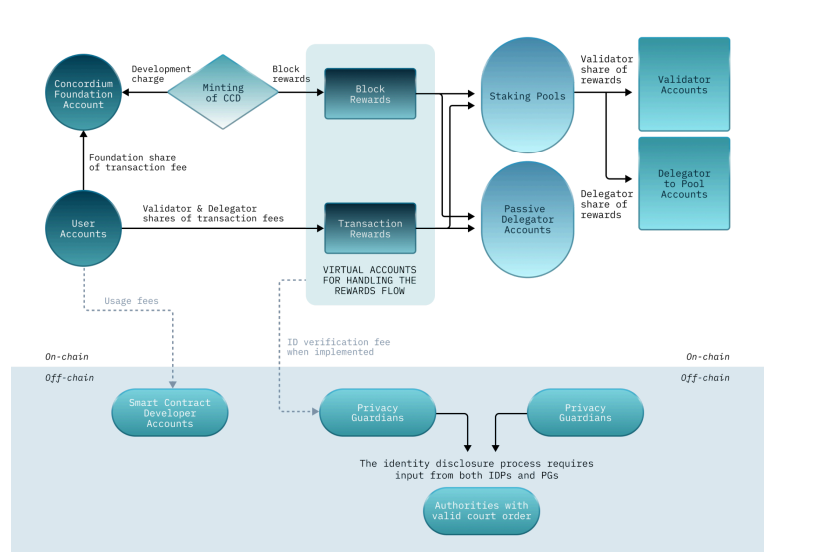
Concordium’s main goal is to operate blockchain technology at the intersection of privacy and compliance. User identities are encrypted at the transaction level. When necessary, legal authorities can access real identities via collaboration with the “Privacy Guardian” and “Identity Providers.” This model ensures both anonymity and regulatory compliance.
How the Project Works
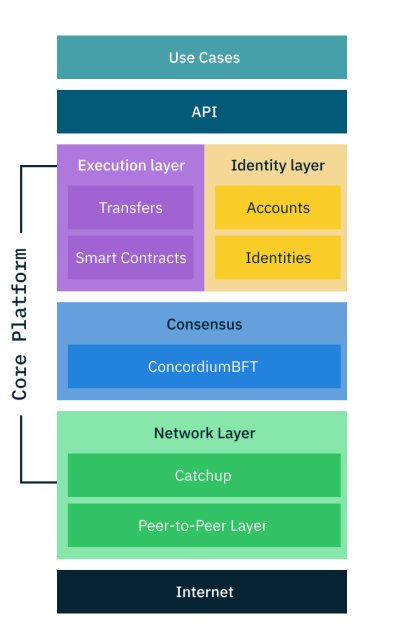
Consensus: ConcordiumBFT, a PoS-based BFT-style mechanism, ensures fast transactions with instant finality.
Identity Layer: Every account is verified by an identity provider. ZK proofs allow selective disclosure of information while maintaining privacy.
Smart Contracts: Supports WebAssembly (Wasm) and Rust, enabling flexible multi-language development.
Protocol-Level Tokens (PLTs): Protocol-managed tokens that reduce smart contract risk.
Governance
Concordium governance is structured around:
- Concordium Foundation (initial control)
- Governance Committee (gradually gaining authority)
- CCD Token holders (DAO participation)
- By 2027, governance is expected to be fully community-driven.
CCD Token Use Cases
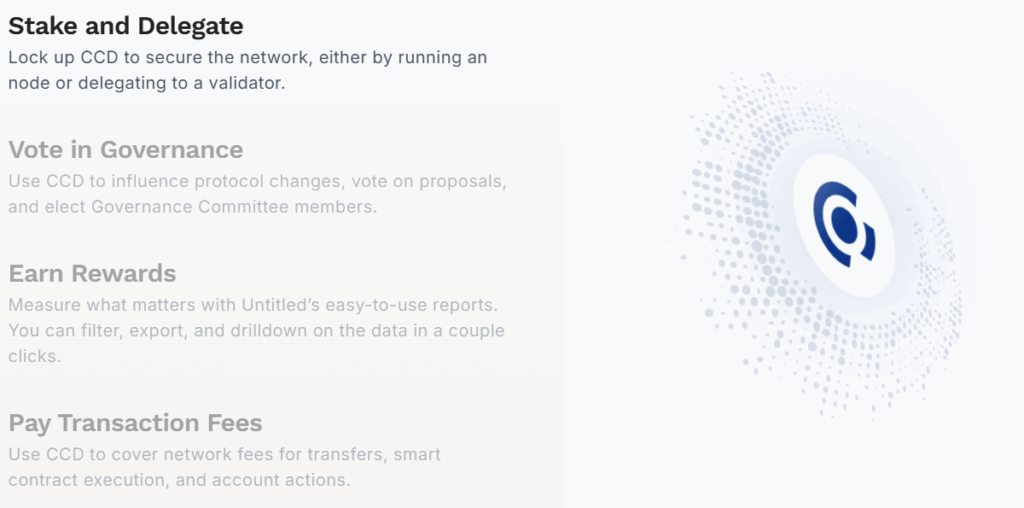
- Transaction fees (GAS payments)
- Staking and validator rewards
- Delegation (passive or validator pools)
- Governance and voting
- DeFi collateral
- Executing smart contracts
Token Information
- Symbol: CCD
- Total Supply: 13,822,405,698 CCD
- Circulating Supply: 11,382,671,810 CCD
- Inflation Rate: 4% annual minting
- GAS Mechanism: Transaction costs fixed in EUR, adjusted based on CCD/EUR price.
Concordium Roadmap
- Phase 1 (June 2021 – June 2024): GC created by Foundation Board, framework for governance and tokenomics established. First community elections held in June 2024.
- Phase 2 (June 2024 – June 2027): CCD holders vote on 2 new GC members. Mixed direct and representative democracy model implemented. GC improves voting process and framework.
- Phase 3 (Post-June 2027): All GC members elected by CCD holders, with active community participation in governance.
Ecosystem
- DeFi: Secure stablecoins and payment solutions via PLTs.
- Identity: Integrated Web3 ID and verifiable credentials.
- NFT & Smart Contracts: Rust/Wasm-supported applications.
- Institutions: Compliance-focused PayFi solutions.
Key Features
- Identity integration: Transaction-level anonymity + auditability.
- ZK Proof integration: Selective information sharing.
- Fast finality: Instant block confirmation.
- PLT model: Protocol-level tokens reduce smart contract risk.
- Regulatory compliance: Infrastructure aligned with evolving regulations.
Official Links
You can also freely share your thoughts and comments about the topic in the comment section. Additionally, don’t forget to follow us on our Telegram, YouTube, and Twitter channels for the latest news and updates.