

 Yeliz Akmaca
Although the project is commonly referred to as CONX, its on-chain asset is positioned under the name XPLA. XPLA was developed as a Layer-1 blockchain with its own mainnet, directly focused on gaming, digital content, and the entertainment industry. The project emerged from a crowded ecosystem filled with short-lived dApps and unsustainable NFT initiatives, aiming instead to build infrastructure that delivers long-term, real-world usage.
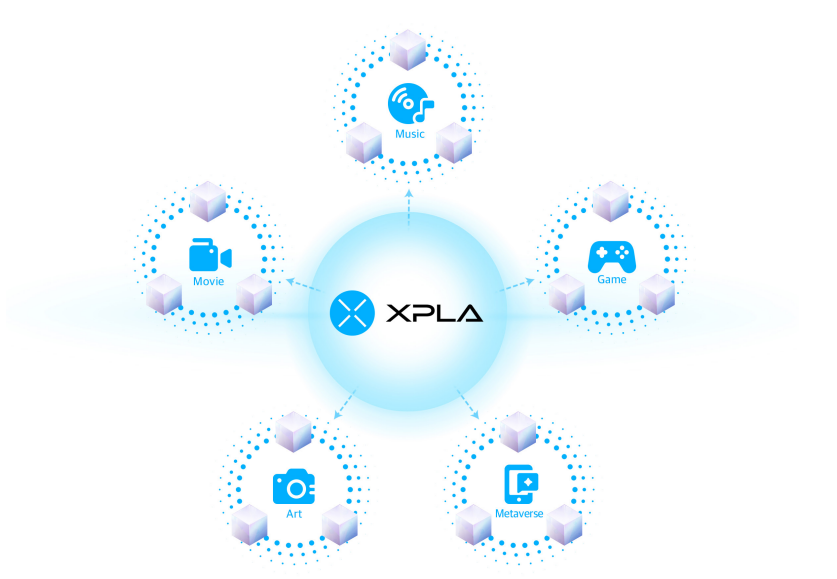
XPLA’s approach is less about technical spectacle and more about the idea of “working content.” From day one, the chain was designed to remain active through games, NFT-based content, and digital media projects.

The Team Behind It: From Web2 Experience to Web3
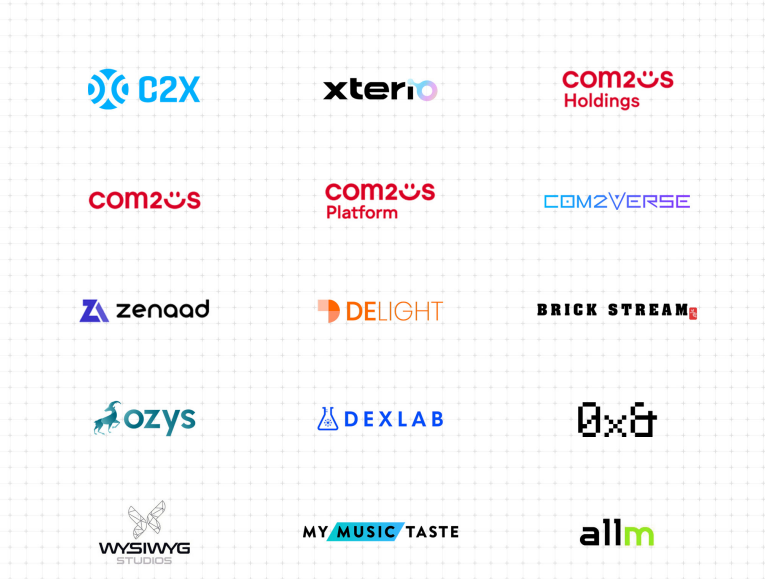
XPLA’s development team previously worked on the C2X Blockchain Gaming Platform. This matters because the project is not a purely theoretical Web3 initiative; the team brings hands-on experience in migrating existing game and content infrastructure on-chain.
While the founding structure does not emphasize highly visible public profiles, both the technical backbone and business development side consist of professionals who have collaborated with major Asia-based gaming and content companies. This background helps explain why XPLA consistently frames itself as an ecosystem rather than just a standalone blockchain.
Where Did the Project Idea Come From?
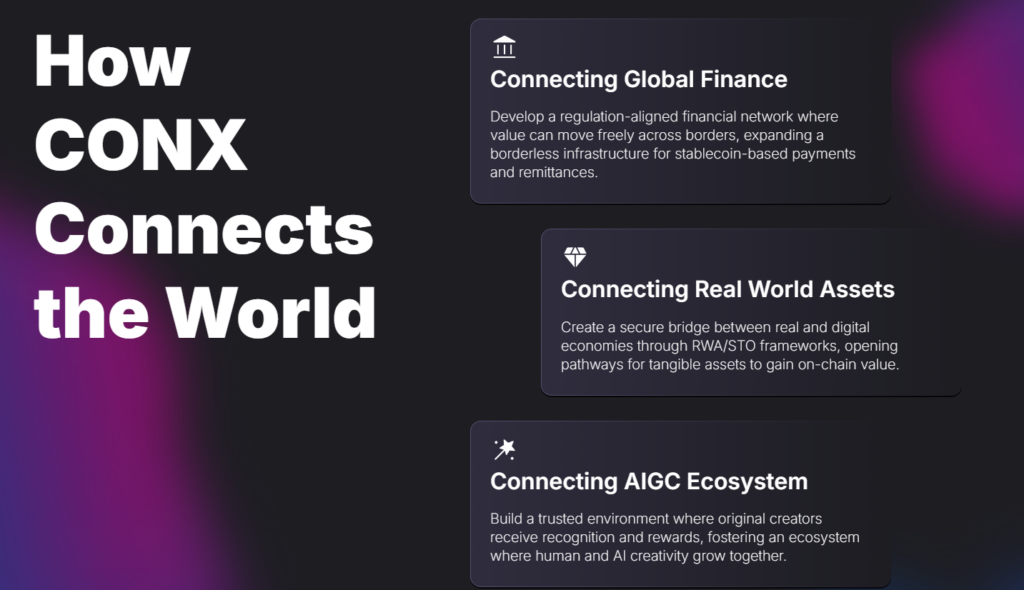
XPLA starts from a clear problem: the blockchain space hosts countless applications, but most are abandoned quickly. A large share of gaming and NFT projects lose users after the initial hype fades. The architecture targeted by CONX is built around enabling capital flow between traditional finance (TradFi) and decentralized finance (DeFi), aiming to create a borderless, multi-sector digital economy.
To reverse this trend, XPLA is built on three core assumptions:
-
Content creators and players should sit at the center of the chain
-
The network should launch with ready-to-use content, not an empty ecosystem
-
Governance must be economically meaningful, not purely technical
Instead of the classic “anyone can deploy a dApp” approach, XPLA adopts a content-first, expansion-later model.
How Does XPLA Work?
XPLA operates on a Tendermint-based mainnet developed with the Cosmos SDK. Its consensus mechanism relies on a BFT-supported Proof-of-Stake structure, providing both energy efficiency and fast block finality.
Key technical highlights include:
-
High stability through Tendermint Core
-
Native compatibility with the Cosmos ecosystem
-
Gradual EVM compatibility for Ethereum-based dApps
-
Modular architecture optimized for gaming and media applications
As a result, XPLA functions less like a single-purpose chain and more like a unified platform hosting multiple content verticals.
Governance: Does Token Ownership Translate Into Influence?
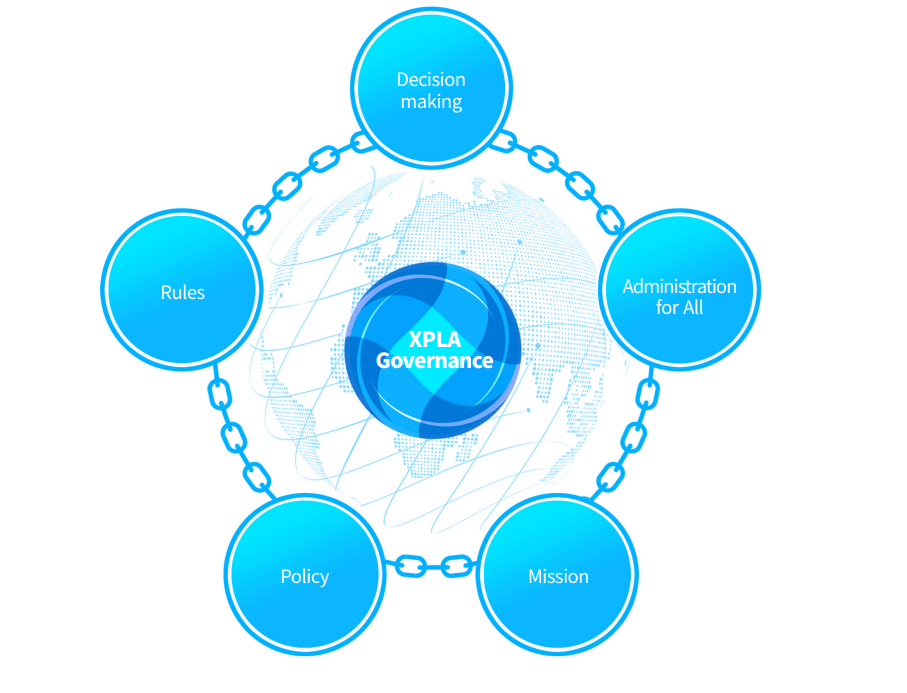
Governance within the XPLA ecosystem is conducted directly through the $XPLA token. Token holders can participate in on-chain voting related to:
-
Network upgrades
-
Allocation of ecosystem funds
-
Proposals for new content and dApps
A key detail is that only staked XPLA carries voting weight in certain governance decisions, a design choice intended to limit short-term speculative voting behavior.
Roadmap: Gradual Construction Over Fast Listings
XPLA’s roadmap avoids aggressive date promises and instead focuses on phased expansion:
-
Stabilization of the mainnet
-
Migration of existing games and content on-chain
-
Expansion of EVM compatibility
-
Adapting NFT standards for in-game use
-
Increasing community and developer incentives
This strategy appears quieter in the short term but aims for sustainability over time.
What Is the XPLA Token Used For?
$XPLA serves as the core economic asset of the network, extending beyond transaction fees:
-
Participation in governance voting
-
Staking and validator delegation
-
NFT trading
-
In-ecosystem token swaps
-
Economic activity within games and digital content
In this sense, XPLA positions itself as a platform token, not merely a gas asset.
XPLA Supply Overview
The ratio of circulating supply to total supply suggests that token unlocks are distributed over time.
-
Total supply: 1.99 billion XPLA
-
Maximum supply: 2 billion XPLA
-
Circulating supply: 893.51 million XPLA
Token Economics and Distribution
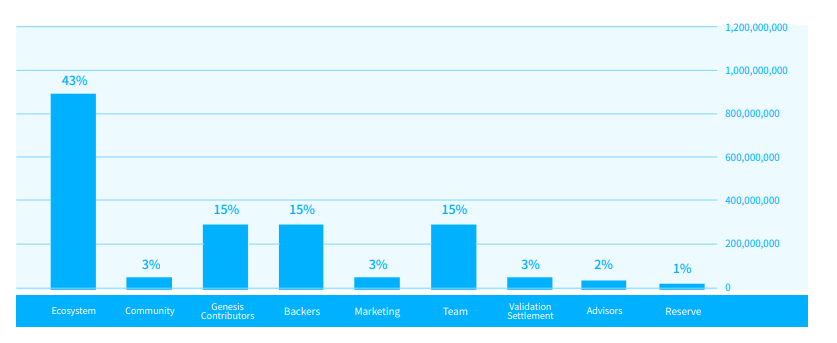
The distribution structure broadly breaks down as follows:
-
Ecosystem development: 43%
-
Team: 15%
-
Early supporters / investors: 15%
-
Genesis contributors: 15%
-
Community and marketing pools: 6%
-
Validators and advisors: 5%
-
Reserve: 1%
The allocation heavily weighted toward ecosystem and content development clearly reflects the project’s priorities.
Ecosystem: Games, NFTs, and Digital Content Together
One of XPLA’s strongest aspects is its focus on planned, concrete content rather than abstract potential. The network aims to provide shared infrastructure for:
-
Gaming projects
-
NFT marketplaces
-
Digital collectibles
-
Media and entertainment applications
Open-source developer tools and the native wallet solution, XPLA Vault, are also integral parts of the ecosystem. Overall, XPLA aims to form a transparent bridge between content creators and end users.
XPLA is not a project built for rapid hype cycles. However, its:
-
Gaming and content-centric focus
-
Real usage scenarios
-
Controlled token economy
-
Hybrid Cosmos + EVM approach
position it differently for long-term observers.
Key Features
XPLA delivers high security and scalability through its Tendermint BFT-based Proof-of-Stake architecture. Interoperability is supported via Cosmos SDK and IBC, while EVM compatibility is introduced progressively to broaden the ecosystem.
The network’s modular structure is designed to ease the transition of Web2-based gaming and content projects into Web3. XPLA Vault serves as the official wallet solution for staking, asset management, and governance.
Network security is reinforced through BFT PoS consensus, double-spend protection, validator slashing mechanisms, and on-chain governance.
XPLA aims to build a cultural blockchain ecosystem centered on games, NFTs, and digital media. Its DAO-based governance model emphasizes community participation, supported by hackathons, bounty programs, and content-focused incentives.
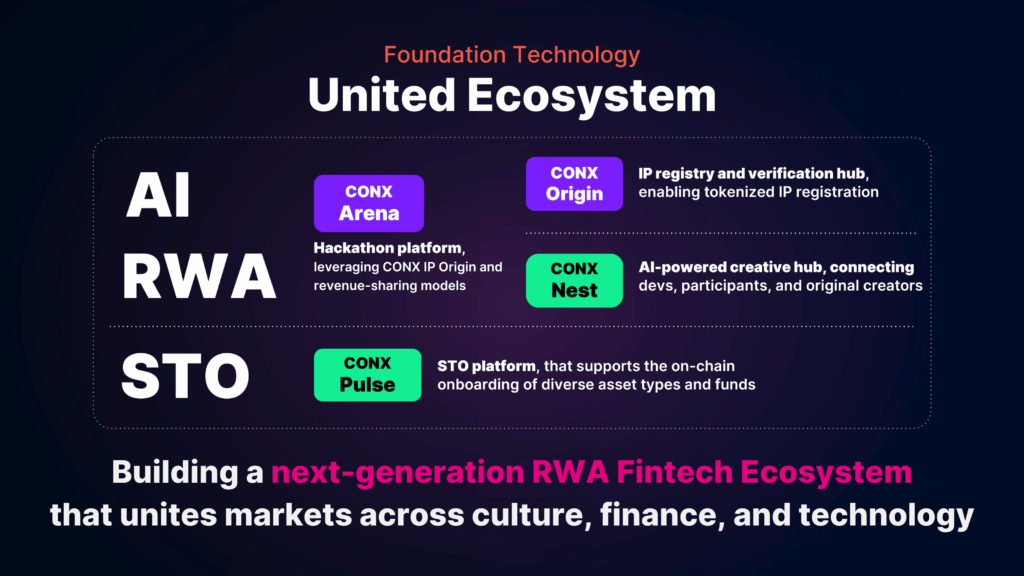
Key Platforms in the CONX Ecosystem
-
CONX Vault: Asset storage, transfer, and management for digital tokens, NFTs, and tokenized assets
-
CONX Origin: Infrastructure for on-chain IP registration and tokenization
-
CONX Nest: AI-powered creative tools for IP-based digital asset production
-
CONX Arena: Platform for showcasing, evaluating, and engaging creative projects
-
CONX Pulse: Core platform for issuing and managing tokenized real-world assets (RWA)
Rather than short-term price action, the real determinant of XPLA’s trajectory will be whether the ecosystem genuinely fills with active content.
Official Links
Also, in the comment section, you can freely share your comments and opinions about the topic. Additionally, don’t forget to follow us on Telegram, YouTube and Twitter for the latest news and updates.