

 Emre Yumlu
Dash (DASH) is an open-source blockchain project aimed at enabling fast, low-cost, and decentralized digital payments. Derived from the phrase “Digital Cash,” Dash, as its name suggests, aims to provide a practical cryptocurrency infrastructure that can be used for daily payments. It stands out with its innovations in security, speed, scalability, and governance, making it one of the projects that has survived for years and continues to be actively developed.
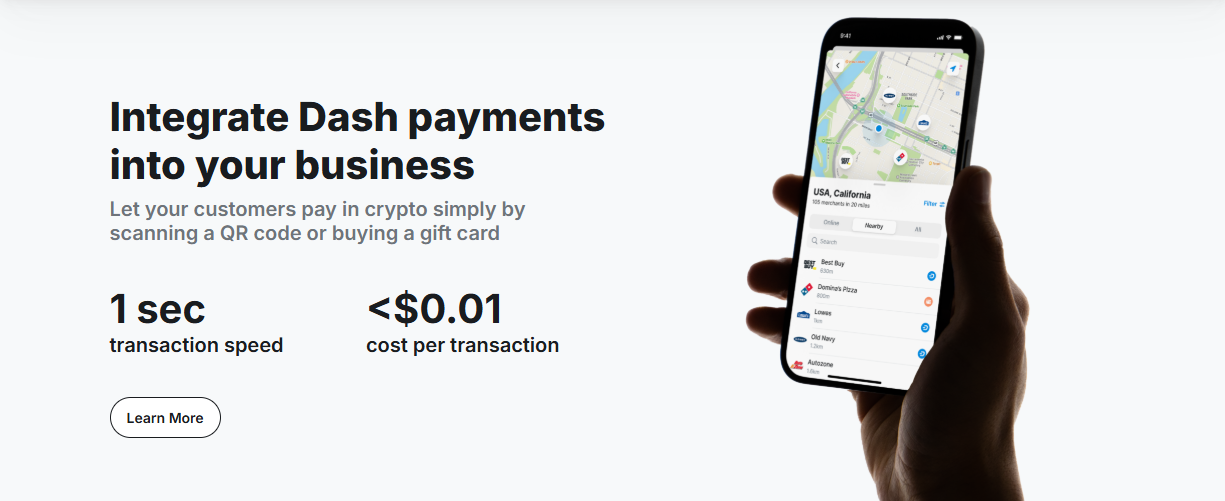
The Dash network offers a wide range of uses, from grocery shopping to airplane tickets, bill payments to business-to-business transfers. Both individual users and businesses can consider Dash as an alternative digital payment method for global and cross-border payments.
What is Dash?
Dash was launched in January 2014 as a fork based on Litecoin. The names behind the project are software developers Evan Duffield and Kyle Hagan. Initially launched under the name “XCoin,” the project soon changed to “Darkcoin.” In 2015, it adopted the name “Dash” to appeal to a broader audience and reflect its payment-focused vision.
One of Dash’s notable aspects is that it was developed without any ICO, pre-mine, or venture capital investment. In this regard, the project aims to offer a fairer and more community-oriented structure in terms of distribution and governance.
How Does Dash Work?
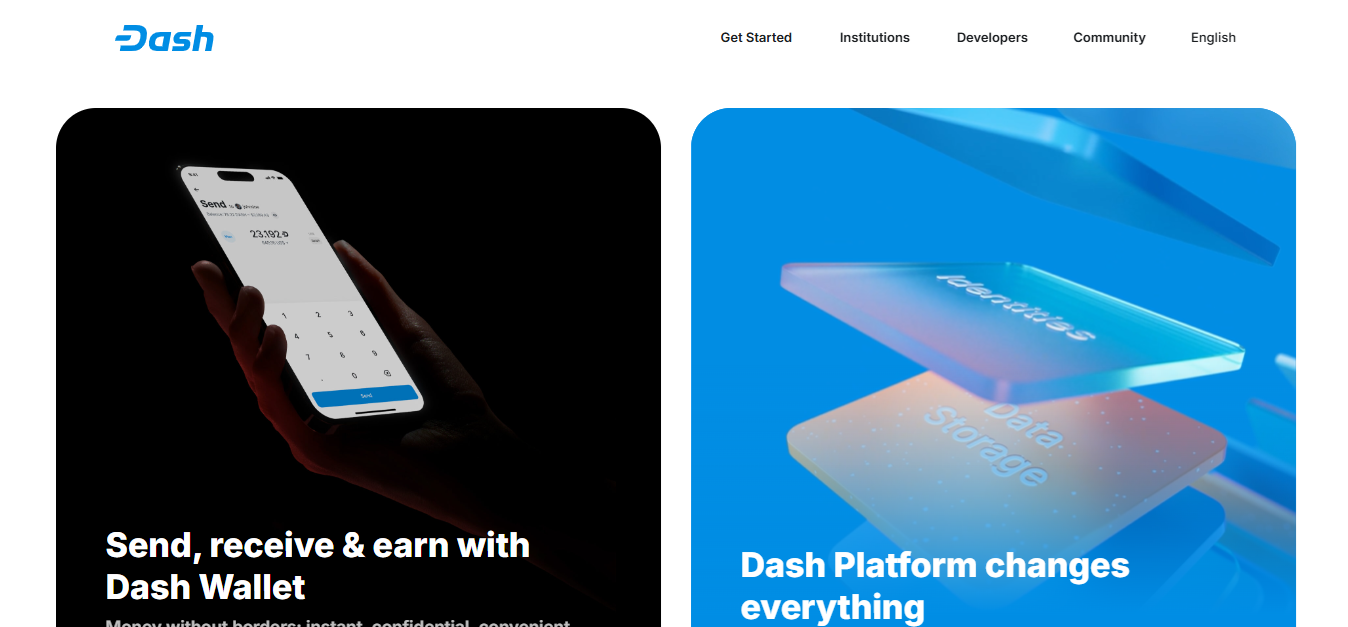
Dash uses a two-tier network structure, different from traditional blockchain architectures. This structure is designed to enhance both security and transaction speed.
First Tier: Miners
The first tier consists of miners operating with the classic proof-of-work (PoW) mechanism. Dash uses a special hash algorithm called X11. This algorithm aims to increase security by running multiple cryptographic functions sequentially. Miners validate transactions and produce new blocks.
Second Tier: Masternodes
The key feature that sets Dash apart from many other crypto projects is the masternode system in the second tier. To operate a masternode, 1000 DASH must be locked as collateral on the network. These nodes provide additional services to the network and receive a share of block rewards in return.
Thanks to masternodes, the Dash network enables features such as instant transaction confirmation, enhanced security, and decentralized governance.
Masternode System and Long-Living Quorums (LLMQ)
In the Dash network, masternodes do not operate individually but in groups called Long-Living Masternode Quorums (LLMQ). These quorums are subsets of masternodes selected deterministically and remain active for specific periods.
The primary role of LLMQs is to perform threshold signing for the network’s critical functions. Features like InstantSend and ChainLocks operate securely and decentralized thanks to this structure.
InstantSend: Instant Transaction Confirmation
One of Dash’s most notable features is the InstantSend mechanism. This system allows transactions to be finalized in seconds and become irreversible.
In the InstantSend process, masternode quorums check whether the transaction is valid. The inputs of the approved transaction are locked, preventing them from being used in another transaction across the network. Thus, users experience near-instant transactions without paying extra fees.
This feature makes Dash a strong alternative for retail payments and daily use cases.
ChainLocks: Protection Against Blockchain Reorganizations
One of the biggest risks in blockchain networks is the reorganization of the chain (reorg), which can reverse transactions. Dash minimizes this risk with ChainLocks technology.
ChainLocks ensures that masternode quorums approve and lock new blocks at regular intervals. A locked block is considered finalized by the network and cannot be reversed. This eliminates the need to wait for multiple confirmations, allowing payments to be accepted securely and instantly.
Proof-of-Service (PoSe) Mechanism
In the Dash network, masternodes are incentivized to provide quality service through the Proof-of-Service (PoSe) system. Masternodes are scored based on their performance in fulfilling duties.
Masternodes that do not contribute to the network or fail to perform quorum duties are penalized and lose eligibility for rewards. This mechanism ensures the network operates stably and reliably.
What is Dash Platform?
Dash goes beyond being just a payment network and offers a Web3 technology infrastructure for developers. This structure is called Dash Platform.
The core components of Dash Platform are DAPI and Drive. These components transform the Dash network into a decentralized cloud infrastructure.
DAPI (Decentralized API)
DAPI is a decentralized API layer that allows developers to interact with the Dash network. It enables sending data, querying data, and interacting with the blockchain via JSON-RPC and gRPC endpoints.
The biggest advantage of DAPI is that it provides developers with the same level of access to the network without requiring them to run their own nodes. Additionally, it eliminates single points of failure since it is not tied to a single server.
Drive: Decentralized Data Storage
Drive is the data storage layer of Dash Platform. Developers define data contracts for their applications. These contracts determine how data will be stored and validated.
User data is stored on the masternode network after validation. Thanks to Dash’s special database solution, GroveDB, data integrity can be verified with cryptographic proofs.
Dash’s Governance Model and DAO Structure
Dash is one of the oldest and most functional DAO (Decentralized Autonomous Organization) examples in the crypto world. The network’s governance is shaped by votes from masternode owners.
10% of block rewards are allocated to the Dash treasury. This budget funds project proposals for software development, marketing, business development, and ecosystem growth. Masternodes directly vote to decide which projects receive funding.
This system allows Dash to develop sustainably without needing external financing.
Dash Token Economics (Tokenomics)
Dash’s maximum supply is theoretically limited to 18.9 million. However, this number may vary depending on how treasury rewards are used.
Block rewards are distributed as follows:
- 45% to miners
- 45% to masternodes
- 10% to treasury
The new DASH production rate decreases by approximately 7% each year. This mechanism slows the rate of supply growth over time.
How is Dash Security Provided?
Dash offers high security through both its mining layer and masternode layer. For an attack to succeed, an attacker would need to control both layers simultaneously. This significantly increases costs and practically deters attacks.
Thanks to ChainLocks and the LLMQ structure, the Dash network has extra protection against 51% attacks.
Dash Team
The Dash ecosystem operates with an open-source structure and community-supported governance model rather than a centralized company, but it is supported by a professional team handling core development and product aspects. This team, under the Dash Core Group, shapes the network’s technical development, product vision, and long-term strategy.
Ryan Taylor – CEO: Ryan Taylor, as CEO of Dash Core Group, is responsible for the project’s overall strategy, corporate relations, and ecosystem growth. He plays an active role in partnerships aimed at increasing Dash’s global adoption, roadmap planning, and governance processes. Taylor is one of the leading figures targeting broader reach for Dash’s payment-focused vision.
Samuel Westrich – CTO: Samuel Westrich is the chief technology officer responsible for developing Dash’s technical infrastructure. Technical work on blockchain architecture, network security, Dash Platform, and masternode infrastructure is led by Westrich. He plays a critical role in Dash’s scalability and long-term sustainability.
Brian Foster – Head of Product: Brian Foster leads the product team, focusing on user experience, functionality, and market fit of Dash products. He has significant responsibilities in the development of DashPay, Platform components, and user-facing tools. Foster’s work aims to bridge Dash’s technical strengths with practical use cases.

Official Links
You can also freely share your thoughts and comments about the topic in the comment section. Additionally, don’t forget to follow us on our Telegram, YouTube, and Twitter channels for the latest news and updates.