

 Emre Yumlu
DecentralGPT (DGC) is an innovative platform designed as a decentralized artificial intelligence (AI) large language model inference network. It addresses data privacy, accessibility, and transparency issues by reducing reliance on centralized systems in the development and application of large-scale language models. In traditional centralized systems, data processing and storage are concentrated in a few large data centers, increasing vulnerability to cyberattacks and leading to excessive control over data. DecentralGPT solves these issues by leveraging distributed network nodes to collectively handle data processing and model inference tasks, enhancing global computational efficiency. Additionally, it protects user data from unauthorized access through end-to-end encryption and strict data access controls.
What Is DecentralGPT (DGC)?
DecentralGPT is a decentralized AI network supporting open-source large language models. It aims to build a secure, privacy-preserving, democratic, and transparent General Artificial Intelligence (AGI) network. Distributed nodes collectively perform data processing and model inference, reducing dependence on a single computational center and increasing system resilience against attacks. Its open-source nature fosters collaboration within the global developer community, driving rapid technological advancement. DecentralGPT overcomes the limitations of traditional AI models, offering a more secure, equitable, and open AI future.

AIGC Industry and AGI Outlook
Market Value of the AIGC Industry
The AI-Generated Content (AIGC) industry, encompassing the automated creation of text, images, videos, and music, is a rapidly growing field. Revolutionizing sectors like media, advertising, entertainment, and education, AIGC provides efficient solutions for content production, personalized marketing, and user engagement.
- Media and News: For instance, The New York Times uses AIGC technology to automatically generate sports news and financial bulletins, enabling faster content updates compared to manual processes and dynamically adjusting reports based on reader feedback. Data shows that media companies using AIGC experience a 40% reduction in content production time and a 30% increase in audience engagement.
- Advertising: A leading online retailer utilized AIGC to create personalized ads, achieving a 20% increase in click-through rates and a significant improvement in advertising ROI. AIGC boosts campaign click-through rates by 20-30% and enhances cost-effectiveness by 50% compared to traditional methods.
- Educational Technology: Online education platforms leverage AIGC to produce personalized learning materials and interactive experiences, improving student learning efficiency by an average of 35%. Institutions adopting AIGC report a 40% increase in student engagement and a 50% rise in satisfaction.
Future Market Growth
Recent market research predicts the AIGC industry will reach a trillion-dollar market size within the next decade. Key drivers include:
- Technological Innovation: Next-generation language models like GPT and BERT enable near-human-quality text and image generation.
- Enterprise Demand: Digital transformation fuels demand for fast, personalized content production. By 2025, at least 60% of global large enterprises are expected to adopt AIGC technology.
- Cost Reduction: AIGC can reduce content production costs by up to 70%, particularly for large-scale needs.
- Emerging Markets: As internet access and technology adoption grow in regions like Asia and Africa, AIGC demand is projected to exceed 35% annual growth.
DecentralGPT’s Role in AGI
DecentralGPT accelerates AGI development through its decentralized network. Distributed computing resources lower operational costs and enhance data security. Localized data processing protects sensitive information (e.g., medical or financial data). Additionally, it democratizes technology by providing equal access to global developers, fostering innovation.

Core Features of DecentralGPT
- Decentralized Architecture: Globally distributed nodes independently execute AI model inference tasks, reducing reliance on a single data center and enhancing system resilience.
- Multi-Model Support and Open Source: Supports various open-source large language models, increasing transparency and accessibility.
- Privacy and Security: Data encryption at local nodes minimizes privacy breach risks.
- Democratic Access: Users and developers in both developed and developing countries can equally benefit from the platform.
- Efficiency and Cost Reduction: Global distributed resources boost processing speed and lower centralized system costs.
- Technological Innovation: Open-source support encourages global collaboration and rapid technological advancement.
- Social Equity: Broadens access to advanced AI technologies, bridging the technology gap.
- Environmentally Friendly: Distributed nodes reduce environmental impact through renewable energy use and shorter data transmission distances.
- Data Sovereignty: Users gain greater control over their data through localized processing and strict governance policies.
DecentralGPT Technical Architecture
User Interface
Users interact with DecentralGPT through client node interfaces, which collect queries, data inputs, or administrative commands, encrypt them, and send them to distributed GPU nodes.
Distributed Coordinator
The client node also functions as a distributed coordinator, querying the status of GPU nodes across the network for task allocation and load balancing. It processes encrypted requests, selects suitable GPU nodes, and assigns tasks via a random blockchain machine.
Distributed Computing Nodes
- Node Structure: Each node is equipped with GPUs capable of performing AI model inference independently or collectively.
- Operating System and Software: Nodes run on Ubuntu or similar systems, with software and libraries to support AI model execution.
- P2P Network: Nodes connect via a peer-to-peer (P2P) network, enhancing data sharing and network reliability.
Data Storage and Sharing
- IPFS Technology: The Interplanetary File System (IPFS) is used for distributed data storage and sharing.
- Web3 Storage: User data is encrypted and accessible end-to-end with private keys.
- File Storage and Access: All data is securely stored and accessed through a distributed storage network.

Distributed GPU Machines
GPU nodes perform high-speed AI model inference, forming a global distributed computing network.
Core Functions of DecentralGPT
- Natural Language Understanding and Generation: Handles tasks like answering questions, writing articles, and generating code.
- Multi-Language Support: Geographically distributed nodes optimize processing for local languages.
- Personalized User Experience: Provides tailored responses based on user history.
- Seamless Integration and Scalability: Offers open APIs for easy integration and global scalability.
- Enhanced Privacy and Security: Local encryption and advanced security protocols ensure data protection.
- Customizable Interface: Businesses and developers can tailor interfaces and functions to specific needs.
Distributed GPU Mining Mechanism
DecentralGPT employs a distributed GPU mining mechanism to support network vitality and model development.
- Total Supply: 1 trillion tokens in the first four years, followed by 50 billion annually.
- Mining Conditions: Requires long-lease GPU machines pledging DBC tokens on the DBC network.
- Reward Distribution: Every 600 blocks (approximately 1 hour), 5,707,763 DGC is distributed based on a miner’s computing power share.
- Reward Allocation: Model developers receive 30%, GPU miners receive 70%.
- Halving: Rewards halve every four years for 100 years.
- Automatic Burning: 100% of user payments are burned, reducing token supply.
DecentralGPT (DGC) Tokenomics Model
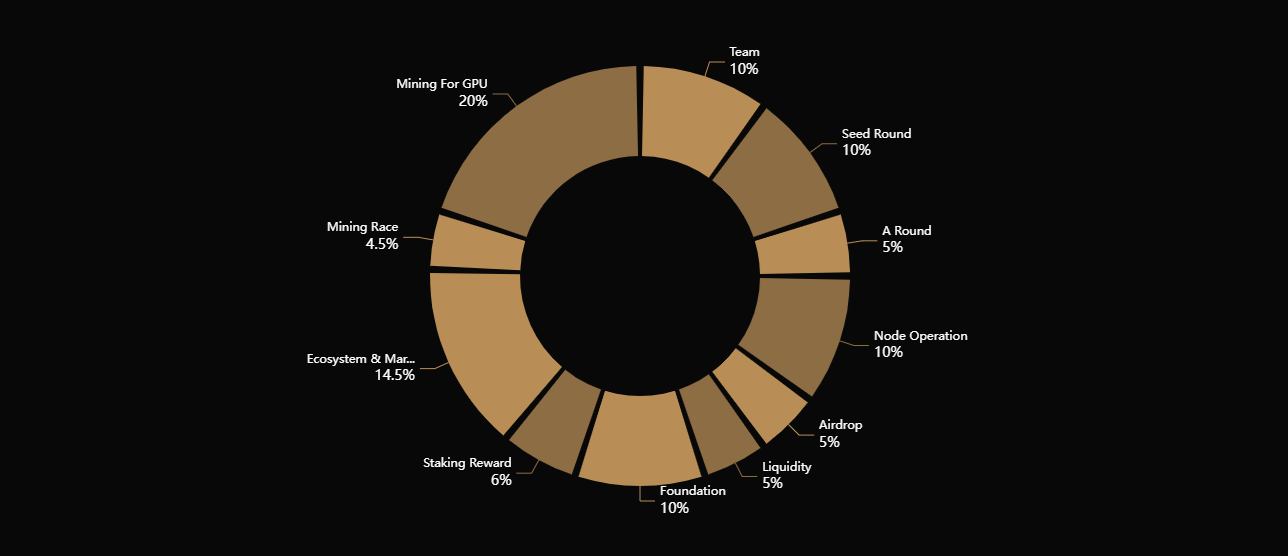
DGC is the economic unit of the DecentralGPT platform. In the first four years, 1 trillion tokens are issued, with 60% on BNB Chain and 40% on DBC EVM Chain. All user-paid DGC tokens are 100% burned.
Token Allocation:
- Team: 10%
- Seed Round: 10%
- A Round: 5%
- Node Operation: 10%
- Airdrop: 5%
- Mining (GPU): 20%
- Liquidity: 5%
- Foundation: 10%
- Ecosystem & Marketing: 14.5%
- Staking Reward: 6%
- Mining Race: 4.5%
Roadmap
- 2025 Q1: Growth marketing, DGC public sale, foundational AI agent API, long-term memory optimization.
- 2025 Q2: Community growth, Canvas support, diverse document formats, learning, and summarization.
- 2025 Q3-Q4: AI agent growth, node clusters in Europe and Africa, LLM computer interface control (70% accuracy), real-time voice and video calls.
- 2026 Q1-Q2: AI agent infrastructure, 90% accurate interface control, virtual avatar support.
- 2026 Q3-Q4: Virtual avatars in video calls, preliminary AGI with support for all input/output modalities.
Strategic Partners and Investors
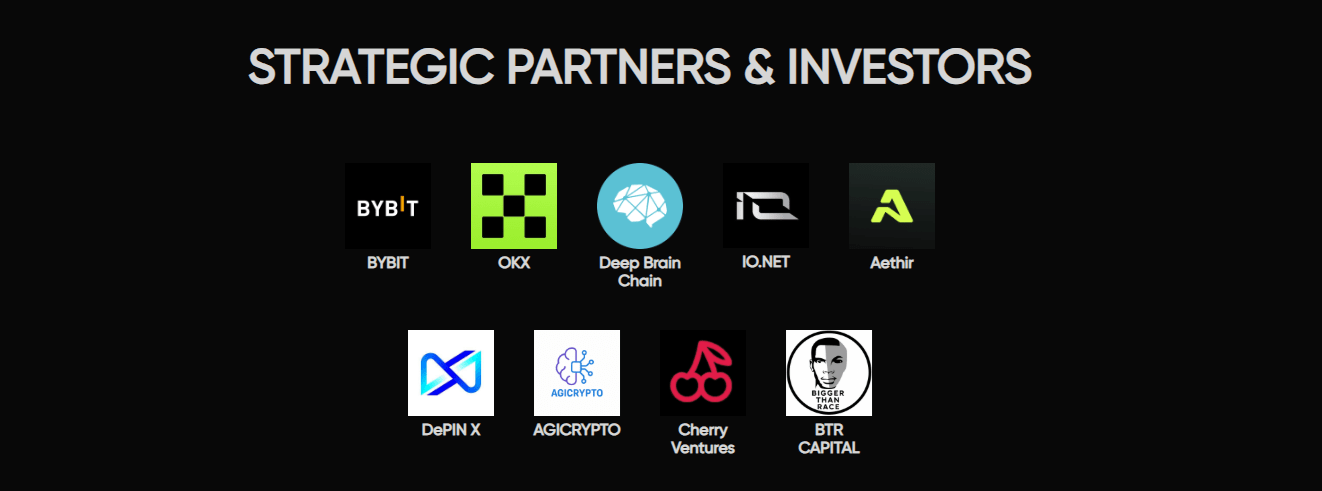
DecentralGPT is backed by prominent partners and investors, including Bybit, OKX, Deep Brain Chain, IO.NET, Aethir, DePIN X, AGICRYPTO, Cherry Ventures, and BTR CAPITAL.
DecentralGPT Team
- Vitalli: CEO, Blockchain Marketing Expert, FinTech Manager
- Harry: Chief Scientist & CTO, Stanford Post-Doc, AI Team Leader
- Joshua Vizer: Strategy Director, Product Strategy, Community Growth
- Ze: Marketing Director, UPenn Ventures Club Analyst
- Jeff: Business Director, Serial Entrepreneur, Wall Street Investment Banking
- Anwar: Tech Advisor, Columbia University Faculty, ETH Hackathon Judge

Official Links
You can also freely share your thoughts and comments about the topic in the comment section. Additionally, don’t forget to follow us on our Telegram, YouTube, and Twitter channels for the latest news and updates.