

 Emre Yumlu
Monero (XMR) is a cryptocurrency developed with the belief that financial privacy is a fundamental right, designed to provide completely anonymous and untraceable transactions. Launched in 2014, Monero offers a direct alternative to the traceability issues created by transparent blockchains. While transactions in Bitcoin and similar cryptocurrencies are visible to everyone, privacy in Monero is a default and mandatory feature.
This approach distinguishes Monero not only technically but also philosophically from other cryptocurrencies. Monero stands against the idea of “everyone seeing everything” and aims to protect the privacy of digital cash.
How Did Monero (XMR) Come About?
Monero’s origins trace back to the CryptoNote technical paper published in 2013. This document focused on two fundamental problems of Bitcoin: the traceability of transactions and the eventual centralization of mining. CryptoNote proposed a new structure built on privacy and fair mining to solve these issues.
In 2014, Monero was born as a fork from Bytecoin, a CryptoNote-based project. Bytecoin’s large pre-mined supply had caused trust issues within the community. For this reason, an anonymous user with the pseudonym “thankful_for_today” on the Bitcointalk forum started a new project with a clean launch. Initially named “BitMonero,” the project was soon simplified to Monero. The name, meaning “coin” in Esperanto, reflects the project’s goal of being universal and neutral.
Over time, Monero evolved into a community-driven structure and has continued to be developed without a central company or official leadership model. While figures like Ricardo Spagni have occasionally stood out, Monero has never been tied to a single individual. Today, the project is maintained entirely as open-source by a global developer community.

Key Features That Distinguish Monero (XMR) from Other Cryptocurrencies
Monero’s most distinctive aspect is that it makes privacy mandatory rather than optional. All transactions on the network are automatically hidden. This makes Monero a more secure system not only for “those who want privacy” but for all users.
1. Sender Privacy
Ring Signatures Monero uses ring signatures to hide the identity of the transaction initiator. In this system, the real signature is mixed with signatures from other users. Someone examining the chain cannot definitively determine who initiated the transaction.
2. Recipient Privacy
Stealth Addresses A one-time address is generated for every Monero transaction. This makes the recipient’s main address invisible on the blockchain. An outside observer cannot understand how many transactions came to a specific address or to whom they belong.
3. Amount Privacy
RingCT Ring Confidential Transactions (RingCT), made mandatory in 2017, also hides transaction amounts. Thus, in Monero, only the transaction parties know who sent how much to whom.
4. Network Privacy
Technologies such as Dandelion++ and Tor/I2P hide how transactions propagate across the network. This makes tracking users via IP addresses significantly more difficult.
How Does Monero (XMR) Work?
Monero is based on the CryptoNote protocol and, unlike Bitcoin, uses dynamic block sizes and flexible transaction fees. When network congestion increases, blocks can grow, reducing transaction bottlenecks. However, excessively large blocks trigger reward penalties for miners, allowing the system to self-balance.
Difficulty levels and fees are automatically adjusted according to network usage. This structure ensures Monero remains both scalable and sustainable in the long term.
How Is Monero (XMR) Mined?
Monero still operates with a Proof of Work (PoW) mechanism. However, unlike Bitcoin, it was designed to be resistant to ASIC devices.
RandomX Algorithm
Monero’s RandomX algorithm prioritizes CPU and memory usage. This makes it difficult for expensive and specialized hardware to dominate the network. Even an average computer can participate in Monero mining.

Mining Methods
- Solo mining
- Mining pools
- Cloud mining
Browser-based mining solutions such as Coinhive, which were popular in the past, are no longer in use.
Monero (XMR) Tokenomics
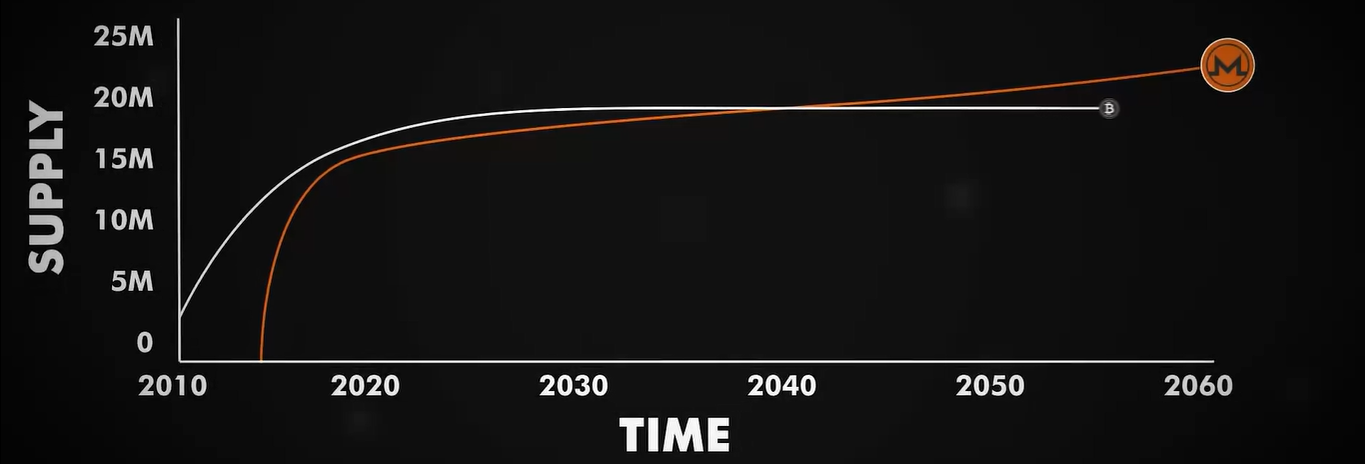
Monero (XMR) tokenomics has a structure that is quite different and noteworthy compared to many other cryptocurrencies. Its core features are designed to ensure long-term network security, and there is no fixed maximum supply cap. Instead, it uses the tail emission model.
Main Emission Period
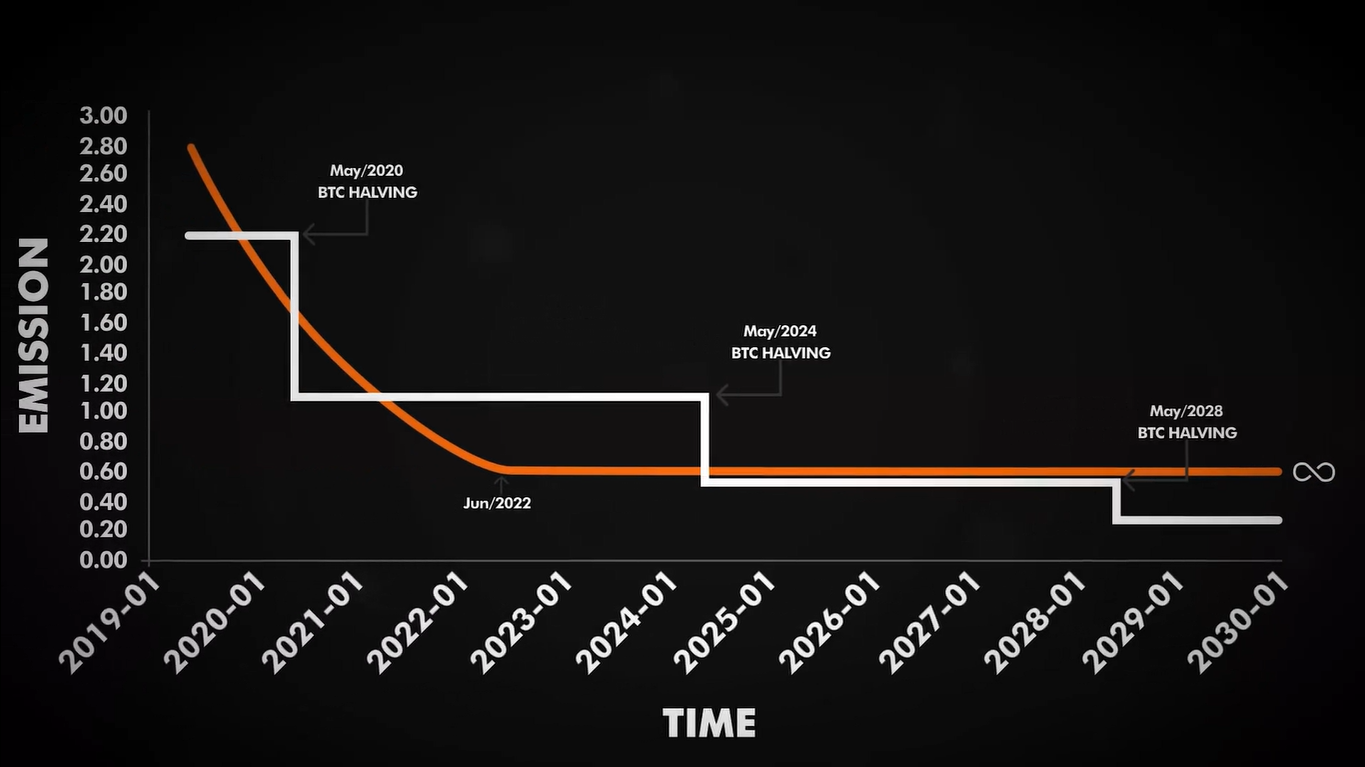
- Monero’s main emission curve follows a structure where block rewards gradually decrease.
- Approximately 18.4 million XMR (precisely around ~18.132 million) was produced by the end of May 2022.
- When this period ended, the main emission was completed, and tail emission came into effect.
Tail Emission (Current Status)
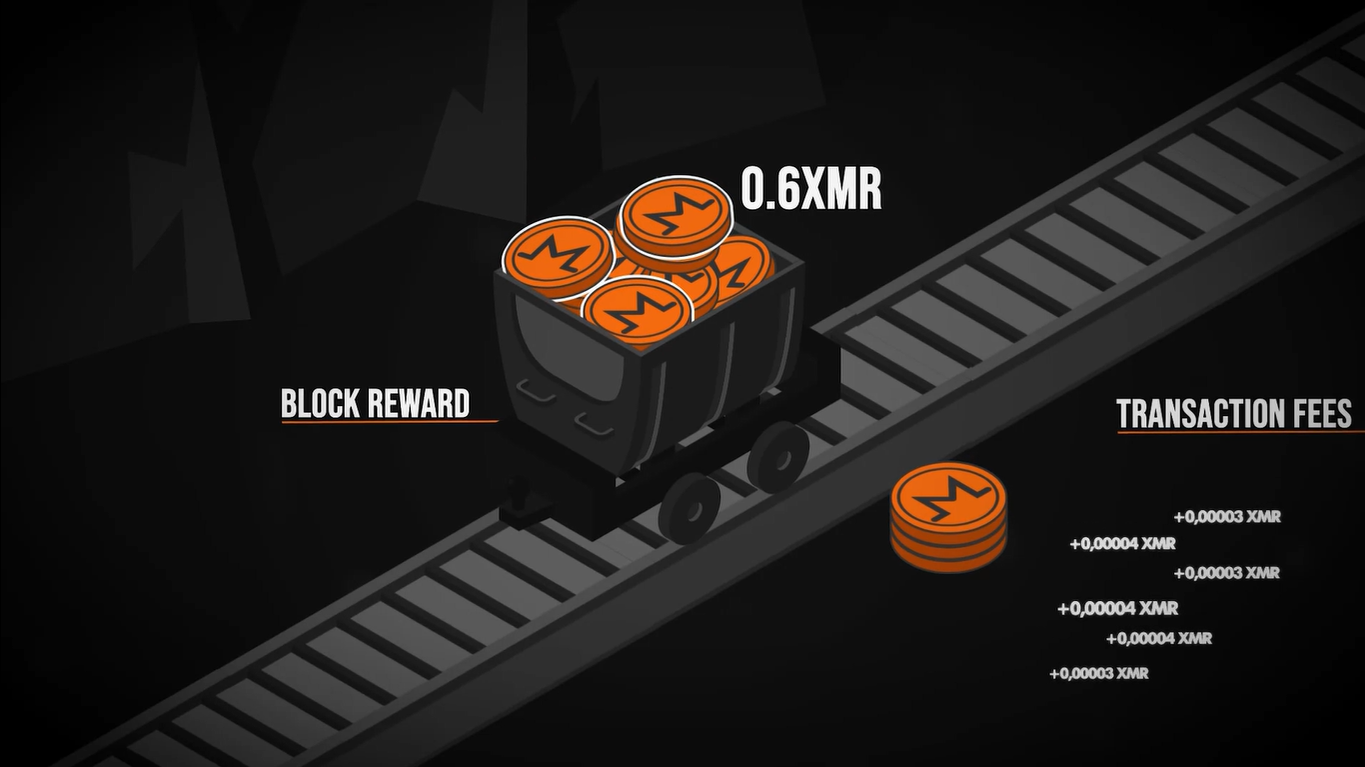
- Since May 2022, a fixed block reward of 0.6 XMR is produced per block (average block time is 2 minutes).
- This means approximately 432 XMR per day (~157,680 XMR/year) in new coins.
- Tail emission continues forever; meaning new XMR production never stops.
- This fixed reward provides ongoing incentive for miners to sustain network security in the long term (transaction fees alone may not be sufficient).
Inflation Rate
- At the start of tail emission (2022), the annual inflation rate was approximately 0.87%–1% (with circulating supply ~18 million XMR).
- As the circulating supply increases over time, the inflation rate continuously decreases and approaches 0% (it never reaches exactly zero; it is a disinflationary/asymptotic model approaching zero).
- As of today (2025–2026), the annual inflation rate is around 0.8%–0.9% and continues to decrease each year.
Circulating and Total Supply (2025–2026 Data)
- Circulating supply: Approximately 18.44–18.45 million XMR (as of late 2025 / early 2026).
- Total supply: There is no fixed upper limit → infinite emission continues, but the increase is very slow and predictable.
- Approximately 99%+ of the main emission has been completed; currently only tail emission is being produced.
Why Tail Emission Is Used?
- Designed to prevent miners from becoming fully dependent on transaction fees and to ensure long-term network security.
- Targets a low inflation rate sufficient to offset lost coins (forgotten wallets, lost private keys), with estimated annual loss rate around 1%–1.5%; tail emission typically balances or falls below losses → net supply may even decrease over time.
- The Monero community defends this model by arguing that “low and predictable inflation is necessary for network security.”
Use Cases of Monero (XMR)
Monero’s primary purpose is censorship-resistant and private payments.
Who Uses It?
- Individuals who want to protect their financial privacy
- Journalists and activists accepting donations
- Users in countries with censorship risks
- P2P payment systems
However, its complete anonymity has also led to its preference in darknet markets. This has caused regulatory pressure on the project.
Regulations and Controversies
Monero and similar privacy coins are a topic of debate in many countries, particularly due to AML and KYC regulations. In regions such as Europe, South Korea, and Japan, some major exchanges have delisted Monero.
The core debate at this point is: Should privacy be equated with crime, or is it a fundamental right?
The Monero community defends that protecting privacy in the digital world is legitimate and necessary.
Monero’s Philosophy and Values
Monero is not just a technology but also a stance.
- Privacy: Default and mandatory
- Security: Most up-to-date cryptographic methods
- Decentralization: ASIC resistance and open-source development
- Transparent Development: Community-driven decision-making
These values are among the main reasons Monero has remained standing for so long.
Monero (XMR) Investors
With its privacy-focused structure, Monero (XMR) has attracted significant interest from both institutional and individual investors over the years and stands out as one of the most important cryptocurrency projects. Some of the investment funds and companies that have supported the ecosystem since the early days of the project include:
- Electric Capital
- Galaxy Digital
- Block Ventures
- LuneX Ventures
- Asymmetry Asset Management
Monero (XMR) Sponsors
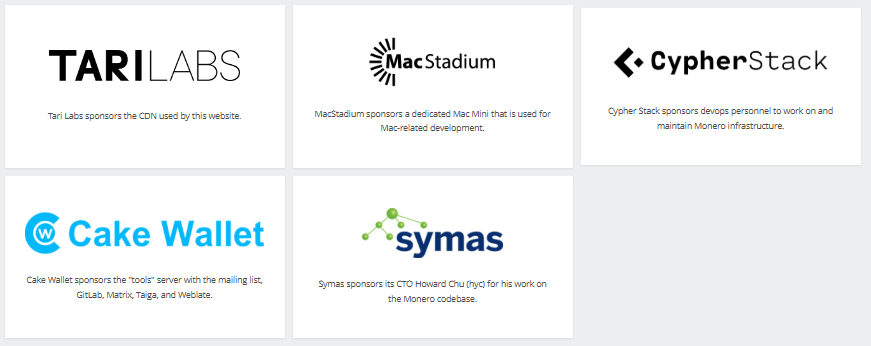
The following companies actively support the Monero Project in line with the goal of spreading financial privacy on a global scale. Their contributions play an important role in the sustainability of Monero’s technical infrastructure and development processes.
- Tari Labs: Supports the content delivery network (CDN) used on Monero’s official website.
- MacStadium: Provides sponsorship support for a special Mac Mini hardware used for MacOS-based development.
- Cake Wallet: Supports Monero’s tool server, contributing to the operation of essential services such as email lists, GitLab, Matrix, Taiga, and Weblate.
- Symas: Sponsors CTO Howard Chu (hyc)’s work on the Monero codebase.
- Cypher Stack: Finances DevOps personnel responsible for the maintenance and continuity of Monero infrastructure.
These sponsors directly contribute to the development of privacy-focused financial technologies while preserving Monero’s decentralized structure.
Why Is Monero (XMR) Important?
Monero (XMR) offers a strong example of how privacy can be protected in the digital age, beyond being just an investment vehicle. In an ecosystem dominated by transparent blockchains, it is one of the rare projects that makes privacy default.
With its decentralized, censorship-resistant, and untraceable structure, Monero stands as one of the cryptocurrencies closest to the concept of “digital cash.” Despite ongoing regulatory pressures and debates, Monero continues its path without changing its core philosophy.
Monero (XMR) Team
Monero’s foundations trace back to an academic-style paper from 2012 known as CryptoNote. This influential document, authored under the pseudonym Nicolas van Saberhagen (whose real identity has never been revealed), introduced innovative cryptographic methods centered on transaction privacy, laying out a theoretical blueprint for a new kind of digital currency that addressed key limitations in earlier designs like Bitcoin.
The project itself lacks any single confirmed founder or centralized entity behind its creation. Development has always been driven by a worldwide community of contributors, most of whom have deliberately chosen to remain anonymous in line with the coin’s strong emphasis on privacy. This decentralized, pseudonymous approach has been a core principle from the start.
Among the few publicly known figures is Riccardo Spagni, better known in the community as “FluffyPony.” He played a prominent role as the lead maintainer of the Monero protocol, overseeing technical coordination and upkeep until late 2019.

Monero (XMR) Frequently Asked Questions
What is Monero (XMR)?
- Monero is a privacy-focused, open-source cryptocurrency that hides the sender, recipient, and transaction amount by default.
What is the main difference between Monero and Bitcoin?
- While all transactions in Bitcoin are transparently traceable, privacy in Monero is mandatory, and on-chain data cannot be tracked externally.
Are Monero transactions truly untraceable?
- Thanks to ring signatures, stealth addresses, and RingCT, who sent what amount to whom is practically impossible to detect.
Is Monero legal?
- Monero is not illegal in many countries; however, due to its privacy-focused structure, it may be delisted from some exchanges because of regulations.
Official Links
You can freely share your thoughts and comments about the topic in the comment section. Additionally, please don’t forget to follow us on our Telegram,YouTube and Twitter channels for the latest news.